
On-demand CPD

Webinar series: Making history accessible Session 5: Making history accessible: review and reflection In this session, participants will be encouraged to review their action research projects. Coaching conversations will encourage reflection, allowing participants to share their actions and insights. Additionally, they will begin developing a strategic plan to outline next...

What does this series cover? The proliferation of generative artificial intelligence is transforming education, the economy and society at a blistering pace. In the face of such seismic change, it can feel daunting. Whatever your experience with AI, this new webinar series will equip you to make informed decisions about...
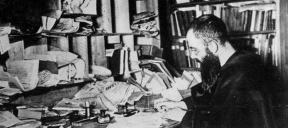
Embracing messiness: teaching disciplinary thinking in history Session 1: Embracing messiness: the case for returning to disciplinary thinking in history classrooms In recent years, disciplinary thinking has been somewhat overlooked as the 'what' of curriculum has taken the front seat for many schools. This introductory session will explain the rationale...
Embracing messiness: teaching disciplinary thinking in history Session 2: Keeping sources messy This session looks into how source work has often been too tidy in the classroom setting and the reasons behind this. It will explore a different approach to working with sources and evidence and give practical approaches to...
Embracing messiness: teaching disciplinary thinking in history Session 3: Interpretations: complexity without confusions This session delves into interpretations. It analyses how we can be both too simplistic and too complex with our approach. It will explore a different approach to interpretations and give practical approaches to exemplify what this could...
Embracing messiness: teaching disciplinary thinking in history Session 4: Historical writing This session focuses on how we can support our students to write like historians. We will explain why PEE models and other simplistic frameworks actually limit our students and instead we should look to the work of historians as...
Embracing messiness: teaching disciplinary thinking in history Session 5: Helping the past take shape with historical enquiry This session focuses into enquiry and on second order concepts. It offers practical advice to how second order concepts can be introduced in a way that is historically rigorous. We will explicitly address...

Mentoring beginning and early career history teachers in the secondary school Session 1: Developing subject knowledge This first webinar will begin with the question: What do beginning and early career history teachers need to know about history? It will explore the substantive and disciplinary subject knowledge that is essential for...
Mentoring beginning and early career history teachers in the secondary school Session 2: Supporting planning In this second webinar, Victoria and Laura model how they get beginning and early career teachers planning with a strong sense of coherence, direction and historical purpose over a sequence of lessons. Release date: Tuesday...
Mentoring beginning and early career history teachers in the secondary school Session 3: Observation and feedback In this third webinar, Laura and Victoria explore strategies for dialogic and history-specific observation and post-lesson reflection. This session will focus on how mentors can forefront historical learning in the observation cycle. Release date:...
Mentoring beginning and early career history teachers in the secondary school Session 4: Navigating sensitive, emotive and controversial histories The fourth webinar considers how to support beginning and early career history teachers to tackle more sensitive, emotive and controversial histories in the classroom, and harness the potential of their mentee...
Mentoring beginning and early career history teachers in the secondary school Session 5: 'Move Me On’ skills practice This final webinar of the series brings together the strands of mentoring through a ‘Move Me On’ style case-studies workshop, with participants tackling common mentoring quandaries together. Release date: Tuesday 22 April...
Webinar series: Meaningful and useable assessment in the secondary history classroom Session 2: Assessing the historical parts This session will explore how history teachers can isolate and assess individual components, or parts, of pupils’ historical knowledge, but without reducing this to an assessment of isolated facts. The session will include...
Webinar series: Meaningful and useable assessment in the secondary history classroom Session 3: Assessing pupils’ answers to enquiry questions This session will consider how history teachers can go about ‘marking’ pupils’ answers to enquiry questions in a way that values the pupils’ own voice and independent thinking, and avoids restricting...
Webinar series: Meaningful and useable assessment in the secondary history classroom Session 4: Assessing the historical whole This session will set out a range of tasks and questions, beyond answering an enquiry question, that require pupils to draw on the knowledge they have built cumulatively throughout the curriculum. The session...
Webinar series: Meaningful and useable assessment in the secondary history classroom Session 5: A year in assessment This session will put forward a couple of examples of what meaningful and useable assessment could look like across a school year at Key Stage 3. The session will explore the range of...
Webinar series: Meaningful and useable assessment in the secondary history classroom Session 6: A history teacher’s 'markbook' This session will consider what it might be most useful for history teachers to keep a record of over the course of a year. Every time we read pupils’ work or listen to...
Webinar series: Meaningful and useable assessment in the secondary history classroom Session 1: Invisible assessment within an enquiry This session explores the constant, routine assessment that goes on throughout the history lessons that make up a single enquiry – assessment that forms such a natural part of history teaching that...