
Filmed Talks
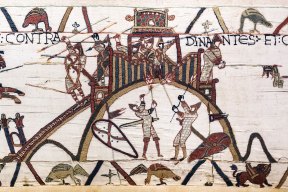
Normandy originated from a grant of land to Rollo, a Viking leader, in the early tenth century. By the end of that century Normans were to be found in southern Italy, then in Britain and, at the end of the eleventh century, in the near East on the First Crusade....
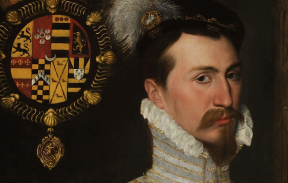
The Dudleys thrived at the court of Henry VII, but were sacrificed to the popularity of Henry VIII. Rising to prominence in the reign of Edward VI, the Dudleys lost it all by advancing Jane Grey to the throne over Mary I. That was until the reign of Elizabeth I,...
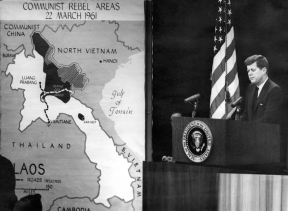
Would US President John F. Kennedy have avoided the catastrophe that became the Vietnam War if Lee Harvey Oswald had not assassinated him in Dallas on that fateful day of 22 November 1963? This question – or a version of it – has animated discussions of the Vietnam War for...
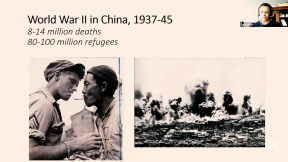
The Chinese regime never used to want to talk about their country’s experience in World War Two. The Japanese occupation of parts of China was felt to be a humiliating episode that was best forgotten, and the Communists were uncomfortable that their nationalist enemy Chiang Kai-Shek had been China’s main...
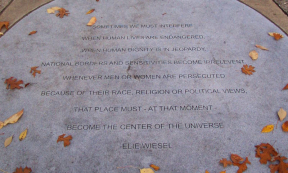
9 December 2023 was the 75th anniversary of the passing of the United Nations Convention on the Prevention and Punishment of the Crime of Genocide (known as the UN Convention on Genocide). The convention was a clear statement by the international community that crimes of that nature should never happen...
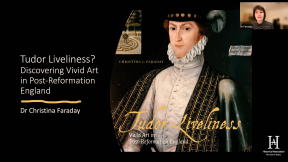
In Tudor England, artworks were often described as ‘lively’. What did this mean in a culture where naturalism was an alien concept? And in a time of religious upheaval, when the misuse of images might lure the soul to hell, how could liveliness be a good thing? In this talk...
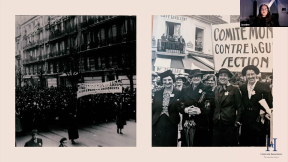
How did a group of women activists with varied ideological backgrounds construct several important campaigns against fascism in the interwar period? How did this Women's World Committee against War and Fascism (Comité Mondial des Femmes contre la Guerre et le Fascisme) undertake effective humanitarian and propaganda work and forge extensive...
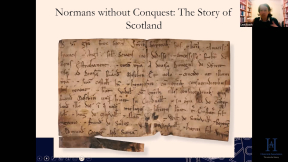
How did descendants of Viking marauders come to dominate Western Europe and the Mediterranean, from the British Isles to North Africa, and Lisbon to the Holy Land and the Middle East? In this Virtual Branch talk Levi Roach, author of Empires of the Normans, tells a tale of ambitious adventures...
The Medlicott Medal is awarded annually for outstanding services and contributions to history. This year the Medal went to renowned historian and author Professor Diarmaid MacCulloch who is currently Professor of the Church at Oxford. His 2008 book History of Christianity: the first three thousand years is the leading authority...
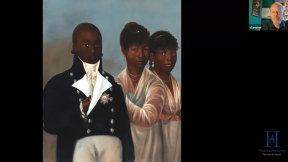
How did a man born enslaved on a plantation triumph over Napoleon's invading troops and become king of the first free black nation in the Americas? This is the forgotten, remarkable story of Henry Christophe. Christophe fought as a child soldier in the American War of Independence, before serving in...

In the 1950s, Britain fought a series of brutal wars against insurgents in the colonies of Malaya, Kenya, and Cyprus. How did people at home experience these wars? How did they learn about the use of torture and other unsettling tactics? And how did they respond to this knowledge? In...
The Mongol invasions into the Near East had a devastating effect upon many societies, sultanates, empires and kingdoms. For decades, wave after wave of armies swept across the area, defeating every army sent against them and utterly reshaping the area’s complex political ecosystem. Some powers fell in battle; some submitted...
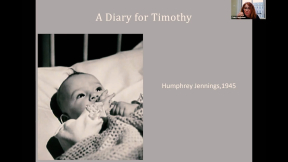
Mass-Observation is probably the most consistently useful source for the study of mid and late 20th social lives Britain. It was established in 1937 with the aim of investigating ordinary life and developing an 'anthropology of ourselves.' It used a range of different methods to collect information, from recording overheard...
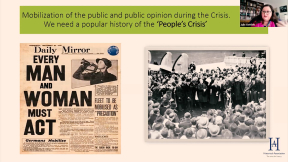
Professor Julie Gottlieb has written extensively on inter-war British political and gender history, and her more recent work has provided alternative perspectives on seemingly settled debates in the historiography of British foreign policy and the history of appeasement. Through the lens of women/gender, social history, and now psychology/emotion, she argues...
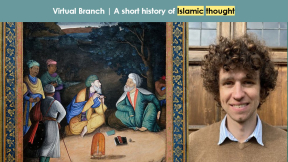
In his book of the same name, A short history of Islamic thought, Dr Fitzroy Morrissey provides a concise introduction to the origins and sources of Islamic thought, from its beginnings in the 7th century to the current moment. In this talk he explores the major ideas and introduces the...
In this first webinar about writing historical fiction, author Tony Bradman will talk about how ideas grow from reading and thinking about history. Once you have a good idea, then you need to research it properly, starting with secondary sources for context, then moving on to more specific reading. Visits...
In this second webinar in our series on writing historical fiction, author Tony Bradman talks about the actual process of writing the story, with examples. The difficulty of the first page - how to start your story with impact and make sure the reader is gripped from the first line....
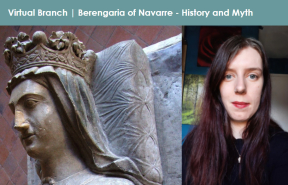
In this talk Dr Gabrielle Storey discusses the life and times of Berengaria of Navarre, queen of England, lord of Le Mans, and wife of Richard I. Berengaria of Navarre has been inaccurately labelled as the only queen never to have stepped foot in England. This talk will present new...
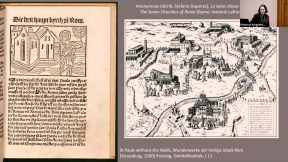
To give you a taster of the fantastic sessions on offer at the HA's annual conference, we've published one of the sessions from the 2022 HA Conference on Rome in the world/the world in Rome with Dr Lucy Donkin. In many cultures, earth has been used to represent a place...
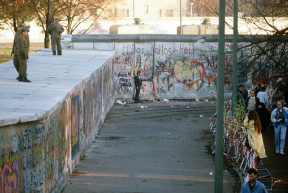
The Berlin Wall became a symbol of a time in history, and a physical defining point in an otherwise covert series of battles. To study and explore the Berlin Wall is to explore how the Cold War manifested itself in Central Europe and the impact it had on one nation...