
World
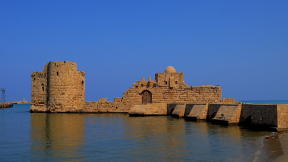
During the twelfth and thirteenth centuries the crusaders constructed tens of castles across the Middle East, some merely small watchtowers, others massive strongholds or fortress cities - but why did the crusaders place so much importance on fortifications? Nicholas Morton explores the development of this remarkable phenomenon asking key questions...
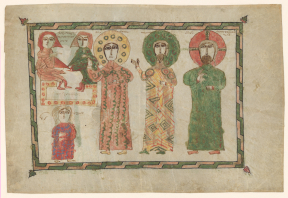
The Crusades were traditionally studied as an extension of western European history. In recent decades, however, historians have begun to study the Crusades from the perspective of Middle Eastern history, through sources left behind by local Muslims as well as Eastern Christians. This presentation will discuss this shift in the...
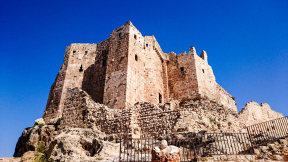
In this talk, Steve Tibble discusses the Assassins and Templars, two of history's most legendary groups. One was a Shi’ite religious sect, the other a Christian military order created to defend the Holy Land. Steve Tibble traces the history of these two groups from their origins to their ultimate destruction...
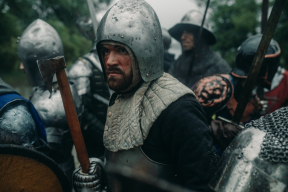
Steve Tibble explores the hidden world of crime during the Crusades, revealing how violence and lawlessness—driven largely by dislocated young men—were more central to the chaos in the Holy Land than religious conflict.
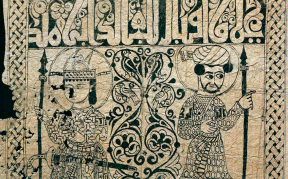
The Fatimid Caliphate also known as the Fatimid Empire, was a caliphate extant from the tenth to the twelfth centuries CE under the rule of the Fatimids, an Isma'ili Shi'a dynasty. The Fatimids traced their ancestry to the Islamic prophet Muhammad's daughter Fatima and her husband Ali, the first Shi'a...
The religious wars of the Crusades are renowned for their military engagements. But the period was witness to brutality beyond the battlefield. More so than any other medieval war zone, the Holy Land was rife with unprecedented levels of criminality and violence. In the first history of its kind, Steve...
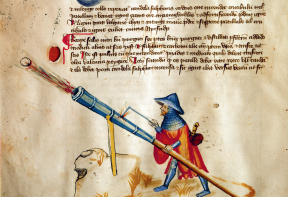
In this podcast Dr Nicholas Morton (Nottingham Trent University) discusses the role the Near East played in the development and transmission of technology and innovation during the medieval period. Dr Morton looks examines the significance of gunpowder, the navigational compass and maritime chart, and also how the changing civilisations of...
In this podcast Dr Nicholas Morton (Nottingham Trent University) provides and introduction to the fall of the Crusader states from the Fourth Crusade to the fall of Jerusalem in 1291. Dr Morton illustrates how the Crusaders were able to regain control of Jerusalem in the early 13th century but lost...
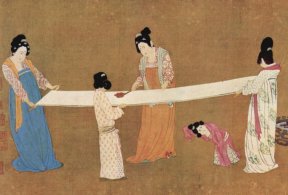
The Silk Road was a network of Eurasian trade routes active from the second century BCE until the mid-15th century. Spanning over 6,400 kilometers (4,000 miles), it played a central role in facilitating economic, cultural, political, and religious interactions between the East and West. The spice trade involved historical civilizations...
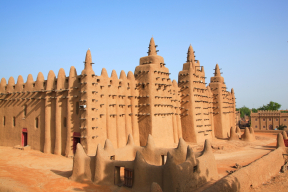
In this podcast Professor Kevin MacDonald (University College London) examines the history of the Mali Empire, discusses the importance of using both oral history and archaeology to construct this history and also reflects upon the empire’s legacy. The Mali Empire was an empire in West Africa from c. 1226 to...
The Mongol invasions into the Near East had a devastating effect upon many societies, sultanates, empires and kingdoms. For decades, wave after wave of armies swept across the area, defeating every army sent against them and utterly reshaping the area’s complex political ecosystem. Some powers fell in battle; some submitted...
In his book of the same name, A short history of Islamic thought, Dr Fitzroy Morrissey provides a concise introduction to the origins and sources of Islamic thought, from its beginnings in the 7th century to the current moment. In this talk he explores the major ideas and introduces the...
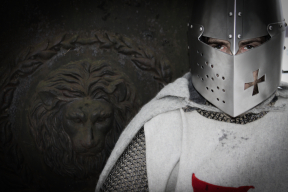
In this podcast Professor Andrew Jotischky of Royal Holloway University of London, discusses some of the key historians and interpretations of the Crusades. Professor Jotischky explores the influences and thinking that informed different historian's research, approaches and traditions and looks at how this has transformed the study and understanding of...
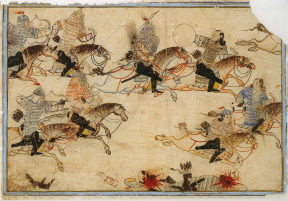
In this podcast Dr Nicholas Morton of Nottingham Trent University examines how the Mongols consolidated their vast empire, the impact of their domination on the cultures of the conquered, their defeat to the Mamluks at the Battle of Ayn Jalut and how internal disputes led to the division and disintegration...
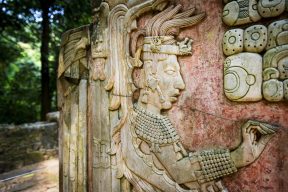
The discovery in 1952 of the tomb of King Pakal II of Palenque has been called the most important archaeological find in the history of the Americas. Protected by a magnificently sculpted stone sarcophagus depicting Pakal’s descent to the underworld and re-birth as the maize god lay the body of...
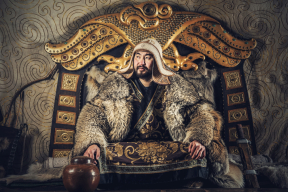
In this podcast, Dr Nicholas Morton of Nottingham Trent University, looks at the rise of Chinggis Khan and the Mongol Empire and the impact it had on the civilisations of the Near East. The podcast examines some of the themes and perspectives that he covers in his book: The Mongol...
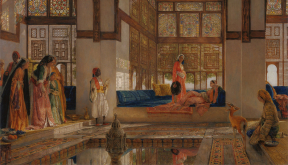
In this podcast Dr Anna Chrysostomides of Queen Mary University of London discusses some of the current research on women and gender in medieval Islam, examines the changing role and status of women in the early years of Islam and looks at the lives of some of the key historical...
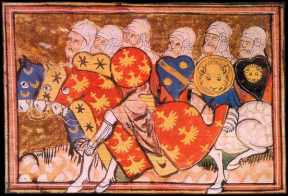
In this podcast, Professor Jonathan Phillips of Royal Holloway, University of London, provides an introduction to the Third Crusade.
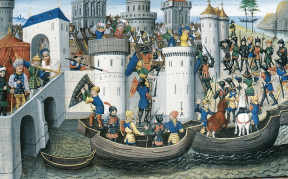
In this podcast, Professor Jonathan Phillips of Royal Holloway, University of London, provides an introduction to the Fourth Crusade.
In this podcast Dr Natasha Hodgson of Nottingham Trent University discusses the development of the Crusader States, the role and influence of the Genoa, Venice and Pisa on this development and examines the origins and significance of the Holy Military Orders. Hodgson discusses what daily life was like and the...