
Enquiries
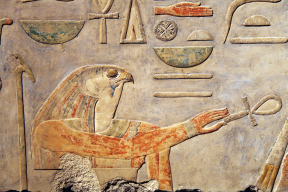
I will be honest – no child has actually asked me if the world was ever full of Ancient Egyptians! Having said that, by focusing on one part of the world, children are left with either this impression or the idea that nothing was happening elsewhere in the world. Clearly,...
The University of Chichester’s three-year BA (Hons) Degree for Primary Education and Teaching involves learning how to provide rigorous and creative educational opportunities for children. The course involves one creativity module each year. The final one involves the development of skills and confidence in creating problem-solving. Four of us were...
The recent survey of history teaching in primary schools conducted by the Historical Association revealed that the majority of respondents felt that they were short of resources to teach the revised National Curriculum. Not surprisingly most schools look to find resources that do the job cheaply. It is a truism...
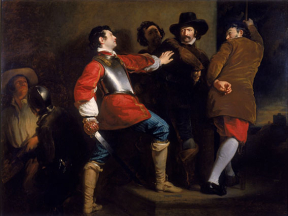
Events which encapsulate family, community, national and global history provide rich opportunities for engaging children. Some of these draw on positive memories associated with past events: the coronation of Queen Elizabeth II, how people responded to the first flight to the moon, the Millennium celebrations. Yet it is perhaps gruelling...
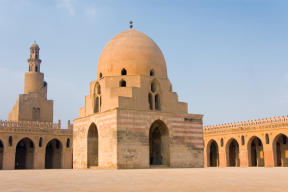
The Primary National Curriculum pinpoints Early Islamic Civilisation as Baghdad c. AD 900 - yet it was so much more. For approximately a thousand years after AD 700 there was an extraordinary amount of activity that radiated out from Baghdad and along a glittering crescent through North Africa and into...

The new (2014) Primary History National Curriculum is finally upon us. The first thing you might notice is that the level descriptions have gone. These were first introduced in 1995 and became the mainstay for assessing pupil progression and attainment in Key Stages 1, 2 and 3 across schools in...

The Vikings will be familiar territory to many primary teachers. For many, therefore, this section of the history curriculum should cause fewer headaches than others. This does not mean, however, that it is all straightforward. This article contains a number of elements that teachers might welcome including a timeline of...

Place-names, such as house or school names, are infinite in number and all around us. Every place-name may convey a message about the place. Often place-names record and celebrate local and national people, events and incidents, define what a place looked like in the past and how we used to...
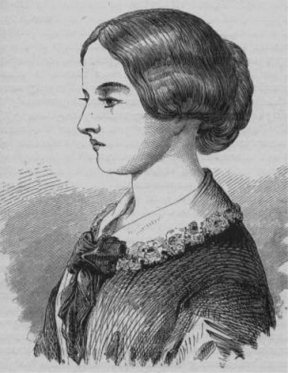
Co-ordinators concerns: OFSTED, primary history and creativity I'm told the emphasis in schools now is for a rigorous approach to history where the children are taught the main facts and features of history. I recall a time not so long ago when the whole curriculum was about creativity but surely...
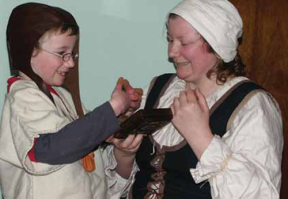
Editorial note: The role of ICT in the Digital Age is a major, perhaps even, the major factor, in enhancing creativity in the learning and teaching of history. This paper illuminates another dimension of ICT in the Digital Age and creativity. It shows how a teacher's creativity has produced a...
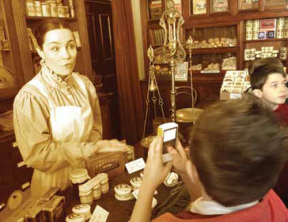
How do we engage young people with their Heritage, answer curriculum needs and make that big leap of transition from primary to secondary school that bit easier? English Heritage's Geosong treasure hunt website went some way to providing answers. What does the website do? Using handheld GPS devices, groups must...
Please note: this article pre-dates the 2014 National Curriculum and some content may be outdated. The Nearly Complete History Of Almost Everything outlines the chronology of various aspects of our lives, and gives a flavour of the enormity at first glanceof ‘teaching chronology'. Topics, which are not tied to a...
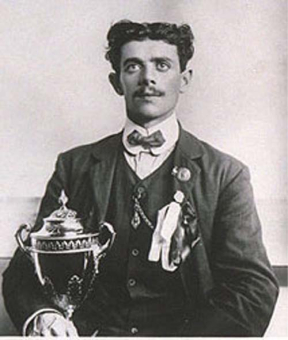
Please note: this article pre-dates the 2014 National Curriculum and some content may be outdated. The Italian confectioner Dorando Pietri is one of the most famous figures from the 1908 Olympics - famous for not winning. His story raises issues of sportsmanship suitable for class discussion. There are detailed accounts...