

In conversation with David Turner
Historian feature
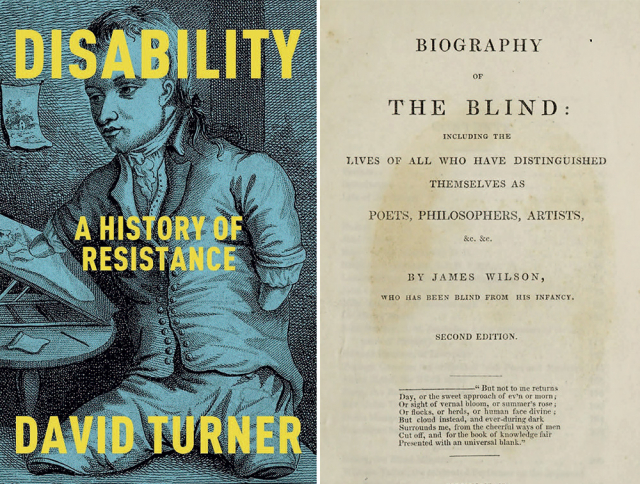
Disabled people have always been present in Britain’s past. Yet they have often appeared only at the edge of historical narratives: as recipients of charity, as objects of medical attention, as casualties of war or work, or as figures in stories told by institutions rather than by themselves. In Disability: A History of Resistance (The Bodley Head, 2026), David Turner asks what happens when disabled people are placed at the centre of British history instead. The result is not a simple story of suffering, welfare, or progress. It is a wide-ranging history of presence, work, creativity, suspicion, support, exclusion, self-representation, and resistance.
Spanning more than five centuries, Turner’s book moves from early modern poor-law petitions and parish disputes to industrial injury, blind writers and workers, educational exclusion, modern activism, and the long struggle for civil rights. It shows disabled people negotiating with local officials, challenging assumptions about dependency, forming collective identities, and insisting that their lives be understood as part of ordinary social, political, and cultural life. Carolin Gluchowski, from The Historian’s editorial board, spoke with David Turner about why disability history matters now, how disabled people can be found in familiar archives, and why resistance has a much longer history than is usually assumed...
This resource is FREE to all registered users of the website
If you are not already registered you can sign up for FREE Basic Website Access or Join the HA to access this content.