
Latest
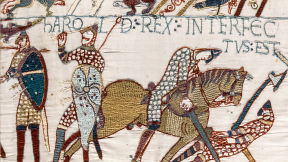
A webinar for pupils, students and teachers – join live. Register here 1066 is one of the most famous dates in British history and the Bayeux tapestry is the historic equivalent of an epic cartoon created to tell the story of the build-up, the battle, and the immediate aftermath. Every...
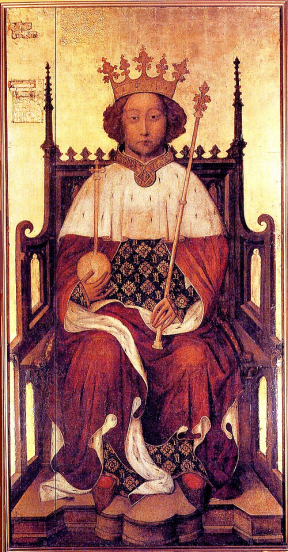
We’re delighted to announce a special addition to the Historical Association Conference 2027 programme: a Friday evening visit to the Royal Shakespeare Company in Stratford-upon-Avon. Conference delegates will have the opportunity to see Elizabeth Debicki take on the title role in Richard II, directed by Daniel Raggett. Exploring power, conspiracy...
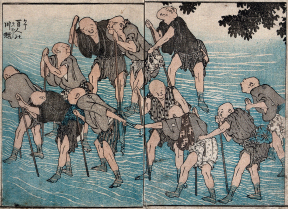
People with disabilities are frequently written out of history, not present or included. Yet we know that disabilities, both visible and non-visible, are natural occurrences across society. The theme for Disability History Month 2026 is 'Disability, Politics and Democracy' which highlights the fact that the history of marginalisation of those...
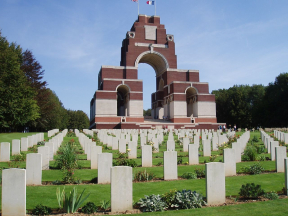
People and the natural world are continuously evolving, with every generation experiencing changes and challenges. Those challenges can be in many different forms but throughout history one factor that continually challenges generations has been war and conflict. These have led to population changes and stresses, environmental changes and damage, and...

In the Curriculum and Assessment review, the importance of oracy has been highlighted and strengthened across all subjects. However, this can lead to generic approaches. In this film in partnership with the English Association, we examine oracy in both subjects, looking at what where there is common ground and what...
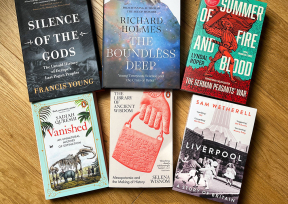
Spanning nearly 3000 years of history, each of these six exceptional books sheds light on how societies are brought together – or driven apart – in the wake of profound change. Celebrating books that combine excellent research with readability, the books shortlisted for the Wolfson History Prize 2026 are: The...
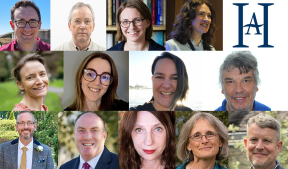
We are delighted to announce the Honorary Fellows for 2026. Each year the Historical Association awards Honorary Fellowships to a small group of people. These awards are to recognise and celebrate outstanding services to history and to the Historical Association. The awards cover services to the Historical Association Branches (of...
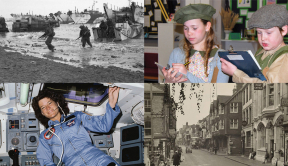
Researching, writing and presenting ideas about a historical theme or period are skills that can support a young person’s educational development and personal wellbeing throughout their formal education journey. The Historical Association (led by the Mid-Trent and Mercia HA Branch) in collaboration with the Spirit of Normandy Trust has organised...

Telling a story about the events, peoples and places of the past is one of the oldest forms of creating an historical legacy. Those stories help to reveal as well as enrich the past, creating a place for investigation as well as fascination. That is why we want to harness...
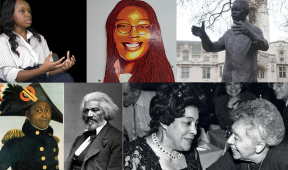
October 2026 marks 39 years since the first Black History Month was celebrated in the UK. In this time, it has evolved from early efforts to highlight the achievements and contributions of Black people throughout history, to become an integral part of the year in both public history and history...
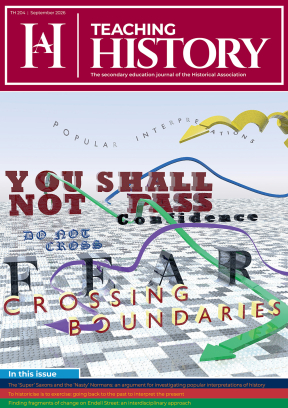
Read Teaching History 204: Crossing Boundaries Boundaries take many shapes and forms, from lines to walls to marks on a map. Some are hard and some are permeable. As history teachers we are used to teaching and raising questions around boundaries, whether geographical borders or delineators of time. We also...

Move Me On is designed to build critical, informed debate about the character of teacher training, teacher education and professional development. It is also designed to offer practical help to all involved in training new history teachers. Each issue presents a situation in initial teacher education/training with an emphasis upon...
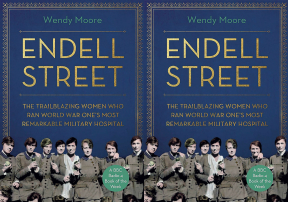
Gemma Hargraves saw a history book recommended on social media and looked it up. Within the first pages she realised this was a book she needed to share with her students due to the positive female role models and other resonant themes. This article outlines a short sequence of lessons...
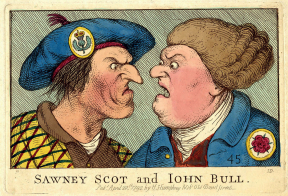
The simple answer is that historians are arguing about what it is that they are arguing about. Linda Colley’s profoundly influential Britons, 1707-1832: forging a nation, published in 1992, illustrates the point. Beginning with the parliamentary union of England and Scotland in 1707, the book links the emergence of British...
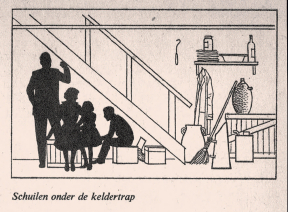
Mila Bammens and Bjorn Wansink were concerned about young people’s reactions to recent nuclear threats. In the second part of this article they set out a series of approaches and resources, used with young people in the Netherlands, to teach about nuclear weapons. The first part of the article sets...
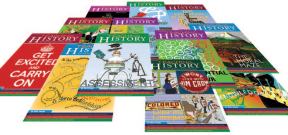
What's the Wisdom On... is a short guide providing new history teachers with an overview of the ‘story so far’ of practice-based professional thinking about a particular aspect of history teaching. It draws on tried and tested approaches arising from teachers with years of experimenting, researching, practising, writing and debating...

The idea that history is constructed can be a difficult concept for pupils to grasp, yet it is foundational to disciplinary understanding and crucial if pupils are to understand both the relevance of history and the responsibility of the historian. When asked about the nature of history, many of my...
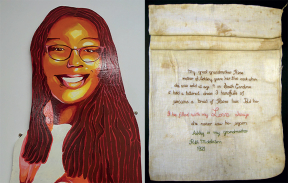
An enslaved mother faces permanent separation from her nine-year-old daughter who is to be sold. She hurriedly places some items in a sack – a lock of her own hair, some pecan nuts, a tattered dress. The daughter, Ashley, keeps the sack and passes on its story to her children....
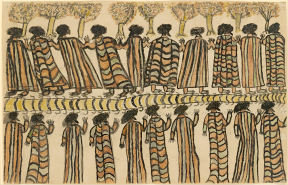
Migration and Empire 1830–1939 is the most popular topic studied for the Scottish Higher qualification. The course specification directs that students should be taught about the impact of Scots emigrants on the British Empire. Marking instructions and classroom practice, however, had historically emphasised the ‘contribution’ of Scots to the empire,...
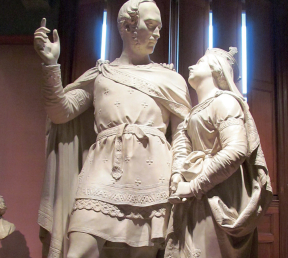
In this article Jane Card outlines the changing popular interpretations of one of the most familiar events in British history, the Norman Conquest. She makes the case for using visual and literary interpretations of the Conquest to engage pupils with thinking about the eleventh century, the subsequent centuries in which...