
Search results
Found 44 results matching “2025” in Primary
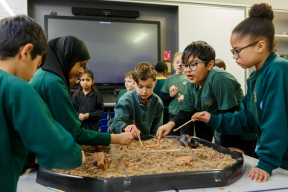
Building and securing disciplinary thinking in primary history Session 5: Helping children build secure evidential thinking Handling sources is something all children learn to do in Key Stage 2 history, but often that crucial distinction between ‘source’ and ‘evidence’ is confused. No archaeologist digs up ‘evidence’. And labelling sources as...

This webinar will guide teachers on how to devise rigorous historical enquiry questions, how to spot and weed out weak ones, and how to sequence them in an effective way across medium-term plans. It will show how disciplinary concepts can be revisited and pupils supported in the careful accumulation of...
P
Primary Resource

Avoiding confusion and challenging misconceptions in primary history Session 2: Avoiding confusion with cause and consequence in primary history This practical webinar will identify what confuses pupils in the teaching of the disciplinary concept of cause and consequence and will show how such confusion and misconceptions can be avoided and...
Avoiding confusion and challenging misconceptions in primary history Session 3: Avoiding confusion with historical interpretations in primary history This practical webinar will identify what confuses pupils in the teaching of the disciplinary concept of historical interpretations and will show how such confusion and misconceptions can be avoided and challenged. Examples...
Avoiding confusion and challenging misconceptions in primary history Session 4: Avoiding confusion with significance in primary history This practical webinar will identify what confuses pupils in the teaching of the disciplinary concept of historical significance and will show how such confusion and misconceptions can be avoided and challenged. Examples of...
Avoiding confusion and challenging misconceptions in primary history Session 5: Supporting pupils in reaching independent conclusions in primary history This practical webinar will demonstrate how people can be supported in, reaching their own independent conclusions about the history, they are studying. It will suggest a number of careful ways of...
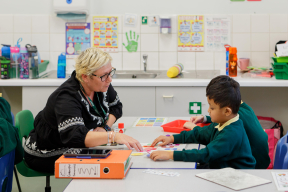
This webinar series will support your teaching of ‘past and present’ at the Early Years Foundation Stage. It will help you to make sense of curriculum frameworks in EYFS, consider what makes effective pedagogy at EYFS, and develop curriculum coherence and transition to Key Stage 1. How is the series...
Building and securing disciplinary thinking in primary history Session 1: How does good storytelling serve disciplinary thinking? Why is storytelling so crucial to the journey of the lesson? How does powerful storytelling make knowledge memorable meaningful? How can I get better at storytelling? How does storytelling help children wrestle with...
P
Primary Resource
Webinar series: Avoiding confusion and challenging misconceptions in primary history Session 1: Avoiding confusion with chronology and change in primary history This practical webinar will identify what confuses pupils in the teaching of chronology and the disciplinary concept of change and continuity and will show how such confusion and misconceptions...
P
Primary Resource
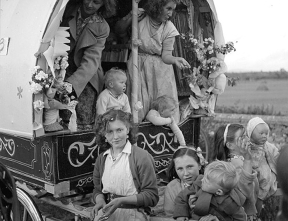
Gypsy, Roma and Traveller people are the largest minority ethnic group in some communities (and therefore in some schools) in the UK. Yet the past of Gypsy, Roma, Traveller people may rarely be part of history lessons. The result is that pupils of Gypsy, Roma and Traveller heritage may not...
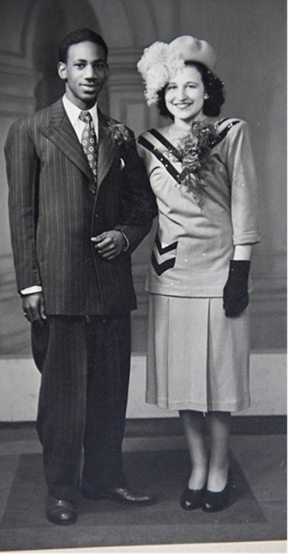
What does this series cover? This series covers the sometimes hidden and controversial history of how the RAF has recruited and treated its black service personnel over time, particularly from the British Caribbean from 1918 onwards. Using newly researched evidence from surviving black RAF veterans of the West Midlands it...
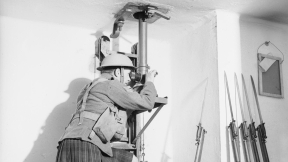
Why did the the Maginot Line – that marvel of 1930s engineering with its miles of fortifications and bunkers to deter German invasion – fail so spectacularly in 1940? Its vast underground forts were designed to withstand artillery and chemical attack, yet France fell in just six weeks, leaving the...
M
Member Resource

Please note: entries for this year’s competition have now closed. Winners will be announced by the end of October 2026. Each year we are so impressed by the ever-increasing number and standard of entries we receive around such a wide range of historical periods and settings. You can take a...
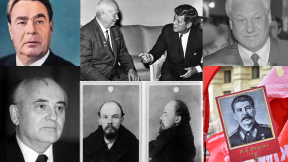
How much of what Russia is today, how its people behave, and how they are perceived is dependent on its history and those that have led it? Was it the first melting pot of the world? Do its broad range of cultural traditions and diversity play a part in its...

Secondary: GCSE history changes affecting KS3 students Recent findings from the Historical Association’s Annual Survey into History Teaching in English Secondary Schools, suggests that – despite the best intentions – changes to GCSE history are seriously affecting the amount of time given to history lessons at Key Stage 3. The...
Please note: entries for this year's competition have now closed. Following the success of our Great Debate competition for secondary students and the successful launch of our sister primary public speaking competition, we are pleased to announce that applications for our third Talking History competition for pupils in years 5...
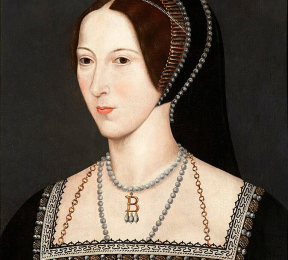
Real history contains some of the most fanciful, exciting, worrying and incredible stories – learning about the past can open our eyes to how people have interacted with the world and each other for centuries. It is not surprising that alongside the real history most cultures and traditions have a...
Spirit of Normandy Trust Senior Vivaan Davda – The Cathedral and John Connon School, Mumbai Spirit of Normandy Trust Key Stage 3 Joshua Broadbent – Royal Grammar School, Guildford Spirit of Normandy Trust Primary Salisbury Cathedral School Best School History Magazine [sponsored by the Mid-Trent and Mercia Branch] St Alban’s...
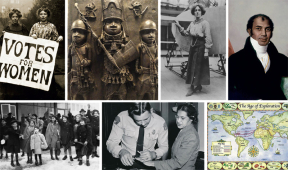
There has been much emphasis on ensuring that we teach a balanced history curriculum which reflects diversity. Teachers often ask the Historical Association where they can get their ideas and find examples of good practice. From the start, the journal Primary History has addressed the many strands of a diverse...