
Past event resources
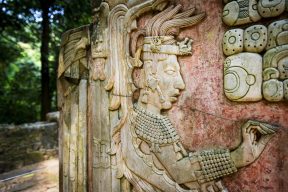
The discovery in 1952 of the tomb of King Pakal II of Palenque has been called the most important archaeological find in the history of the Americas. Protected by a magnificently sculpted stone sarcophagus depicting Pakal’s descent to the underworld and re-birth as the maize god lay the body of...
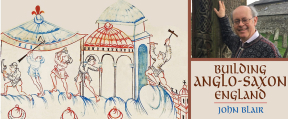
Building Anglo-Saxon England demonstrates how recent excavations enable us to grasp for the first time the diversity of the Anglo-Saxon built environment. The book explores how the natural landscape was modified for human activity, and how settlements were laid out with geometrical precision by specialist surveyors. It also shows how...
Dr Zbigniew Wojnowski is a historian based at the University of Oxford. He specialises in the history of the Cold War and is particularly interested in the history of Soviet social, cultural, and political interactions with Eastern Europe after 1945. In 2017, he published a book entitled The Near Abroad:...
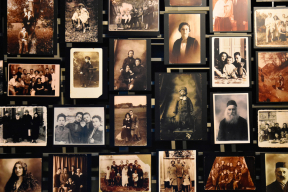
To choose to act, to have no choice to be who you are, to live an ordinary life in extraordinary times? These are all questions that the Holocaust raises. Millions of people became victims of the Nazis, millions more choose not to act to stop the events around them, felt...
As British and Irish migrants sought new lives in the Caribbean, Asia, North America and Australasia, they left a trail of physical remains where settlement occurred. Between the 17th and 20th centuries, gravestones and elaborate epitaphs documented identity and attachment to both their old and new worlds. In this Virtual...
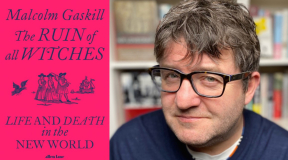
Professor Malcom Gaskill joined the HA Virtual Branch on Thursday 10 December 2022 to discuss the subject of his book, The Ruin of all Witches, Life and Death in the New World, which was shortlisted for the Wolfson History Prize in 2022. His research explores the attitudes, beliefs and treatment...
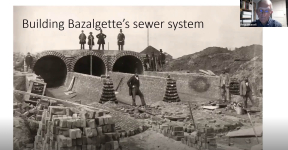
In this HA Virtual Branch talk Peter Hounsell drew on his recently published book Bricks of Victorian London, exploring the crucial role brick production played in the creation of Britain's capital and why the important place of bricks in the fabric of the city isn't always obvious. Peter Hounsell has...
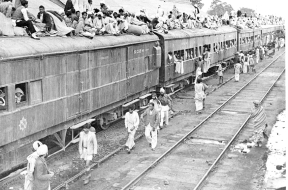
August 2022 marks 75 years since British India was divided at independence into two separate states: India and Pakistan (the latter including today’s Bangladesh). As with the 70th commemoration in 2017, this anniversary will trigger a great deal of collective remembering in Britain just as in South Asia itself. Freedom...
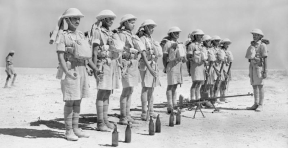
Two-and-a-half million men from undivided India served the British during the Second World War. Their experiences are little remembered today, neither in the West where a Euro/US-centric memory of the war dominates, nor in South Asia, which privileges nationalist histories of independence from the British Empire. What was it like...
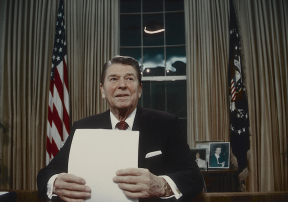
The 1980s are often viewed as marking the repudiation of the political order marked by the New Deal and the 1960s, both periods of enormous social, political, and cultural change. Yet the decade symbolised by President Ronald Reagan, far from being a period of triumphant conservative counterrevolution, was a period...
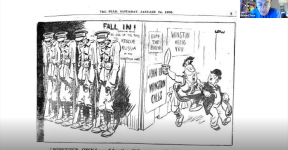
In this HA Virtual Branch talk Professor Richard Toye explores Churchill’s response to the USSR and how his actions during the early Cold War years intersected with his views of traditional Anglo-Russian tensions and the legacy of the ‘Great Game’. Richard Toye is Professor of Modern History at the University...
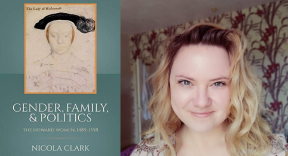
Every queen had ladies-in-waiting. Her confidantes and chaperones, they are the forgotten agents of the Tudor court. Experts at survival, negotiating the competing demands of their families and their queen, the ladies-in-waiting of Henry VIII’s wives were far more than decorative ‘extras’: they were serious political players who changed the...
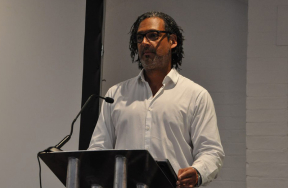
Professor David Olusoga is a revered TV historian, a writer and a practising academic at Manchester University. In 2022 he was the recipient of the Historical Association's annual Medlicott medal, awarded for outstanding contributions to history. The recipient of the medal provides the closing lecture of the HA's annual awards...
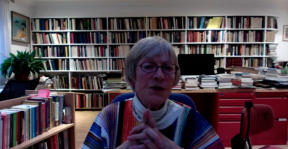
Ravenna was the capital of the Western Roman Empire from 402 CE until 751 CE, then later, the capital of the immense kingdom of Theoderic the Goth and finally the centre of Byzantine power in Italy. In this talk Professor Judith Herrin explores the history of the city, its peoples...
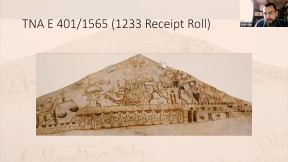
In 1242, the prominent thirteenth-century Jewish financier David of Oxford attempted to divorce his wife, Muriel. In the process, he met with a number of obstacles which seriously hampered his efforts and had far-reaching implications for the Jewish community as a whole. In the end, David had to appeal directly...
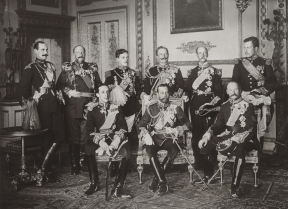
In the lead-up to the Queen's Platinum Jubilee, Dr Bob Morris joined the HA Virtual Branch in March 2022 to consider why the monarchy has survived in Europe. Dr R. M. (Bob) Morris is a Senior Honorary Research Associate at the Constitution Unit, University College London. He was formerly a...
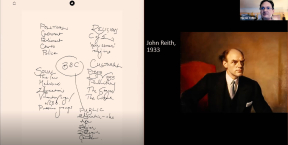
In the centenary year of the BBC, this Virtual Branch talk from Marcus Collins relates the strange tale of how the BBC did and did not broadcast about homosexuality in the 1950s and 1960s and what it tells us about sexuality, broadcasting and the origins of permissiveness in mid-twentieth century...
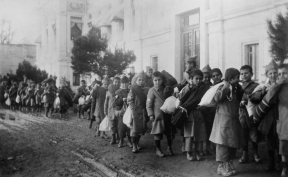
Why is the term 'Armenian Genocide' controversial, with many countries still not acknowledging a genocide at all? What do we know about the event of 1915 and the plight of the Armenian community in Turkey? How can we grapple with a history that many people want to forget? In this...
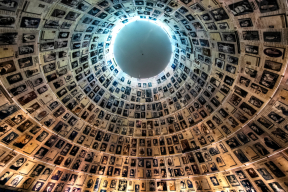
This year's Holocaust Memorial Day the theme is 'One Day'. In this webinar with historian Paula Kitching, we will use the one day Wannsee Conference of January 1942 to help explore the actions of the perpetrators, the Holocaust victims and how decision making by people can lead to genocide. This...
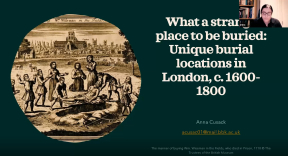
Anna Cusack joined the HA Virtual Branch to discuss unique burial locations in London c.1600-1800. Anna recently completed a PhD at Birkbeck, University of London on the marginal dead of seventeenth and eighteenth-century London, focusing specifically on suicides, executed criminals, Quakers, and Jews and the treatment of their bodily remains...