
Britain & Ireland
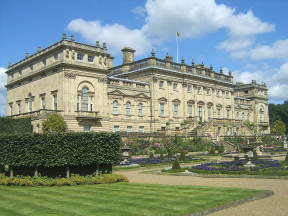
What really paid for the ballgowns, portraits and country estates of Georgian Britain? Historian Miranda Kaufmann peels back the polished veneer of Britain’s heiresses to reveal fortunes forged in Caribbean slavery. Beneath the elegance of marriage markets and inheritance battles lies a darker story of exploitation, empire and human resilience....
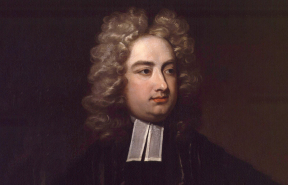
In Episode 12, Professor Michael Brown of the University of Aberdeen discusses who held power in Ireland in 1714 and how the protestant ascendancy developed following the fall of James II and the rise of the Hanoverian dynasty. This is a period increasingly defined by the exclusion of Ireland’s Catholic...
In Episode 11, Dr Mary Jo MacDonald of the University of Jyväskylä explores how the end of the Licensing Act, sweeping political change, and a revolution in intellectual culture opened unprecedented opportunities for women to shape political, social, and intellectual life in Britain and Ireland. The film highlights major proto‑feminist...
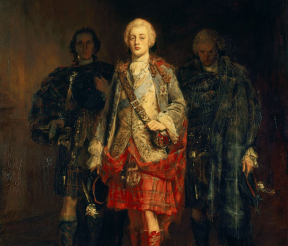
In Episode 9, Professor Alison Cathcart (University of Stirling) discusses who held power in Scotland in 1714 and how the Union with England, together with the arrival of the Hanoverian dynasty, transformed the nation. She examines the central role of the Church of Scotland, the influence of the Royal Burghs,...
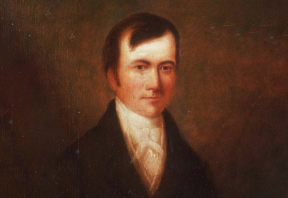
In Episode 9, Dr Eryn White (Aberystwyth University) discusses who had power in Wales in 1714, the changing relationship between Wales and the wider United Kingdom and the key developments that took place in Wales between 1714-1785. Dr White reflects upon the rapid expansion of print and literacy in Wales...
Ym Mhennod 9, mae Dr Eryn White (Prifysgol Aberystwyth) yn trafod pwy oedd mewn grym yng Nghymru ym 1714, y berthynas newidiol rhwng Cymru a'r Deyrnas Unedig ehangach a'r datblygiadau allweddol a ddigwyddodd yng Nghymru rhwng 1714-1785. Mae Dr White yn myfyrio ar ehangu cyflym print a llythrennedd yng Nghymru...
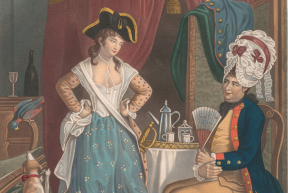
In episode 10, Dr Declan Kavanagh (University of Kent), reflects on Queer British history 1714-1785. Dr Kavanagh looks at the history of the language of LGBTQ+, in particular the term ‘queer’ in its very recent usage and how the language of descriptors for these communities has been influenced. Dr Kavanagh...
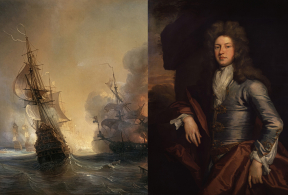
In Episode 5, Professor Anne Murphy (University of Portsmouth) examines the development of finance in Britain and Ireland, from the emergence of the Bank of England during the Nine Years’ War into a system that would facilitate the growth of the British Empire and Britain’s Industrial Revolution. During this period...
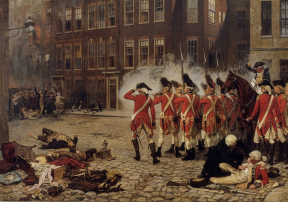
In Episode 7, Professor Carl Griffin (University of Sussex) discusses the changing landscape of England as enclosure accelerates, transforming the social dynamics of the countryside as peasants become wage labourers and their rights to use the ‘common land’ is diminished. Professor Griffin reflects on this period of protest over enclosure,...
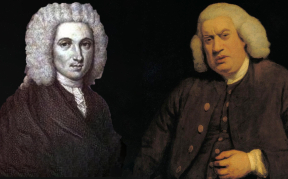
In Episode 6, Dr Declan Kavanagh (University of Kent) discusses the development of ideas around, and responses to, disability in Britain and Ireland in the 18th century. Dr Kavanagh examines the definition given in Samuel Johnson’s Dictionary in 1755 and looks at the medical and charity models of responding to...
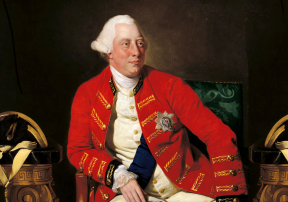
In Episode 1, Dr Robin Eagles (History of Parliament), discusses the development of power and freedom in Britain and Ireland from the reign of Queen Anne to the beginning of the Georgian Age. This was a period of strict hierarchy where the monarchy and aristocracy retained significant control over both...
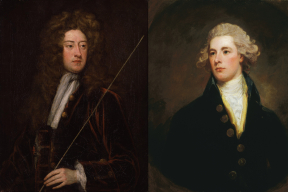
In Episode 2, Dr Robin Eagles (History of Parliament), examines the birth of Britain’s two party system in the form of the Whigs and the Tories; two parties, whose rivalry would define politics in Britain from the Restoration and Glorious Revolution to the middle of the Victorian Age. During this...
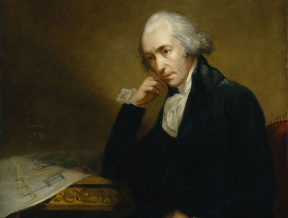
The 18th century represents a pivotal moment bridging early modern Britain with the social, economic and technological transformations of the Industrial Revolution. In Episode 3, Professor Emma Griffin (Queen Mary University of London), explores this period of invention, innovation and entrepreneurialism, how it affected ordinary families, and its role in...
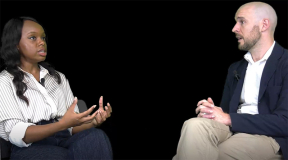
In Episode 4, Dr Montaz Marché (University College London) and Professor Ryan Hanley (University of Exeter), discuss the lives and experience of 18th century Black Britons. In this discussion they look at the lives of both the exceptional and the ordinary, and reflect upon the politics of race and gender...
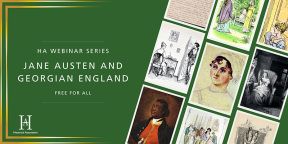
Join us for a journey through Georgian history, literature and society – all from the comfort of your own home. Celebrating the 250th anniversary of Jane Austen's birth, this rich, interdisciplinary webinar series from the Historical Association delves into the vibrant world of the Georgians through the lens of one...
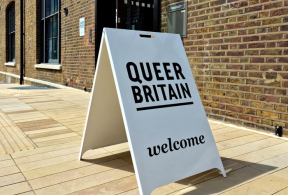
In this podcast Dr Samantha Knapton of Nottingham University and Jennifer Shearman of Queer Britain explain how their work has come together to reveal and present the hidden history of LGBTQ+ lives across Britian and beyond. Queer Britain is the UK’s first museum dedicated to the LGBTQ+ community and its...
Red Lion Square was long one of London's most genteel addresses, home to nobles, scholars, and professionals. But on 25 March 1818, one house on the south side opened its doors to quite another class of person, as the Mendicity Society began its business. Set up to solve the growing...
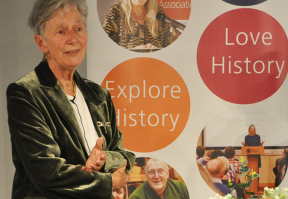
Addressing issues of the legacies of racism created by the transatlantic slave trade and the narratives of its abolition The Medlicott Medal is awarded annually for outstanding services and contributions to history. This year the Medal went to Professor Catherine Hall, who is Emerita Professor of Modern British Social and...
In this series of filmed interviews, Professor Matt Cook, who has the Jonathan Cooper Chair of the History of Sexuality, Mansfield College, University of Oxford, addresses some of the key questions currently on the agenda around LGBTQ+ rights, language and politics. In many of the sections he explores his own...
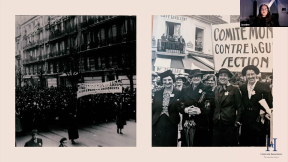
How did a group of women activists with varied ideological backgrounds construct several important campaigns against fascism in the interwar period? How did this Women's World Committee against War and Fascism (Comité Mondial des Femmes contre la Guerre et le Fascisme) undertake effective humanitarian and propaganda work and forge extensive...