
World
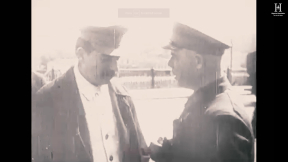
Joseph Stalin was born Joseph Besarionis dze Jughashvili in 1878 into a poor family in Gori, Georgia, part of the then Russian Empire. Stalin attended the Tbilisi Spiritual Seminary while his own radicalism grew, before joining the Marxist Russian Social Democratic Labour Party. He edited the party's newspaper, Pravda, and...
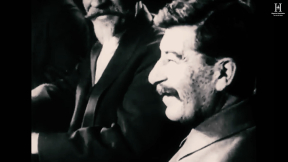
In this film, Professor James Harris (University of Leeds) discusses how interpretations have changed over the years regarding Stalin’s rise to power, and his transformation from rural Georgian to the ‘Man of Steel’ – Stalin. For many years, western interpretations were strongly influenced by his rival Trotsky, who defined Stalin...
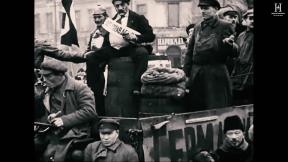
In this film, Professor James Harris (University of Leeds) examines how the New Economic Policy transformed the Soviet economy after the civil war, and looks at Stalin’s central role in that recovery. Key during that period was Stalin’s dispute with Nikolai Bukharin and the Great Break, and the drive to...
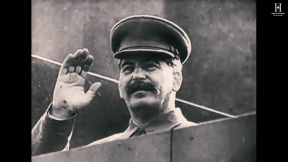
Why was the Soviet Union so violent in the 1930s? In this film, Professor James Harris (University of Leeds) looks at differing interpretations of the origins of the Great Terror; was it the story of one man trying to obtain total control, was it a result of collective frustration against...
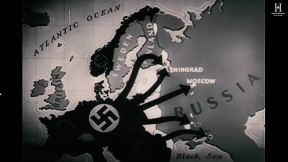
In this film, Professor James Harris (University of Leeds) examines Stalin and the Soviet preparations for global war. The reasons why Stalin agreed the Nazi-Soviet pact are explored as are Stalin’s response to invasion in 1941. Professor Harris addresses the impact the war had on the USSR and how that...
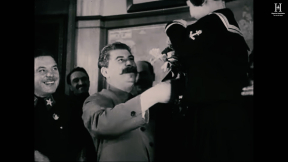
In this film, Professor James Harris (University of Leeds) reflects upon how historical interpretations of Stalin have changed over time. Stalin’s legacy and influence continues to materialise in all subsequent Soviet and Russian administrations. The Man of Steel is used by politicians when they are looking for arguments to open...
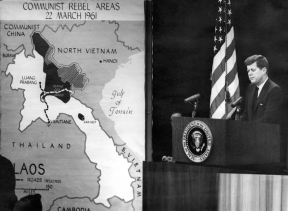
Would US President John F. Kennedy have avoided the catastrophe that became the Vietnam War if Lee Harvey Oswald had not assassinated him in Dallas on that fateful day of 22 November 1963? This question – or a version of it – has animated discussions of the Vietnam War for...
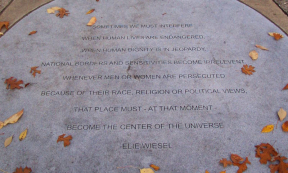
9 December 2023 was the 75th anniversary of the passing of the United Nations Convention on the Prevention and Punishment of the Crime of Genocide (known as the UN Convention on Genocide). The convention was a clear statement by the international community that crimes of that nature should never happen...
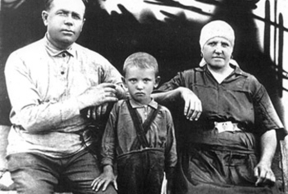
Emeritus Professor Archie Brown of the University of Oxford discusses Mikhail Gorbachev's early life and the influence it had on his later life and thinking. Mikhail Gorbachev was born to a poor peasant family of Russian and Ukrainian heritage in 1931. Badly affected by both the famine of 1930-33 and...
Emeritus Professor Archie Brown explains how Mikhail Gorbachev became the leader of the Soviet Union in 1985 and describes the domestic and international situation the USSR found itself in at this point of the Cold War. He discusses Gorbachev's political and economic agenda and priorities, looks at the support and...
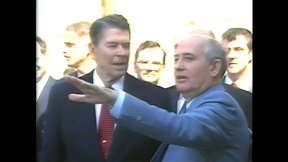
Professor Archie Brown discusses how Gorbachev fundamentally reformed Soviet foreign policy, redefined relations with the West, fostered closer personal relationships with former adversaries and how he transformed the Cold War world. He examines Gorbachev's policy towards Eastern Europe and the fall of the Iron Curtain, and looks at how his...
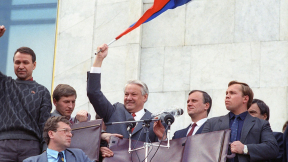
Professor Archie Brown looks at the forces that led to Gorbachev's eventual downfall. He also examines the coup in 1991, the rise of Boris Yeltsin and the subsequent breakup of the Soviet Union. This film is part of our film series that looks at Russian history through the lens of...
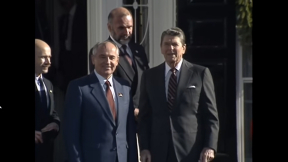
Mikhail Gorbachev’s leadership and period in office is remembered differently in different parts of the world. Professor Archie Brown discusses the different interpretations the have developed in the West and in Russia to Gorbachev and his legacy. He describes the impact and development of Post-Soviet Russia and how this has...
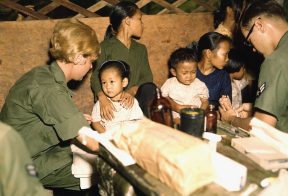
The Vietnam War was one of many conflicts born partly out of the tumultuous global shift of the end of European Empires for which the Second World War had acted as a catalyst. What marked the Vietnam War out from some of the other political changes in the Indo-Chinese and...
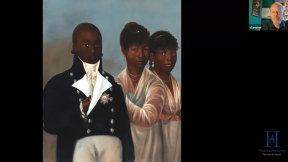
How did a man born enslaved on a plantation triumph over Napoleon's invading troops and become king of the first free black nation in the Americas? This is the forgotten, remarkable story of Henry Christophe. Christophe fought as a child soldier in the American War of Independence, before serving in...
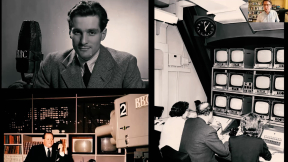
In the 1950s, Britain fought a series of brutal wars against insurgents in the colonies of Malaya, Kenya, and Cyprus. How did people at home experience these wars? How did they learn about the use of torture and other unsettling tactics? And how did they respond to this knowledge? In...
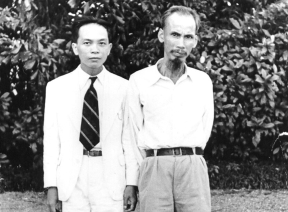
French Indochina, officially known as the Indochinese Union, was a grouping of French colonial territories in Southeast Asia until its demise in 1954. It comprised Cambodia, Laos (from 1899), the Chinese territory of Guangzhouwan (from 1898 until 1945), and the Vietnamese regions of Tonkin in the north, Annam in the...
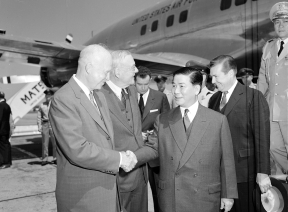
In July 1954, France and the Viet Minh signed the Geneva Peace Accord, which resulted in dividing Vietnam along the 17th parallel into a northern section, under the control of the communists, led by Ho Chi Minh, and a southern section, led by the Catholic anticommunist Ngô Đình Diệm who...
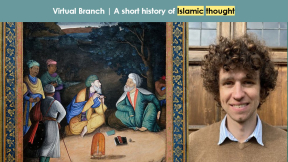
In his book of the same name, A short history of Islamic thought, Dr Fitzroy Morrissey provides a concise introduction to the origins and sources of Islamic thought, from its beginnings in the 7th century to the current moment. In this talk he explores the major ideas and introduces the...
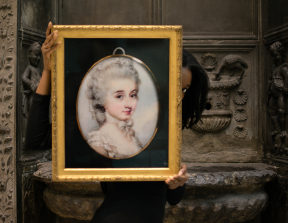
There is a great deal of discussion at the moment about how we engage with and confront the history and legacies of slavery in twenty-first century Britain. A lot of attention has been placed on men like slave trader Edward Colston or merchant and slave-owner Robert Milligan, both of whom...