
Whole School
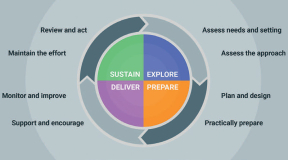
In this useful article, Matt Flynn uses the Education Endowment Foundation implementation process (2024) to exemplify how history subject leaders can affect positive whole school change and develop their history provision in line with their school’s needs. He shares the process through a developed example, providing an excellent scaffold that...
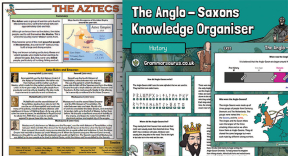
There has been much emphasis on pupils having a rich knowledge and this has led to many schools devising knowledge lists and knowledge organisers. This article argues that is a valuable element in a good history curriculum in primary schools but that it is important that this is properly thought...
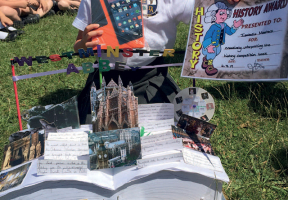
Bev Forrest writes: As part of my role as a Historical Association Quality Mark assessor I am privileged to visit schools across the country. In the autumn of 2019, I ventured out into Essex to carry out an assessment at Dilkes Academy. I was delighted to recommend gold status for...
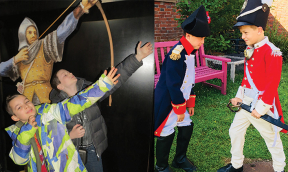
All too often, with increasing pressure to obtain the ‘best’ results, primary schools allow English and mathematics to steal the limelight, unwittingly pushing other subjects to one side. As a consequence, these ‘other’ subjects are squeezed into vehicles to teach English or maths – barely recognisable under the guise of...
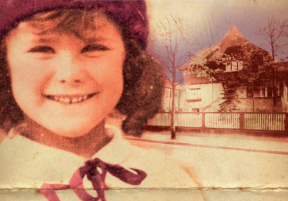
Judith Kerr, author of The Tiger Who Came to Tea and the Mog stories, came to Britain in 1936 with her brother Michael and their parents, Alfred and Julia Kerr. Her father was Jewish, an anti-Nazi, and famous theatre critic who fled Berlin as Hitler came to power in 1933,...
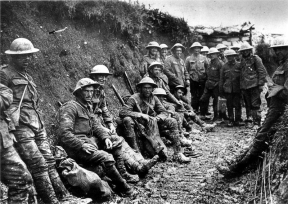
Remembering the Battle of the Somme and other events within the First World War will be popular features of primary assemblies as part of the centenary commemorations. Yet primary teachers are often concerned about how to explore a topic as challenging as the First World War with such a young...
Commemorating the Battle of the Somme through an assembly is not an easy task and one which needs careful thought and preparation. This battle officially started on 1 July 1916, after a week-long artillery bombardment, though both British and French commanders had prepared for the offensive for several months. To...

In this article, Michael Maddison provides an overview of what schools must do in relation to promoting British values, as well as preventing extremism and radicalisation, and why it is so important that opportunities are taken in history to deal with these two pressing issues. It is an updated version...

It can sometimes seem that the primary and secondary phases of education live in isolation from each other. After all, most primary teachers are generalists (despite sometimes having specialist experience of a particular curriculum area), having to turn their hands to all subjects on the curriculum whatever they feel about...
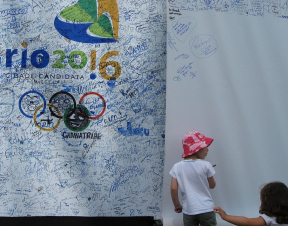
A series of whole-school or class assemblies planned for the weeks leading up to the Olympic Games in 2016 provides an excellent opportunity to introduce or reinforce pupils’ understanding of significance. Over the weeks the pupils will be introduced to inspirational stories taken from previous games and through this be...
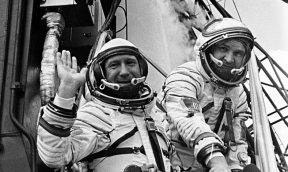
For this issue I have selected an eclectic range of anniversaries. Some are to do with travel and exploration, showing the human spirit of endeavour and wanting to find out more, like Christopher Columbus' epic voyage across the Atlantic, even if, as we now know, the Vikings went before him...
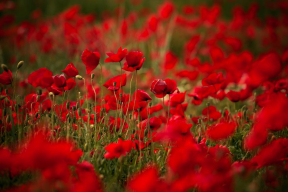
A debt of honour... During the months of September to November 2015, assemblies in my school will focus on remembrance relating to the First World War culminating in a special Armistice Day assembly. In conjunction with this focus a possible approach could be to introduce the children to the growth...
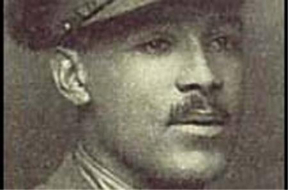
Events which encapsulate family, community, national and global history provide rich opportunities for engaging children. Some of these draw on positive memories associated with past events: the coronation of Queen Elizabeth II, how people responded to the first flight to the moon, the Millennium celebrations. Yet it is perhaps gruelling...
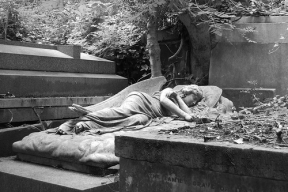
Why visit a cemetery as part of the history curriculum? Local studies now feature prominently in the primary history curriculum for both key stages. This development challenges teachers to find easilyaccessible, inexpensive and relevant resources on their doorstep. A rich resource which has traditionally been overlooked is the local churchyard...
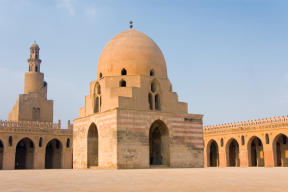
The Primary National Curriculum pinpoints Early Islamic Civilisation as Baghdad c. AD 900 - yet it was so much more. For approximately a thousand years after AD 700 there was an extraordinary amount of activity that radiated out from Baghdad and along a glittering crescent through North Africa and into...

The new (2014) Primary History National Curriculum is finally upon us. The first thing you might notice is that the level descriptions have gone. These were first introduced in 1995 and became the mainstay for assessing pupil progression and attainment in Key Stages 1, 2 and 3 across schools in...

As part of our First World War centenary-themed assemblies, in the last issue of Primary History we focused on the importance of the local dimension. Here we have chosen to look at the role of the international community in the First World War. This approach reflects and celebrates our multi-cultural...
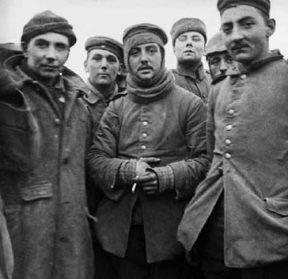
Over the next three editions of Primary History our assemblies pages will be linked to the theme of commemorating the First World War. We have found that while many teachers wish to remember these events in school, they are unsure how to approach the subject with primary aged children. It...

Please note: this article was originally written in early 2014 for schools needing to prepare schemes of work for the new National Curriculum coming into effect that September. The implementation from September 2014 of the new national curriculum programme of study for history gives you a time-scale for reviewing, refreshing...

IntroductionWith the publication on 11 September 2013 of the final version of the revised National Curriculum for September 2014, subject leaders and classroom teachers could start to consider the implications of the proposed changes. For history at Key Stages 1 and 2, some parts of the programmes of study are...