
Free for members
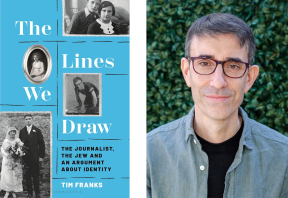
In this Virtual Branch Tim Franks, acclaimed BBC Journalist, talks about his personal history and identity drawing on his new biography The Lines we Draw: The Journalist, The Jew and an argument about identity. We will delve into Tim's experiences as a journalist in some of the world's major conflict...
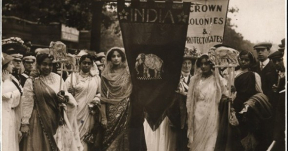
Between 1917 and 1947, women in the Indian subcontinent were engaged in active debates and noteworthy demonstrations for the vote, building up a national suffrage movement. In this talk Professor Sumita Mukherjee discusses the activities of Indian suffragettes in this period, showing how they were connected with British and other...
The Historical Association's Medlicott Medal 2025 was awarded to Dr Christine Counsell. The award seeks to recognise individuals from a diversity of backgrounds in their service to history. Read more about Christine, her work and her award here. As is the custom, Dr Christine Counsell received her award and presented...
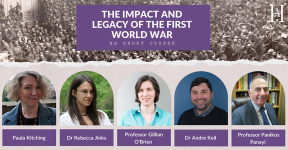
Beyond the mud and blood: The First World War and the social, political and cultural impact and legacy on ordinary people While the first global conflict of the modern world fuelled military and leadership challenges, it also created an environment of social, political and cultural unrest. 2024 was 110 years...
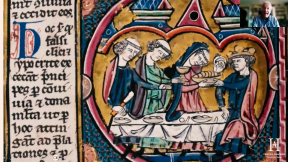
In his recent book The Monastic World, Andrew Jotischky looks at how from the late Roman Empire onwards, monasteries and convents were a common sight throughout Europe. The history of monasticism is defined by the fierce and passionate abandonment of the ordinary comforts of life, the most striking being food...
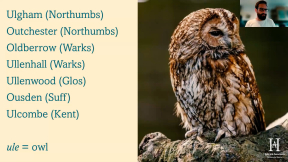
In his recent book The Cuckoo's Lea Michael J Warren provides a exploration of how birds are entwined with British history, particularly in our place names. Join us for an exclusive Q&A with the author to weave together literature, history and ornithology and discover a fascinating heritage that matters deeply...
The Reformations, both Protestant and Catholic, have long been told as stories of men. But women were central to the transformations that took place in Europe and beyond. What was life like for them in this turbulent period? How did their actions and ideas shape Christianity and influence societies around...
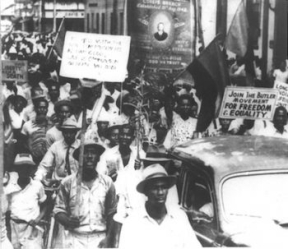
This webinar examines the era of ‘post-emancipation’ in the Caribbean from around the mid-nineteenth to the mid-twentieth centuries. It interrogates the notion of ‘emancipation’ and asks what kind of ‘freedom’ did abolition bring to the formerly enslaved? How did colonial states and other authorities seek to regulate the lives of...
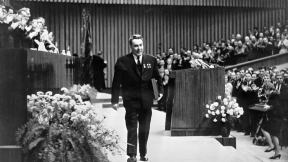
In this film Dr Edwin Bacon takes us through Brezhnev’s early life and career: his birth in Ukraine in 1906, the opportunities brought by the revolution, his role in the battle of Ukraine and his eventual arrival to the Politburo at the end of the 1950s. Dr Bacon looks at...
Embracing messiness: teaching disciplinary thinking in history Session 1: Embracing messiness: the case for returning to disciplinary thinking in history classrooms In recent years, disciplinary thinking has been somewhat overlooked as the 'what' of curriculum has taken the front seat for many schools. This introductory session will explain the rationale...
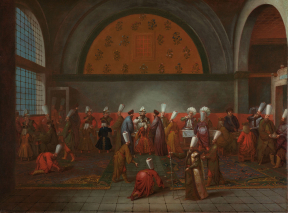
For European states in the early modern era the Ottoman empire represented a huge trading bloc, stretching at its height from Hungary in the west to Iran in the east, from Ukraine in the north to Egypt in the south, and along the southern shores of the Mediterranean to the...
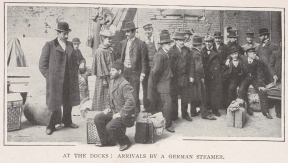
Research on the history of migration continues to flourish and grow, but scholarship is also becoming increasingly splintered, often focusing on particular settings or population groups. Migration is often used as a way to discuss questions of national identity or diverse religious, ethnic, religious and local identities in the UK,...
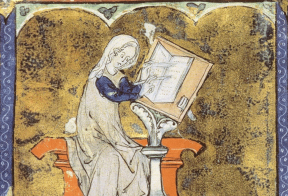
What was life really like for women in the medieval period? How did they think about sex, death and God? Could they live independent lives? Few women had the luxury of writing down their thoughts and feelings during medieval times. But remarkably, there are at least four who did: Marie...
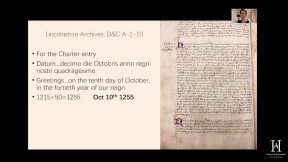
As part of a project to identify and write biographies of all of the Jews of the medieval Lincoln Jewry, Natasha Jenman, Luka Liu, and Josh Outhwaite have been working on records of Jewish property ownership in the city across the thirteenth century. This allows them to identify those individuals...
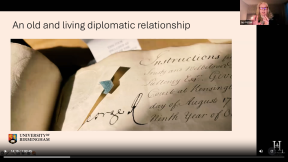
Any study of the intercultural relationships between the Indigenous peoples of North America and British settlers usually focuses on the differences that resulted in disputes and violence. However, on closer examination, the interaction also involved the exchange of ideas and the forging of alliances, which required diplomacy and respect for...
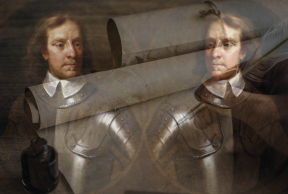
Oliver Cromwell’s death in 1658 sparked a period of unrivalled turmoil and confusion in English history. In less than two years, there were close to ten changes of government; rival armies of Englishmen faced each other across the Scottish border; and the Long Parliament was finally dissolved after two decades....
The religious wars of the Crusades are renowned for their military engagements. But the period was witness to brutality beyond the battlefield. More so than any other medieval war zone, the Holy Land was rife with unprecedented levels of criminality and violence. In the first history of its kind, Steve...
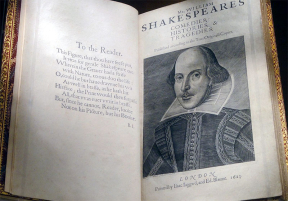
To mark the anniversary of the publication of Shakespeare’s first folio in 1623–24, our 2024 winter webinar series focused on ‘The history that Shakespeare gave us’. The representation of the past in Shakespeare’s plays has shaped many people’s understanding of history. In this webinar series, leading academics explore the history...
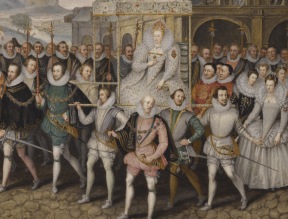
In this Virtual Branch talk Professor Emma Smith provides a preview of her current research, which explores the lives and cultural undercurrents of Elizabethan England. What was influencing their cultural tastes and how much of it was new, or had it all been seen before? Emma Smith is Professor of...