
Free for members
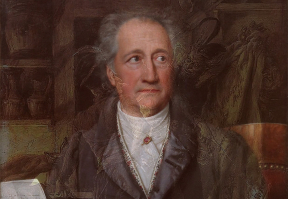
In Goethe: His Faustian life, award-winning biographer, critic and writer A. N. Wilson tells the spellbinding story of the life of Goethe. From his youth as a wild literary prodigy, to his later years as Germany’s most heroic intellectual figure, Wilson hones in on Goethe’s undying obsession with the work...
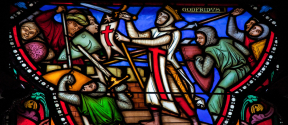
As Christianity had spread across Europe, Islam had spread across the Middle East. At the end of the eleventh century the relationship between the Muslim leader of Jerusalem and the Christian communities and travellers to the city fractured. Along with other key relationships across Europe, the Middle East and around...
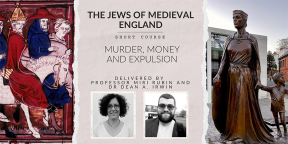
A Jewish community was established in England shortly after the Norman Conquest. Initially confined to London, from the 1130s onwards Jews began to settle in other parts of the country, where they lived as English Jews for more than two centuries. Their life in England came to an end in...
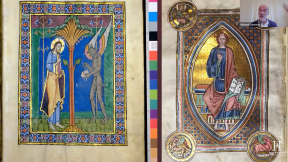
Modern, non-invasive scientific techniques have revolutionised knowledge of medieval inks and pigments - from the most exotic, such as lapis lazuli and Egyptian blue, to the most ordinary, indigo and ochres - and of how they were used to create magnificent illuminated manuscripts. This webinar will outline the techniques in...
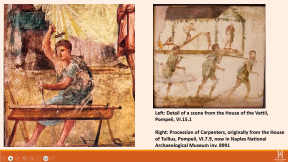
In this webinar, Jane Draycott shares her research on prostheses and assistive technology in ancient Greece, Rome and the neighbouring civilisations. She outlines the findings from her 2023 book on this subject, which arose from a grant to visit museums around the UK to access surviving ancient prostheses and modern...
In this Virtual Branch talk, Dr Alvin Finkel challenges claims that egalitarian, peaceful societies disappeared with the founding of agriculture or with the founding of state-level social organisation. Different authors have suggested that early human society was essentially egalitarian in nature, with hierarchies only later becoming common. The point at...
In this open-access recorded webinar you’ll hear from teacher educators with advice and guidance to help you to make plans and get the most out of your history teacher training, whichever route you are taking.
Red Lion Square was long one of London's most genteel addresses, home to nobles, scholars, and professionals. But on 25 March 1818, one house on the south side opened its doors to quite another class of person, as the Mendicity Society began its business. Set up to solve the growing...
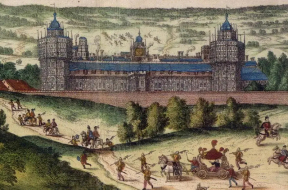
During his lifetime, Henry VIII journeyed throughout his kingdom in what are known as royal 'progresses'. In this webinar, Anthony Musson will share research from the AHRC-funded 'Henry on Tour' project which seeks to reassess these progresses by exploring archival sources, archaeology, music and material culture. In addition to contributing...
Addressing issues of the legacies of racism created by the transatlantic slave trade and the narratives of its abolition The Medlicott Medal is awarded annually for outstanding services and contributions to history. This year the Medal went to Professor Catherine Hall, who is Emerita Professor of Modern British Social and...
In 1135 Stephen of Blois usurped the throne, stealing it from his cousin Empress Matilda and sparking a nineteen-year civil war that would become known as the Anarchy, one of the bloodiest periods in English history. On the one side is Empress Matilda. On the other side is her cousin,...
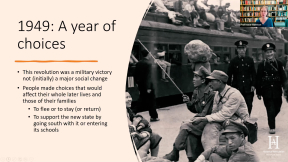
In this talk Professor Henrietta Harrison uses diary records to think about the experience of living through the revolution in China in 1949, focussing on what it meant to Chinese people, how they learned about its practices and ideology, and how this changed their lives - whether they were radical...
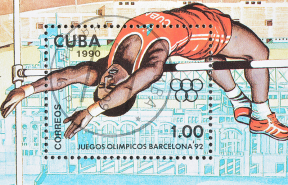
2024 was an Olympic Games year. Held every four years (with the exception of during the World Wars and Covid-19 restrictions), the modern Olympics is the largest international sporting event in the world. However, historically it has not always been just the sports that are played and the athletes’ performances...
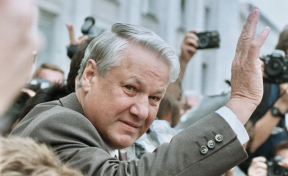
Borisn Yelstin was the Russian leader from the collapse of the Soviet Union through to the leadership of Vladimir Putin. A key pivotal figure of the twentieth century, he had as an important an impact on Russia and global politics as any of the Soviet leaders of the 1970s and...
This is the story of the Venice Ghetto, the corner of the city where Jews were exiled; free to walk the streets by day, locked behind gates and walls at night. Yet, gates and walls notwithstanding, from its establishment in 1516 until the fall of Venice in 1798, the ghetto...
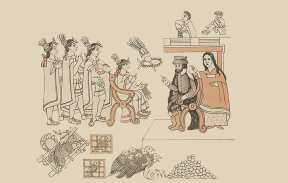
The HA has teamed up with the University of York Institute for the Public Understanding of the Past to provide scholarship updates for teachers. In this module you will find a collection of podcasts on different topics that complement the school curriculum. They are designed to provide teachers with the...
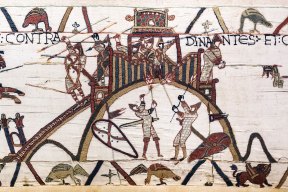
Normandy originated from a grant of land to Rollo, a Viking leader, in the early tenth century. By the end of that century Normans were to be found in southern Italy, then in Britain and, at the end of the eleventh century, in the near East on the First Crusade....
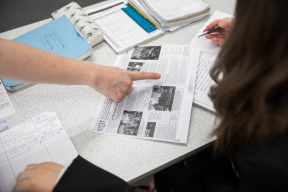
Webinar series: Meaningful and useable assessment in the secondary history classroom Session 1: Invisible assessment within an enquiry This session explores the constant, routine assessment that goes on throughout the history lessons that make up a single enquiry – assessment that forms such a natural part of history teaching that...
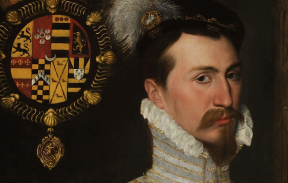
The Dudleys thrived at the court of Henry VII, but were sacrificed to the popularity of Henry VIII. Rising to prominence in the reign of Edward VI, the Dudleys lost it all by advancing Jane Grey to the throne over Mary I. That was until the reign of Elizabeth I,...
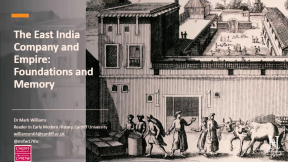
What can the early history of the English East India Company tell us about the foundations of the British Empire, and where does that history sit within current debates about Britain’s imperial legacy? In this session Mark Williams offers a timely insight into the history of one of the most...