
Britain & Ireland
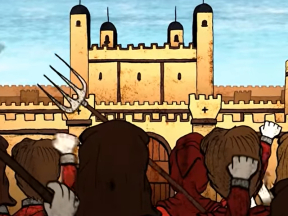
In this series of videos, produced by Royal Holloway, University of London, staff and students explore the Great Revolt of 1381, better known as the Peasants’ Revolt, through a combination of animations, dramatised primary sources, and short presenter-led videos. This includes videos looking at the causes of the revolt, its...
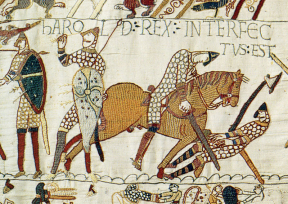
The Norman Conquest of 1066. No date in English history is more well known; no image more famous than the Bayeux Tapestry. The very weight of the word ‘conquest’ can seem to resound with an inevitable, onward press of violent conquest spreading outwards across the island of Britain through the...
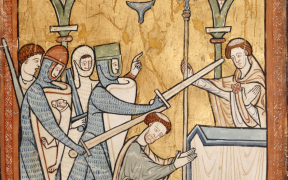
The idea of medieval diplomacy conjures scenes of great drama: royal stalemates in which armies stared each other down across a river; surrender terms after decisive battles; and the pomp and circumstance of taking oaths, making knights, and performing homage. To maintain or establish peace, rulers had to make and...
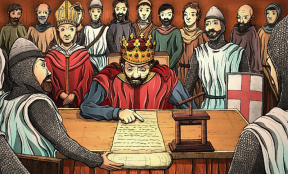
In this series of videos, produced by Royal Holloway, University of London, students and staff explore the history of King John's reign and the factors that led to the sealing of Magna Carta at Runnymede and the First Barons' War. In addition, this playlist also contains videos looking specifically at...
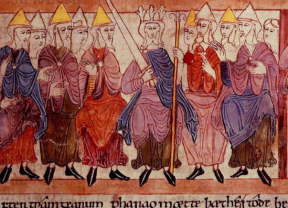
In this podcast Professor Katy Cubitt of the University of East Anglia discusses how the aristocracy developed and changed in the 10th and 11th centuries.
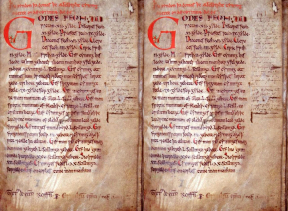
In this podcast Professor Katy Cubitt of the University of East Anglia looks at how governance and administration changed in the late Anglo-Saxon period.
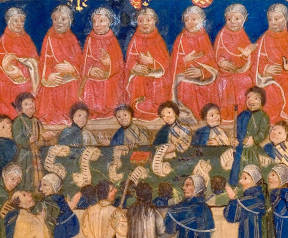
In this podcast Professor Katy Cubitt of the University of East Anglia asks to what extent was the later Anglo-Saxon period a period of change and transformation for English law and legal systems?
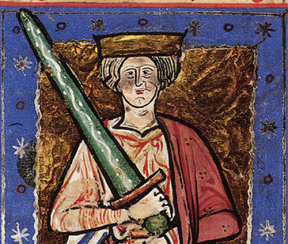
In this podcast, Katy Cubitt, Professor of Medieval History at the University of East Anglia, looks at the life, significance and long reign of Aethelred the Unready. Aethelred’s reign began following the murder of his brother, endured decades of Viking raids and ended with the arrival of King Cnut the...
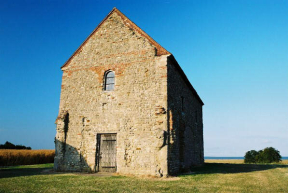
In this podcast, Katy Cubitt, Professor of Medieval History at the University of East Anglia, discusses the ways the church developed and changed in 10th and 11th century England. This period involved the rise of the local parish and the emergence of religious leaders who would attempt to ‘restore and...
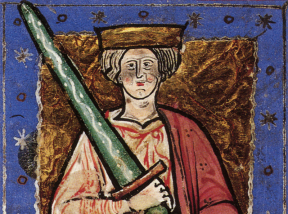
In this podcast Professor Sarah Foot of Christ Church College, Oxford, looks at the development of Anglo-Saxon England from 871 to 1000. This podcast is currently FREE to all registered users of the wesbite. Please log in to view the content.If you are not already registered you can sign up...
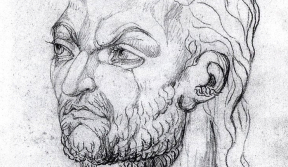
Owain Glyndŵr (Welsh pronunciation: [ˈoʊain ɡlɨ̞nˈduːr]), or Owain Glyn Dŵr, (c. 1349 or 1359 - c. 1415) was a Welsh ruler and the last native Welshman to hold the title Prince of Wales (Tywysog Cymru). He instigated a fierce and long-running but ultimately unsuccessful revolt against the English rule of...
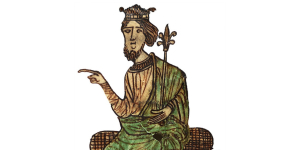
Owain ap Gruffudd (c. 1100 - 23 or 28 November 1170) was King of Gwynedd, north Wales, from 1137 until his death in 1170, succeeding his father Gruffudd ap Cynan. He was called "Owain the Great" (Welsh: Owain Mawr) and the first to be styled "Prince of Wales". In this...
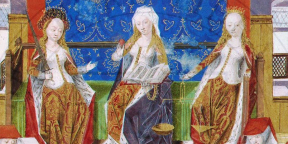
In this podcast Dr Emma Cavell of the University of Leeds discusses the lives and the rights of women in medieval Wales.
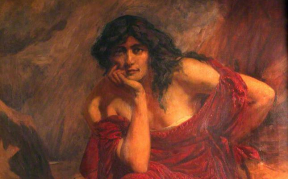
In this podcast Dr Dylan Foster Evans of Cardiff University provides an introduction to Medieval Welsh Literature.
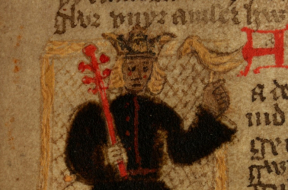
Gruffudd ap Cynan (c. 1055 - 1137), sometimes written as Gruffydd ap Cynan, was King of Gwynedd from 1081 until his death in 1137.In this podcast Dr David Wyatt of Cardiff University looks at the life and significance of Gruffudd ap Cynan.
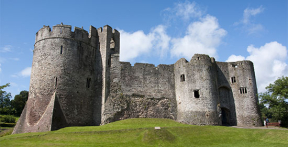
The terms "Welsh March" and "the March of Wales" (in Medieval Latin Marchia Walliae) were originally used in the Middle Ages to denote the territory/marches between England and the Principality of Wales, in which Marcher lords had specific rights, exercised to some extent independently of the king of England. In...
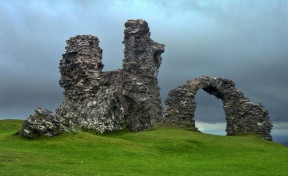
Gwenwynwyn ab Owain Cyfeiliog (died c. 1216) was the last major ruler of mid Wales before the completion of the Norman English invasion. Gruffydd ap Gwenwynwyn (died c. 1286), son of Gwenwynwyn ab Owain Cyfeiliog was a Welsh prince who was lord of the part of Powys known as Powys...
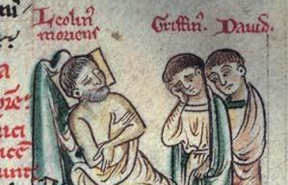
Llywelyn the Great (Welsh: Llywelyn Fawr), full name Llywelyn ap Iorwerth, (c. 1172 - 11 April 1240) was a Prince of Gwynedd in north Wales and eventually de facto ruler over most of Wales. By a combination of war and diplomacy he dominated Wales for 40 years.In this podcast Dr...
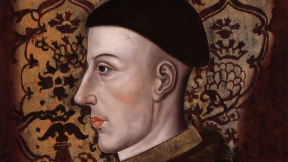
In this set of podcasts Professor Anne Curry, of the University of Southampton and former President of the Historical Association, provides an introduction to the Hundred Years War, looking at its origin, legacy and the role of Henry V and Henry VI.
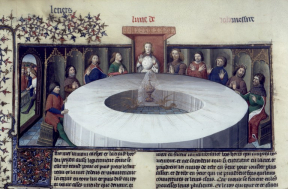
In this podcast Dr Philip Morgan of Keele University examines the significance of the reign of Edward I and relations between England, Scotland, Wales and Ireland.