
Society
Historians use maps a lot – or at least they should. They help us to understand global relations, environmental and social change and they help to reveal how the world was understood and explored in the past. This webinar series is an opportunity to hear three world class academics explore...
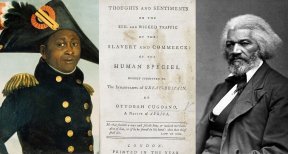
This talk explored the struggle for liberation from the perspective of the enslaved, wherever possible in their own words. Dr Sudhir Hazareesingh shines a light on the lives of revolutionaries like Toussaint Louverture, José Antonio Aponte, Nat Turner, and the pregnant rebel Solitude; touching on the stories of the freed...
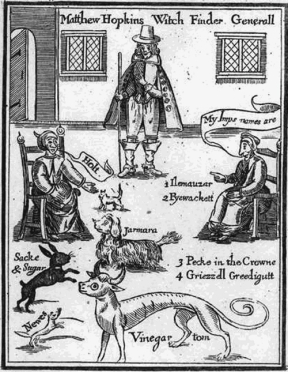
The East Anglian witch hunt under Matthew Hopkins, self-appointed Witchfinder General, has garnered a great deal of popular and historical interest over the years. An image has developed of a zealous, misogynistic young man serving crazed 'justice' against supposed witches, whipping up panic and turning neighbours against each other in...
This self-guided short course provides an introduction to European witchcraft history from the fifteenth century to the present. Using a range of primary sources, the course explores important themes and questions relating to witchcraft history, examining how witchcraft has been imagined and understood at different times and in different places,...
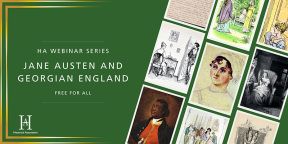
Join us for a journey through Georgian history, literature and society – all from the comfort of your own home. Celebrating the 250th anniversary of Jane Austen's birth, this rich, interdisciplinary webinar series from the Historical Association delves into the vibrant world of the Georgians through the lens of one...
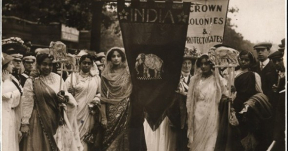
Between 1917 and 1947, women in the Indian subcontinent were engaged in active debates and noteworthy demonstrations for the vote, building up a national suffrage movement. In this talk Professor Sumita Mukherjee discusses the activities of Indian suffragettes in this period, showing how they were connected with British and other...
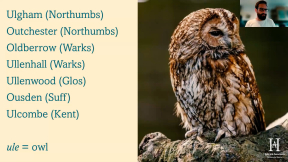
In his recent book The Cuckoo's Lea Michael J Warren provides a exploration of how birds are entwined with British history, particularly in our place names. Join us for an exclusive Q&A with the author to weave together literature, history and ornithology and discover a fascinating heritage that matters deeply...
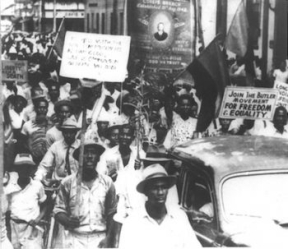
This webinar examines the era of ‘post-emancipation’ in the Caribbean from around the mid-nineteenth to the mid-twentieth centuries. It interrogates the notion of ‘emancipation’ and asks what kind of ‘freedom’ did abolition bring to the formerly enslaved? How did colonial states and other authorities seek to regulate the lives of...
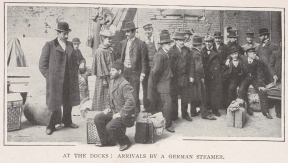
Research on the history of migration continues to flourish and grow, but scholarship is also becoming increasingly splintered, often focusing on particular settings or population groups. Migration is often used as a way to discuss questions of national identity or diverse religious, ethnic, religious and local identities in the UK,...
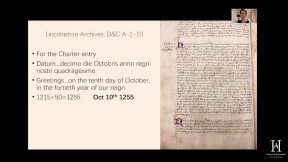
As part of a project to identify and write biographies of all of the Jews of the medieval Lincoln Jewry, Natasha Jenman, Luka Liu, and Josh Outhwaite have been working on records of Jewish property ownership in the city across the thirteenth century. This allows them to identify those individuals...
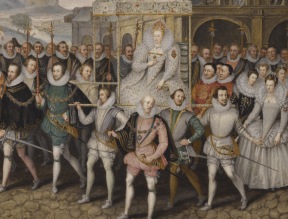
In this Virtual Branch talk Professor Emma Smith provides a preview of her current research, which explores the lives and cultural undercurrents of Elizabethan England. What was influencing their cultural tastes and how much of it was new, or had it all been seen before? Emma Smith is Professor of...
In this Virtual Branch talk, Dr Alvin Finkel challenges claims that egalitarian, peaceful societies disappeared with the founding of agriculture or with the founding of state-level social organisation. Different authors have suggested that early human society was essentially egalitarian in nature, with hierarchies only later becoming common. The point at...
Red Lion Square was long one of London's most genteel addresses, home to nobles, scholars, and professionals. But on 25 March 1818, one house on the south side opened its doors to quite another class of person, as the Mendicity Society began its business. Set up to solve the growing...
Addressing issues of the legacies of racism created by the transatlantic slave trade and the narratives of its abolition The Medlicott Medal is awarded annually for outstanding services and contributions to history. This year the Medal went to Professor Catherine Hall, who is Emerita Professor of Modern British Social and...
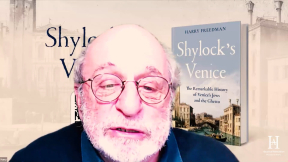
This is the story of the Venice Ghetto, the corner of the city where Jews were exiled; free to walk the streets by day, locked behind gates and walls at night. Yet, gates and walls notwithstanding, from its establishment in 1516 until the fall of Venice in 1798, the ghetto...
The Medlicott Medal is awarded annually for outstanding services and contributions to history. This year the Medal went to renowned historian and author Professor Diarmaid MacCulloch who is currently Professor of the Church at Oxford. His 2008 book History of Christianity: the first three thousand years is the leading authority...
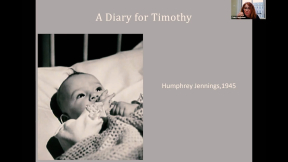
Mass-Observation is probably the most consistently useful source for the study of mid and late 20th social lives Britain. It was established in 1937 with the aim of investigating ordinary life and developing an 'anthropology of ourselves.' It used a range of different methods to collect information, from recording overheard...
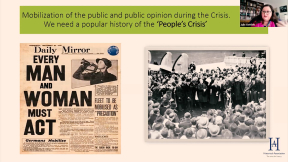
Professor Julie Gottlieb has written extensively on inter-war British political and gender history, and her more recent work has provided alternative perspectives on seemingly settled debates in the historiography of British foreign policy and the history of appeasement. Through the lens of women/gender, social history, and now psychology/emotion, she argues...
This webinar with Dr Emma D Watkins explores the changing understanding of crime and responses to it in the nineteenth-century. It provides a brief overview on the general shift from punishment of the body, to banishment, all the way through to imprisonment. With a particular emphasis on the use of...
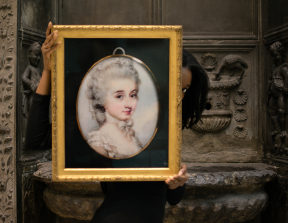
There is a great deal of discussion at the moment about how we engage with and confront the history and legacies of slavery in twenty-first century Britain. A lot of attention has been placed on men like slave trader Edward Colston or merchant and slave-owner Robert Milligan, both of whom...