
Dilemmas

Young children who automatically see shiny things as new no matter what their age, those who mix up technology from one age with another, those who dismiss people in the past as stupid because they did not have the possessions we have today, those who equate the age of a...
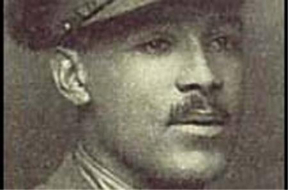
Events which encapsulate family, community, national and global history provide rich opportunities for engaging children. Some of these draw on positive memories associated with past events: the coronation of Queen Elizabeth II, how people responded to the first flight to the moon, the Millennium celebrations. Yet it is perhaps gruelling...
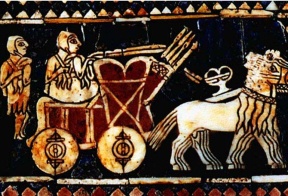
For many teachers and children alike, Ancient Sumer will be completely new. Although Sumer has always been an option for teaching about Early Civilisations, the fame of Ancient Egypt, as well as being a tried-and-tested topic, has meant that Sumer has perhaps been overlooked. There is little danger of failing...
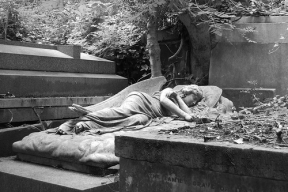
Why visit a cemetery as part of the history curriculum? Local studies now feature prominently in the primary history curriculum for both key stages. This development challenges teachers to find easilyaccessible, inexpensive and relevant resources on their doorstep. A rich resource which has traditionally been overlooked is the local churchyard...
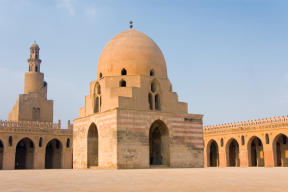
The Primary National Curriculum pinpoints Early Islamic Civilisation as Baghdad c. AD 900 - yet it was so much more. For approximately a thousand years after AD 700 there was an extraordinary amount of activity that radiated out from Baghdad and along a glittering crescent through North Africa and into...

Using ‘Development Matters' to plan learning for history in the Foundation stage You won't find the term history in the Early Years curriculum framework at all. That being so, it can be difficult to know how best to support our Nursery and Reception colleagues when developing historical understanding within the...

The new (2014) Primary History National Curriculum is finally upon us. The first thing you might notice is that the level descriptions have gone. These were first introduced in 1995 and became the mainstay for assessing pupil progression and attainment in Key Stages 1, 2 and 3 across schools in...

It would be pleasant to give an easy answer and produce a recommended calendar for all co-ordinators. The problem is that every school is different, the roles and expectations of co-ordinators vary and some years are different to others. Some co-ordinators have time to fulfil roles like observing colleagues. Some...

Co-ordinator's dilemma: I have seen the new requirements and know that I have a bit of time before things start, but I don't want to leave everything to the last minute. Without feeling that I have to get everything done now, are there some things I can be getting on...
Co-ordinators concerns: OFSTED, primary history and creativity I'm told the emphasis in schools now is for a rigorous approach to history where the children are taught the main facts and features of history. I recall a time not so long ago when the whole curriculum was about creativity but surely...

Diogenes: WHITHER CREATIVITY?! A consideration of the article Creativity and the Primary Curriculum In June 2010 the journal Primary Headship included an article entitled Creativity and the Primary Curriculum which endeavoured to pull together a range of positions as to where the curriculum might be going in the immediate future....
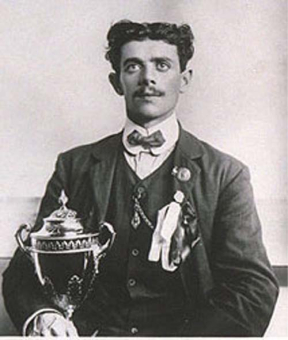
Please note: this article pre-dates the 2014 National Curriculum and some content may be outdated. The Italian confectioner Dorando Pietri is one of the most famous figures from the 1908 Olympics - famous for not winning. His story raises issues of sportsmanship suitable for class discussion. There are detailed accounts...

Our headteacher has become aware that history is being linked with environmental history rather more in the future and has asked me to think about making the links stronger. As far as I can see there is a long way to go. In any case, surely this is much more...
Please note: this article pre-dates the 2014 National Curriculum and some content may be outdated. ‘Some primary schools are like the High Street in many of our towns. I can predict what I will see before I go through the door. What I want to see is something that gives...
Dilemma: I don't think our problem is using visual sources in history. In fact, we are always using pictures, photographs and the moving image in our teaching. In practically every theme, there is something that can be described as visual but when I add up what we do, there does...
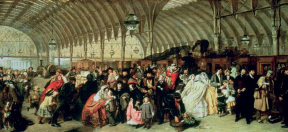
Please note: this article pre-dates the 2014 National Curriculum and some content and links may be outdated. A crucial issue in using history as a vehicle for learning is the professional development of colleagues with whom you are working. This is an activity I did with students on a PGCE...
I'm a newly-appointed subject leader for history. Before that I was the coordinator for the creative arts and I thought I had some excellent ideas on how history teaching could be much more creative. The headteacher though is not so sure and has knocked my confidence a bit. She has...
Please note: this article pre-dates the 2014 National Curriculum and some content may be outdated. Gifted and talented in history? I can understand it in music and physical education, maybe in numeracy but surely not history? All curriculum areas have now been told that they have to identify such children...
Jayne Woodhouse offers advice on the Key Stage 1 history curriculum.
Dr Tim Lomas offers advice on topics, such as the Romans, the Anglo-Saxons and the Vikings. Please note: this article pre-dates the current National Curriculum and some content may be outdated.