
Free for members
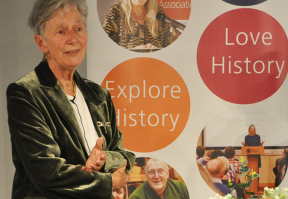
Addressing issues of the legacies of racism created by the transatlantic slave trade and the narratives of its abolition The Medlicott Medal is awarded annually for outstanding services and contributions to history. This year the Medal went to Professor Catherine Hall, who is Emerita Professor of Modern British Social and...
In 1135 Stephen of Blois usurped the throne, stealing it from his cousin Empress Matilda and sparking a nineteen-year civil war that would become known as the Anarchy, one of the bloodiest periods in English history. On the one side is Empress Matilda. On the other side is her cousin,...
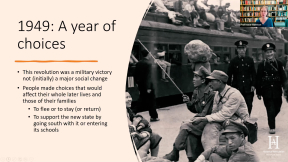
In this talk Professor Henrietta Harrison uses diary records to think about the experience of living through the revolution in China in 1949, focussing on what it meant to Chinese people, how they learned about its practices and ideology, and how this changed their lives - whether they were radical...
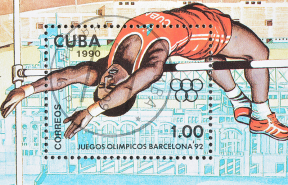
2024 was an Olympic Games year. Held every four years (with the exception of during the World Wars and Covid-19 restrictions), the modern Olympics is the largest international sporting event in the world. However, historically it has not always been just the sports that are played and the athletes’ performances...
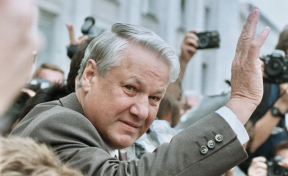
Borisn Yelstin was the Russian leader from the collapse of the Soviet Union through to the leadership of Vladimir Putin. A key pivotal figure of the twentieth century, he had as an important an impact on Russia and global politics as any of the Soviet leaders of the 1970s and...
This is the story of the Venice Ghetto, the corner of the city where Jews were exiled; free to walk the streets by day, locked behind gates and walls at night. Yet, gates and walls notwithstanding, from its establishment in 1516 until the fall of Venice in 1798, the ghetto...
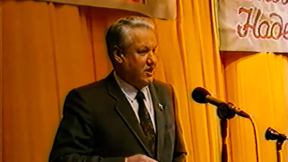
In this film, Dr Edwin Bacon (University of Lincoln), explores the role Yeltsin played in the dissolution of the Soviet Union. Dr Bacon takes us from the fall of the Berlin Wall, the rise of nationalism in the new republics, and how Yeltsin became Russia’s first elected head of state....
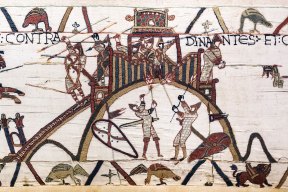
Normandy originated from a grant of land to Rollo, a Viking leader, in the early tenth century. By the end of that century Normans were to be found in southern Italy, then in Britain and, at the end of the eleventh century, in the near East on the First Crusade....
Webinar series: Avoiding confusion and challenging misconceptions in primary history Session 1: Avoiding confusion with chronology and change in primary history This practical webinar will identify what confuses pupils in the teaching of chronology and the disciplinary concept of change and continuity and will show how such confusion and misconceptions...
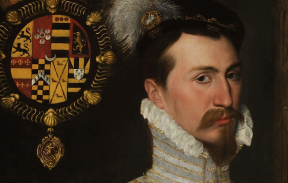
The Dudleys thrived at the court of Henry VII, but were sacrificed to the popularity of Henry VIII. Rising to prominence in the reign of Edward VI, the Dudleys lost it all by advancing Jane Grey to the throne over Mary I. That was until the reign of Elizabeth I,...
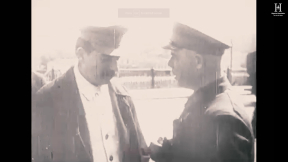
Joseph Stalin was born Joseph Besarionis dze Jughashvili in 1878 into a poor family in Gori, Georgia, part of the then Russian Empire. Stalin attended the Tbilisi Spiritual Seminary while his own radicalism grew, before joining the Marxist Russian Social Democratic Labour Party. He edited the party's newspaper, Pravda, and...
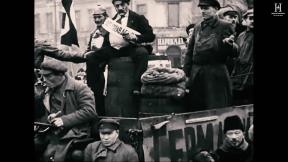
In this film, Professor James Harris (University of Leeds) examines how the New Economic Policy transformed the Soviet economy after the civil war, and looks at Stalin’s central role in that recovery. Key during that period was Stalin’s dispute with Nikolai Bukharin and the Great Break, and the drive to...
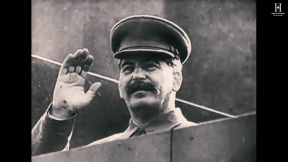
Why was the Soviet Union so violent in the 1930s? In this film, Professor James Harris (University of Leeds) looks at differing interpretations of the origins of the Great Terror; was it the story of one man trying to obtain total control, was it a result of collective frustration against...
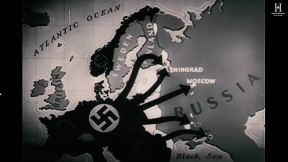
In this film, Professor James Harris (University of Leeds) examines Stalin and the Soviet preparations for global war. The reasons why Stalin agreed the Nazi-Soviet pact are explored as are Stalin’s response to invasion in 1941. Professor Harris addresses the impact the war had on the USSR and how that...
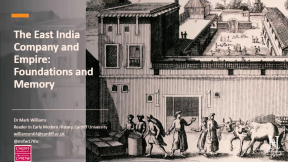
What can the early history of the English East India Company tell us about the foundations of the British Empire, and where does that history sit within current debates about Britain’s imperial legacy? In this session Mark Williams offers a timely insight into the history of one of the most...
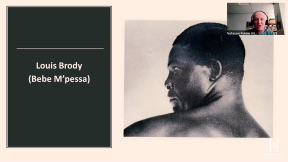
In this webinar, Professor Robbie Aitken looks at the experiences of Black residents in Germany during the Nazi period. Why have they been largely written out of larger histories of the Third Reich? Professor Aitken suggests that there was a genocidal intent in Nazi policy towards them, signalled partly by...
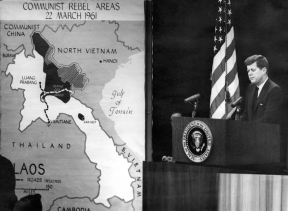
Would US President John F. Kennedy have avoided the catastrophe that became the Vietnam War if Lee Harvey Oswald had not assassinated him in Dallas on that fateful day of 22 November 1963? This question – or a version of it – has animated discussions of the Vietnam War for...
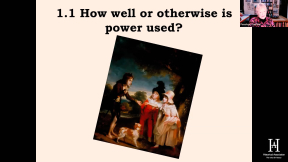
Eighteenth-century Britons were ruled by a restricted oligarchy of landowners and plutocrats. Yet the wider population had a proud tradition of assertiveness and readiness to protest. ‘Britons never will be slaves!’ as the chorus of 'Rule Britannia' (1740) announced pointedly (if somewhat ironically, in view of Britain’s role in the...
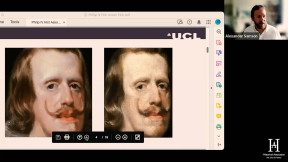
Decline, decadence, crisis, stagnation, and adversity are terms powerfully associated with the reign of Spain’s Planet King; sombre tones that contrast sharply with the glittering cultural and artistic achievements (enhanced by his patronage) that led the period to be dubbed ‘the’ Golden Age, a label consciously competing with France’s later...
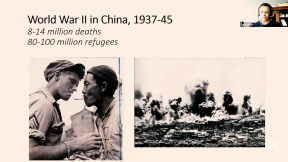
The Chinese regime never used to want to talk about their country’s experience in World War Two. The Japanese occupation of parts of China was felt to be a humiliating episode that was best forgotten, and the Communists were uncomfortable that their nationalist enemy Chiang Kai-Shek had been China’s main...