
Cunning Plans

While lockdown, in response to the Covid-19 pandemic in the spring of 2020, brought a period of turbulence to the education sector, it also brought a wealth of generosity, with a vast range of free online CPD offered by different providers. One in particular was the webinar series ‘West African...
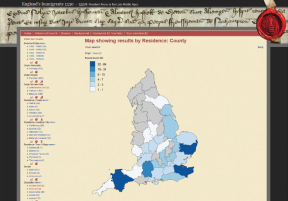
Ever wondered if there is a streak of masochism in those designing A-level history syllabi? The absence of the Spanish Armada from the current Edexcel breadth study in favour of (among other delights) ‘the new draperies’ prompts this question. But the challenge of enthusing modern teenagers with woollen cloth can...

The major aim of this sequence of lessons was to teach Year 8 how to create and refine a narrative. I chose a period I was substantively confident on, which lent itself well to the narrative form, had a number of prominent academic narratives published about it and followed neatly...
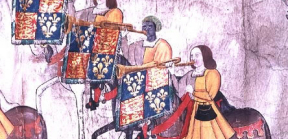
On 29 September 2018 I was fortunate enough to get involved with a collaborative project with Dr Miranda Kaufmann, the Historical Association, Schools History Project, and a brilliant group of people from different backgrounds all committed to teaching about black Tudors. In this short piece, I will share how I...
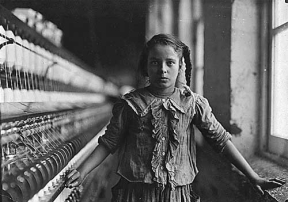
‘Disastrous and terrible.’ For Arnold Toynbee, the historian who gave us the phrase ‘industrial revolution’, these three words sum up the period of dramatic technological change that took place in Britain across the eighteenth and nineteenth centuries. We may not habitually use Toynbee’s description in the classroom, but it is...
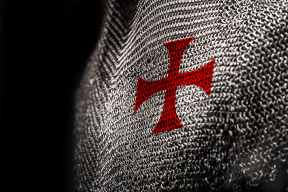
"What shall I say next? We were all indeed huddled together like sheep in a fold, trembling and frightened, surrounded on all sides by enemies so that we could not turn in any direction. It was clear to us that this had happened because of our sins. A great clamour...

My GCSE students were about to embark on their controlled assessment, which asked them to weigh up conflicting views on the British military’s contribution to the D-Day landings. Students were asked to engage with a range of historians’ views and textbooks as well as some contemporary source material to assess...
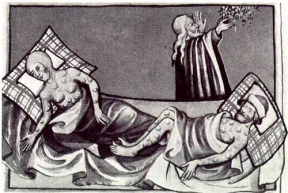
I started teaching ‘crime and punishment through time’ thematically a few years ago. I was teaching it as a Schools History Project ‘study in development’. We had moved from ‘medicine through time’ in order to keep things fresh. After six times through the content, much as I loved it, crime,...
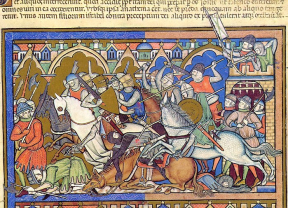
Medieval history has always been a Cinderella era for post-16 students. Some schools offer A-levels in classical civilisation, but most A-level history courses focus on the early-modern and modern periods. A few schools teach an A-level medieval module, with the Crusades being a popular choice. I was therefore excited at...
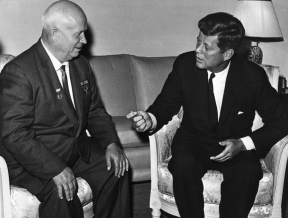
Planning to deliver the new GCSE specifications presents a challenge and an opportunity to any history department, whatever their previous specification. The sweep of history that students will now study at GCSE is much broader than ‘Modern World’ departments are used to; including a medieval or early modern depth study...
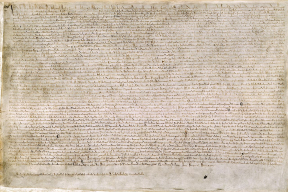
Both Dawson and Hayes have recently written Cunning Plans that show how exciting Magna Carta is. So why not stop there? Bring the barons to life with a flare of Dawson and send Magna Carta flying across the continent with just a hint of Hayes. Hey, from the same edition,...
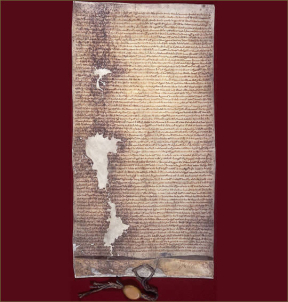
Does your heart skip with excitement at the prospect of a Year 7 lesson on Magna Carta? No? Magna Carta may be an important part of the long-term story of royal power and individual liberties but it is not a topic that excites many teachers. If it were, teachers would...
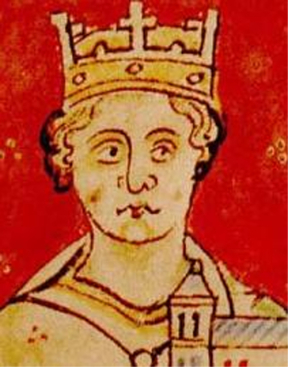
Typical teaching of King John and Magna Carta focuses either on the weakness of John or the importance (as Whig historians would see it) of Magna Carta. The first question is a bit boring and the second discussion unhistorical. This enquiry sequence is designed for students aged 11 to 13....
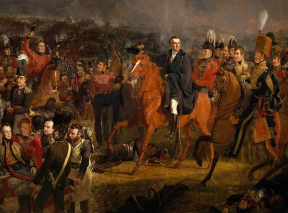
2015 is something of a year of anniversaries. It is 50 years since Churchill's death, 200 years since Waterloo, 300 since the Jacobite ‘Fifteen', 600 since Agincourt, 800 since Magna Carta. Clearly every year brings around its own crop of anniversaries; this year just seems to have quite a few...
Enquiry Question: What's worth knowing about the First World War? At the end of our scheme of work on the First World War, I asked myself how I might encourage my Year 9 pupils to reflect on the historical significance of the events we had studied. I was particularly interested...
Question: Who is buried in the box? Seeking a new and exciting way to introduce my Year 7 students to history, I looked to a practical solution. Ian Dawson once used a Thinking History exercise where students looked at the idea of ‘layers of history'. It was useful in structuring...
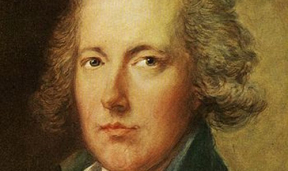
The past 30 years have seen a general revival in scholarly activity relating to ‘all aspects of 18th-century British history'. However, this increase in academic study, which has broadly coincided with the introduction and development of the National Curriculum in England, has not resulted in the period being studied in...
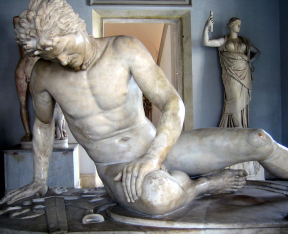
The principles outlined here were developed in response to three key concerns. The first was consideration of the needs of students learning English as an additional language who face particular challenges with reading and writing. Images could perhaps offer them more direct, less abstract, ways into an understanding of challenging...
This enquiry is about how interpretations are formed and why they change. It aims to show Year 9, right at the end of their study of British history, the ways in which meanings of 1688 have shifted over time. It will test students' knowledge and strengthen their chronology of 300...
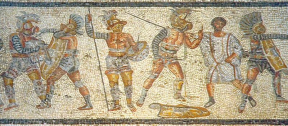
This seemingly straightforward question will prompt correspondingly straightforward answers from your mixed-ability Year 7 class, such as ‘they were slaves who fought with swords until one of the men died for the crowd's entertainment', as one of my pupils answered. Scratch the surface, and almost every word in this response...