
Free for members
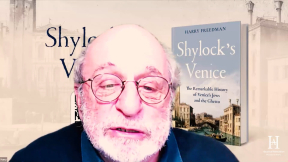
This is the story of the Venice Ghetto, the corner of the city where Jews were exiled; free to walk the streets by day, locked behind gates and walls at night. Yet, gates and walls notwithstanding, from its establishment in 1516 until the fall of Venice in 1798, the ghetto...
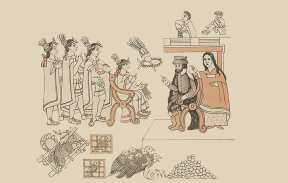
The HA has teamed up with the University of York Institute for the Public Understanding of the Past to provide scholarship updates for teachers. In this module you will find a collection of podcasts on different topics that complement the school curriculum. They are designed to provide teachers with the...
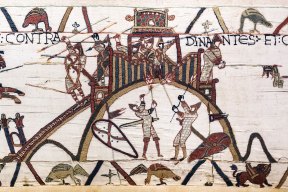
Normandy originated from a grant of land to Rollo, a Viking leader, in the early tenth century. By the end of that century Normans were to be found in southern Italy, then in Britain and, at the end of the eleventh century, in the near East on the First Crusade....

Webinar series: Meaningful and useable assessment in the secondary history classroom Session 1: Invisible assessment within an enquiry This session explores the constant, routine assessment that goes on throughout the history lessons that make up a single enquiry – assessment that forms such a natural part of history teaching that...
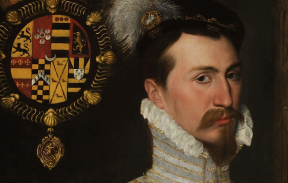
The Dudleys thrived at the court of Henry VII, but were sacrificed to the popularity of Henry VIII. Rising to prominence in the reign of Edward VI, the Dudleys lost it all by advancing Jane Grey to the throne over Mary I. That was until the reign of Elizabeth I,...
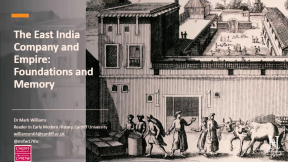
What can the early history of the English East India Company tell us about the foundations of the British Empire, and where does that history sit within current debates about Britain’s imperial legacy? In this session Mark Williams offers a timely insight into the history of one of the most...
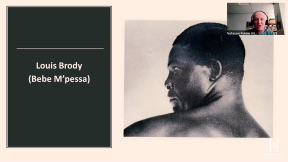
In this webinar, Professor Robbie Aitken looks at the experiences of Black residents in Germany during the Nazi period. Why have they been largely written out of larger histories of the Third Reich? Professor Aitken suggests that there was a genocidal intent in Nazi policy towards them, signalled partly by...
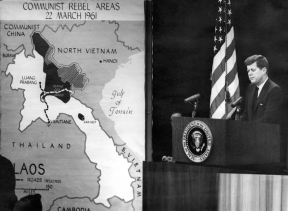
Would US President John F. Kennedy have avoided the catastrophe that became the Vietnam War if Lee Harvey Oswald had not assassinated him in Dallas on that fateful day of 22 November 1963? This question – or a version of it – has animated discussions of the Vietnam War for...
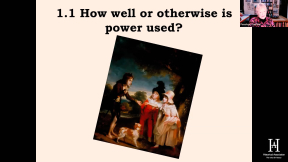
Eighteenth-century Britons were ruled by a restricted oligarchy of landowners and plutocrats. Yet the wider population had a proud tradition of assertiveness and readiness to protest. ‘Britons never will be slaves!’ as the chorus of 'Rule Britannia' (1740) announced pointedly (if somewhat ironically, in view of Britain’s role in the...
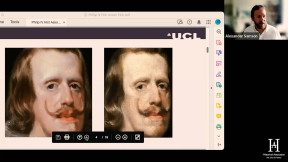
Decline, decadence, crisis, stagnation, and adversity are terms powerfully associated with the reign of Spain’s Planet King; sombre tones that contrast sharply with the glittering cultural and artistic achievements (enhanced by his patronage) that led the period to be dubbed ‘the’ Golden Age, a label consciously competing with France’s later...
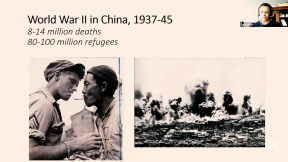
The Chinese regime never used to want to talk about their country’s experience in World War Two. The Japanese occupation of parts of China was felt to be a humiliating episode that was best forgotten, and the Communists were uncomfortable that their nationalist enemy Chiang Kai-Shek had been China’s main...
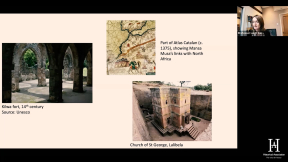
Popular discussions of Africa often focus on the region’s relative poverty, and ask what role historical events like colonialism and the slave trade have played in shaping its development over time. For a long time, the absence of systematic data on African economies before c. 1960 meant these discussions were...
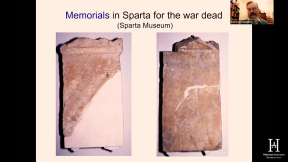
This webinar starts with a basic overview of the city-states of Classical Greece (roughly 500 to 350 BC) and Sparta’s place within their geography and history. It then looks at some common myths about the nature of Spartan society and politics, focusing on areas where recent research has transformed our...
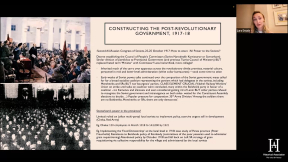
In this webinar Dr Douds examines the nature of political authority in the nascent Soviet Republic and the institutional structures, practices and ideology of government in the Lenin period. She considers how Communist Party dictatorship and the monolithic party-state emerged in the early years following the October Revolution of 1917...
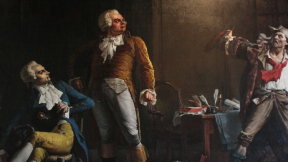
One of the oldest myths of the French Revolution is the lethal rivalry between Robespierre and Danton: Robespierre the cold, bloodthirsty dictator who ruled France through Terror, versus Danton, the warm, humane, inspirational orator who wanted to stop Terror. Throughout the 19th century Robespierre was mostly depicted as a villain,...
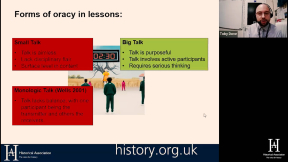
Webinar series: Effective oracy in the secondary history classroom What does great oracy look like in history? This webinar explores the features of good student oracy in a non-disciplinary sense, but also within the setting of a history classroom. It explores how to identify these features in the day to...
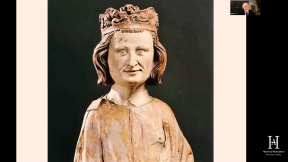
David Carpenter brings to life the dramatic events in the last phase of Henry III’s momentous reign, provides a fresh account of the king’s strenuous efforts to recover power and sheds new light on the rebel figure Simon de Montfort. Professor David Carpenter is a Professor of Medieval History at...
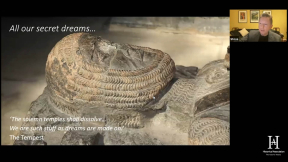
The word Templars conjures up a variety of images and ideas – much of which are fiction rather than fact. In this talk Dr Steve Tibble will unpick some of the stories surrounding this group and place them in a proper historical and factual context. He will explore why the...
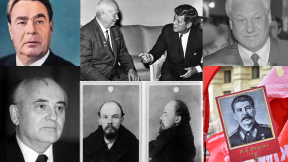
How much of what Russia is today, how its people behave, and how they are perceived is dependent on its history and those that have led it? Was it the first melting pot of the world? Do its broad range of cultural traditions and diversity play a part in its...
Since 2001 the UK has marked Holocaust Memorial Day on 27th January, the date of the 'liberation' of Auschwitz Birkenau by Soviet soldiers in 1945. History teachers and their colleagues are often asked to 'mark' HMD in their schools. In this webinar we will explore themes of commemoration and education...