
Search results
Found 73 results matching “revolutions” in The Historian
Not found what you’re looking for? Try using double quote marks to search for a specific whole word or phrase, try different search filters, or see our search tips.
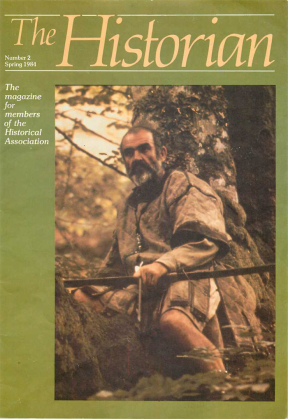
Articles include: 3 Feature: Representations of the Robin Hood Legend – John Taylor 13 The Case for History in School – John Slater 17 Local History: Blind Houses – Mary Delorme 19 Record Linkage: Deadboards – Trevor James 22 Update: Restoration and Revolution 1660-1714 – John Childs 28 Personalia: Profile...
H
Historian Resource
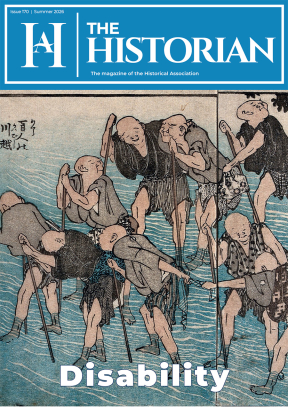
4 Letters 5 Editorial (Read article) 6 Update: Disability history – Daniel Blackie and Alexia Moncrieff (Read article) 10 Deaf marriages and sign language recognition – Rosamund Oates (Read article) 16 Thinking with disability: mapping a disability history perspective onto the history of the British Empire – Esme Cleall (Read...
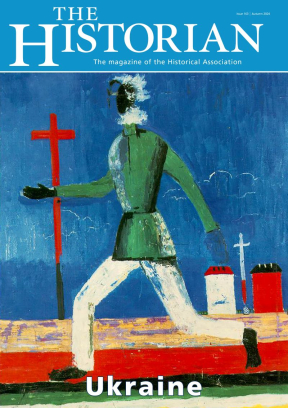
Read The Historian 163: Ukraine The third year of Russia’s full-scale invasion into Ukraine is slowly drawing to a close, with no end to it in sight. Putin’s decision to send troops into Ukraine in hope of a quick capitulation was, however, only the last stage of a longer process...
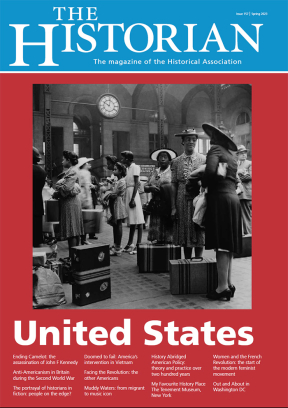
5 Editorial (Read article) 6 Ending Camelot: the assassination of John F Kennedy – Nicolas Kinloch (Read article) 11 Letters 12 Anti-Americanism in Britain during the Second World War – Kit Kowol (Read article) 17 The portrayal of historians in fiction: people on the edge? – Michael Bender (Read article)...

History Abridged: This feature seeks to take a person, event or period and abridge, or focus on, an important event or detail that can get lost in the big picture. Think Horrible Histories for grownups (without the songs and music). See all History Abridged articles Described as the most powerfully...
H
Historian Resource
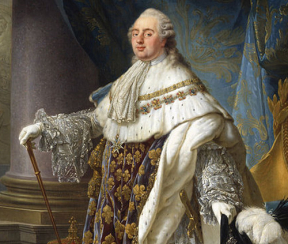
On the night of 20 June 1791 a portly middle-aged man, dressed inconspicuously in brown, with a dark green overcoat and his hair covered by a grey wig, walked out of the Tuileries palace past the guards. For the past 12 nights the Chevalier de Coigny, dressed in a similar...
Sc
Secondary Corporate Resource
St
Student Resource
H
Historian Resource
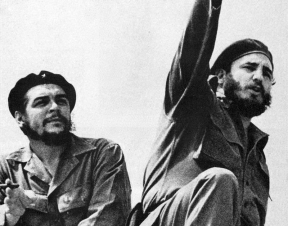
Duplicated Debacles? A comparison of the 1895-96 Jameson Raid and the 1961 Bay of Pigs Invasion. Adam Burns and Robert Gallimore take us on two invasions, one by land and one by sea. Following the Cuban Revolution of 1959 and the rise to power of the socialist regime of Fidel...
Sc
Secondary Corporate Resource
St
Student Resource
H
Historian Resource
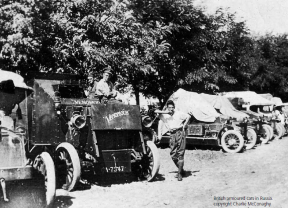
Charlotte Alston reveals a little-known British involvement on the Eastern Front in the Great War.In early January 1918, Lieutenant Commander Soames of the British Armoured Car Division at Kursk, in Russia, telegraphed to his commanding officer Oliver Locker Lampson, who was in London, to thank him for his Christmas greetings....
Sc
Secondary Corporate Resource
St
Student Resource
H
Historian Resource
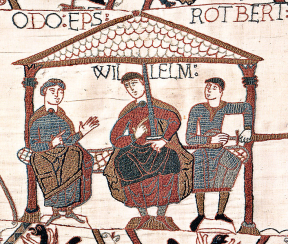
As the most pivotal and traumatic event in English history, the Norman Conquest continues to generate controversy and debate, especially among those who know little about it or enjoy passing judgement on the past. Who had the better claim to the English throne, William the Conqueror or Harold Godwineson? Was...
Sc
Secondary Corporate Resource
St
Student Resource
H
Historian Resource

The viewer of the internationally popular television show Dallas was routinely treated to an aerial tour that skimmed across the open prairie over the distinctive skyscrapers across the fifty-yard line of Texas Stadium and up the manicured pastures of South Fork. This façade of larger-than-life Texana reflects an urban reality...
Sc
Secondary Corporate Resource
St
Student Resource
H
Historian Resource

Christopher Hill, the eminent historian of seventeenth century England, was a convinced Marxist throughout most of his long and productive life (1912-2003). He embraced this secular world-view when he was a young History student at Oxford in the polemical 1930s and never lost his ideological commitment, even though he resigned...
Sc
Secondary Corporate Resource
St
Student Resource
H
Historian Resource
Despite Britain’s longstanding membership of the European Union, the question of ‘Europe’ continues to loom large in the nation’s politics. Whilst the economic pros and cons of Britain ‘joining’ the euro might be understood by only a select few, that issue provides for the many an opportunity to debate Britain’s...
Sc
Secondary Corporate Resource
St
Student Resource
H
Historian Resource
All aspects of Hungarian nationalism – with one exception, which I shall consider later – had more or less similar counterparts elsewhere in Europe; but the blending of those elements yielded a unique constellation. Moreover, the ingredients of this mixture proved highly disruptive for central Europe, indeed at times for...
Sc
Secondary Corporate Resource
St
Student Resource
H
Historian Resource
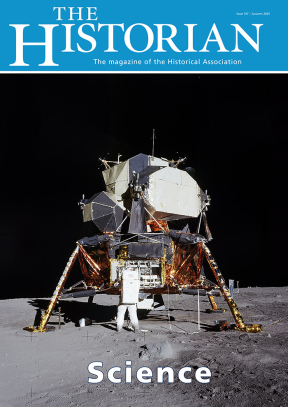
Read The Historian 167: Science 2025 is a memorable year for scientific anniversaries: it is 350 years since the foundation of the Royal Observatory at Greenwich; 200 years since the start of the Royal Institution Christmas Lectures and Michael Faraday’s discovery of benzine; and for the contemporary historians among our...
Read The Historian 157 ‘This will be the American century’, declared the celebrated publisher Henry Luce in 1941. Luce, the son of missionaries, was brought up in China. As a child, he had witnessed the collapse of the Qing dynasty, and the subsequent disintegration of the country. He would probably...
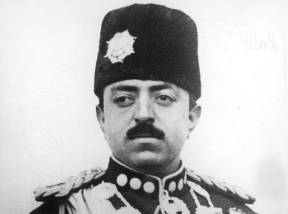
Jules Stewart gives us an insight into how the Germans attempted to destabilise the British strategic position in Afghanistan during the Great War. On a state visit to Berlin in 1928, the Emir of Afghanistan Amanullah Khan was shown a display of the latest in German technology, which included a...
Sc
Secondary Corporate Resource
St
Student Resource
H
Historian Resource

Michael T. Davis compares the parallels between the democratic expectations, or possibilities, of modern-day China with Britain's democratic evolution from the eighteenth century to the emerging democracy of the nineteenth century. The future is an unfamiliar place for historians. Yet we stand on the edge of an historic shift away...
Sc
Secondary Corporate Resource
St
Student Resource
H
Historian Resource
Read The Historian 170: Disability One of the core aims of historical study is the recovery of the full diversity of the human experience. Since the 1960s, which saw the rise of ‘history from below’, our understanding of past societies has become ever richer through studies of ordinary and often...
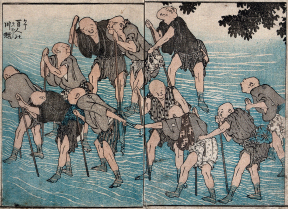
Expansion into new periods and places, new revelations of human diversity and difference, and a rethink of the tools we use to recover the past – disability history is not just thriving but is also exciting, as Daniel Blackie and Alexia Moncrieff demonstrate in their update on the state of...
On reading the title of this article, any reader at all familiar with the social history of late Victorian and Edwardian England is likely to think of the revelations at the time of the extent of urban poverty. Two major enquiries, one into London poverty, and the other into poverty...
Sc
Secondary Corporate Resource
St
Student Resource
H
Historian Resource

She never carries any money but she does carry a handbag. The way that clothes and fashion choices made by HM The Queen are part of her modern armour and reflect her choices as a monarch as discussed in this article. As debates about the relevance of the institution of...
Sc
Secondary Corporate Resource
St
Student Resource
H
Historian Resource
Sarah Davies explores the evidence that even in the most repressive phases of Stalin’s rule, there existed a flourishing ‘shadow culture’, a lively and efficient unofficial network of information and ideas. 'Today a man only talks freely with his wife — at night, with the blankets pulled over his head.’...
Sc
Secondary Corporate Resource
St
Student Resource
H
Historian Resource

In the last two decades or so there has been a movement towards digitising large collections of original sources. These projects have had a range of purposes, approaches and target audiences but there can be little doubt that they have had a profound impact on the practice of history in...
H
Historian Resource