
Search results
Found 44 results matching “2025” in Primary
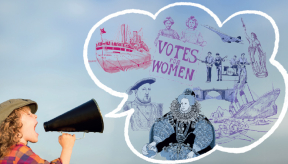
Talking History is now into its second year and gathering speed. Following the pattern of The Great Debate but adapted for Years 5 and 6 the competition seeks to encourage young people’s history and oracy skills through a public presentation. Schools are encouraged to enter their pupils into the online...
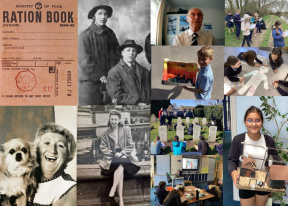
Spirit of Normandy Trust SeniorAvani De Santis [Guildford Grammar School, Western Australia]Kyle Luk [Loughborough Grammar School] Caspar Wright [Wells Cathedral School] Spirit of Normandy Trust Key Stage 3 Anne Andrews [St Mary’s Menston Catholic Voluntary Academy, Leeds]Rafferty Ludlow-Maisey [Crypt Grammar School, Gloucester]Robert Moczynski [Queen Elizabeth Grammar School, Wakefield] Spirit of...

The Historical Association's Medlicott Medal 2025 was awarded to Dr Christine Counsell. The award seeks to recognise individuals from a diversity of backgrounds in their service to history. Read more about Christine, her work and her award here. As is the custom, Dr Christine Counsell received her award and presented...
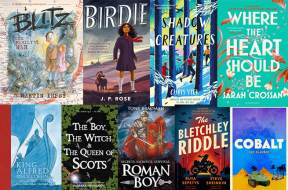
Each year, the Historical Association runs the Young Quills, a competition for published historical fiction for children and young adults (14+). The Young Quills books for each year must be published for the first time in English in the year preceding the competition – so 2024 for this year’s selection....
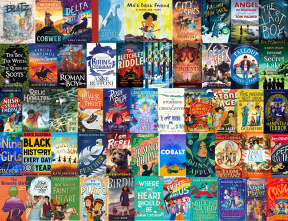
The Young Quills books for each year must be published for the first time in English in the year preceding the competition – so 2024 for this year’s selection. Divided by age suitability the books are given to schools on the condition that the children and young people there write...
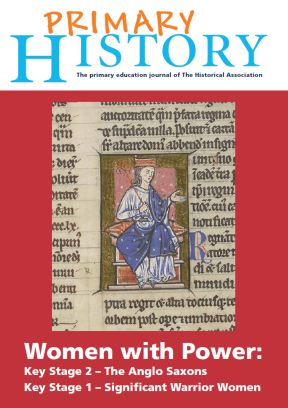
For this year’s Primary History summer resource, we have selected a focus on the lives of women at a particular period – that of the Anglo-Saxon or the early medieval period. This period covers a substantial period of time – around 600 years. It was a time of catalyst and...
P
Primary Resource
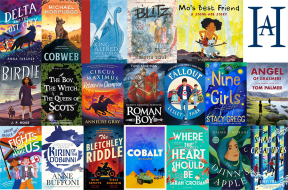
Each year, the Historical Association runs ‘Young Quills’, a competition for published historical fiction for children and young adults (14+). The Young Quills books for each year must be published for the first time in English in the year preceding the competition – so 2024 for this year’s selection. Our...
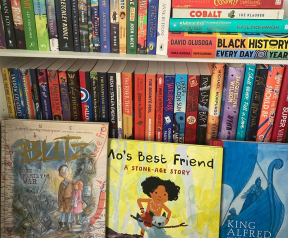
Each year, the Historical Association runs Young Quills, a competition for published historical fiction for children and young adults (14+). The Young Quills books for each year must be published for the first time in English in the year preceding the competition – so 2024 for this year’s selection. Our...

Take time, a place and a character or two, and you can create some of the most exciting stories ever told – and by telling a story you unleash a desire to seek knowledge, to entertain, to inform and to enrich the lives of others. Storytelling is one of the...
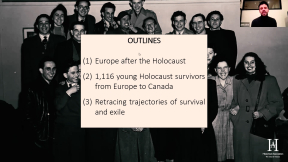
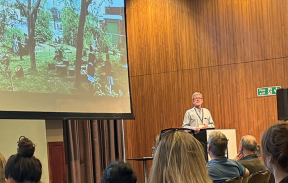
Three student teachers from Liverpool John Moores University had the chance to attend the recent Historical Association Conference held at the Hilton in Liverpool. In this article, they outline the sessions and the benefits of attending, focusing on the sessions that they found most useful. The next conference is being...
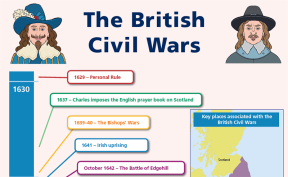
Poster 1: The British Civil Wars Poster 2: Young Quills 2025
P
Primary Resource
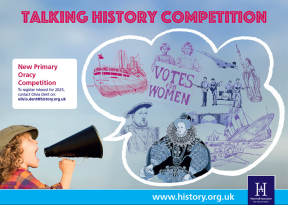
The HA's Primary Oracy Competition: To register interest for 2025, contact Olivia Dent on: olivia.dent@history.org.uk Find out more here
P
Primary Resource
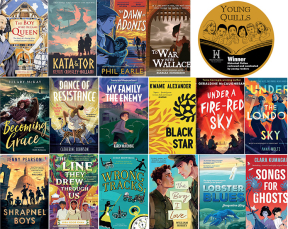
Each year, the Historical Association runs ‘Young Quills’, a competition for published historical fiction for children and young adults (14+). The Young Quills books for each year must be published for the first time in English in the year preceding the competition – so 2025 for this year’s selection. Our...
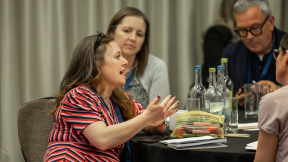
What does this series cover? This webinar series will look at each of the key historical concepts and how these can be implemented in a primary setting. It will give practical advice on how to incorporate the concepts into Key Stage 1 and Key Stage 2 including how to frame...
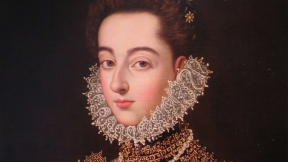
What was life really like for a Spanish royal woman? Catalina Micaela, the younger daughter of Philip II of Spain, wrote extensively to her husband Carlo Emanrele I of Savoy giving fascinating insights into the events at court and the pressures on the families, providing a glimpse into sixteenth-century Spain...
M
Member Resource
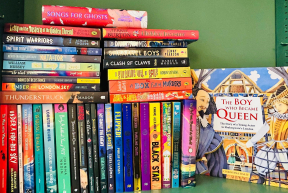
Each year, the Historical Association runs Young Quills, a competition for published historical fiction for children and young adults (14+). The Young Quills books for each year must be published for the first time in English in the year preceding the competition, which was 2025 for the 2026 competition. Our...
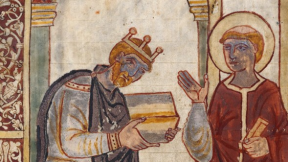
Æthelstan was the early medieval king whose territorial conquests and shrewd statesmanship united the peoples, languages, and cultures that would come to be known as the 'Kingdom of the English.' In this panoramic talk, David Woodman draws on his research and recent book to create a portrait of this immensely...
M
Member Resource
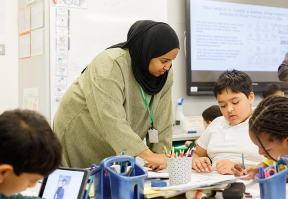
Webinar series: Practical approaches to disciplinary concepts in primary history Session 1: Cause and consequence This webinar explores introducing cause and consequence to students in both explicit and implicit ways. The session will show specific events and unit ideas which will help children grasp the concepts and show teachers how...
P
Primary Resource
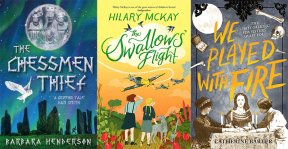
Each year the Historical Association runs the Young Quills, a competition for published historical fiction for children and young adults. The Young Quills books for each year must be published for the first time in English in the year preceding the competition. Divided by age suitability, the books are given...
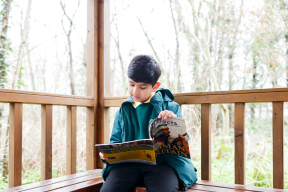
History is a highly literate discipline, but what should the relationship be between primary history and the general teaching of literacy and English? The answer is that primary history should be modelling what it is like to think, speak, read, write and listen in an historical way. However, the subject...
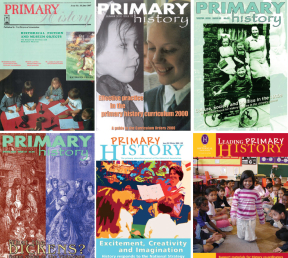
This article is free to everyone. For access to hundreds of other high-quality resources by primary history experts along with free or discounted CPD and membership of a thriving community of teachers and subject leaders, join the Historical Association today Congratulations on the publication of the 100th issue of Primary...
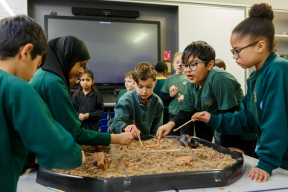
Building and securing disciplinary thinking in primary history Session 2: Helping children think about cause and consequence One of the most common questions asked by historians is ‘why...?’ Why did this event happen? How did the event happen? What were the results of this event? This session will explore disciplinary...
Building and securing disciplinary thinking in primary history Session 3: Helping children think about similarity and difference Historians, when comparing civilisations or places, ask, ‘what is similar?’ and ‘what is different?’ This session will explore disciplinary thinking around similarity and difference, building secure knowledge and equipping children with the vocabulary...
Building and securing disciplinary thinking in primary history Session 4: Helping children think about change and continuity Historians, when studying a period of history, ask ‘what changed over this period?’ and ‘what stayed the same over this period?’ This session will explore disciplinary thinking around change and continuity, helping children...