
Britain & Ireland
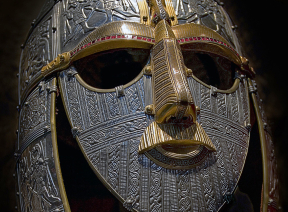
In this HA Podcast Series Professor Joanna Story of the University of Leicester looks at the history of the Anglo-Saxons.
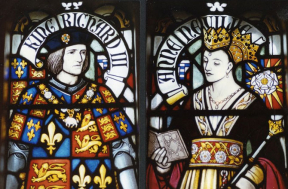
Deirdre O’Sullivan explains how history courses such as England in the Time of Richard III are now freely available to people anywhere in the world who have online access. She reports that in the past two years 40,000 learners have followed this course. MOOCs (Massive Open Access Online Courses) are...
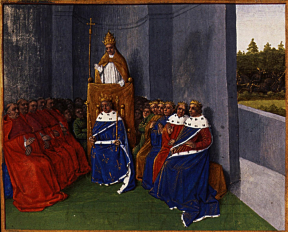
An HA Podcasted History of the Crusades featuring Professor Jonathan Riley-Smith, Professor Jonathan Phillips of Royal Holloway, University of London and Dr Tom Asbridge of Queen Mary, University of London.
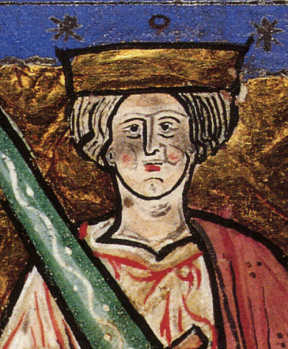
An HA Podcasted History featuring Professor David Bates and Professor Nicholas Vincent of the University of East Anglia, Dr Philip Morgan of Keele University, Professor Mark Ormrod of the University of York, Dr James Davis of Queens University Belfast, Professor Michael Hicks of the University of Winchester, Dr Sean Cunningham...
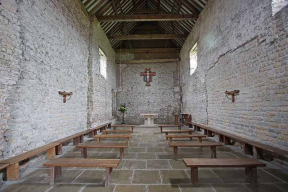
Marie Paterson discovered this historical and spiritual structure many years ago and it continues to affect her. In Essex, on the northern shore of the Dengie Hundred, overlooking the mouth of the Blackwater estuary, proudly stands the lonely Saxon chapel of St Peter’s-on-the-Wall. Erected on the site of the Roman...
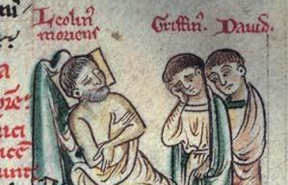
In this set of podcasts Dr Melissa Julian-Jones, Dr David Wyatt, Dr Gideon Brough and Dr Dylan Foster Evans of Cardiff University and Dr Emma Cavell of the University of Leeds look at some key aspects and figures of medieval Welsh history.
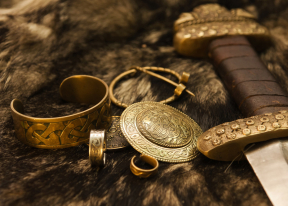
An HA Podcasted History of the Vikings featuring Professor Rosamond McKitterick, Sidney Sussex College, University of Cambridge.
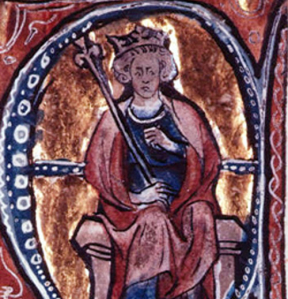
When Queen Victoria died in 1901, the Annual Register remarked that the feeling of forlorn-ness which swept the country had no parallel since the death of King Alfred. The men of the new century were driven to seek a Saxon parallel. So too were men at the beginning of the...
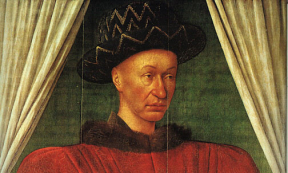
How can a war last 100 years? What did this mean for the peoples of England and France during the medieval period? How significant were the battles of Poitiers, Crecy and Agincourt? In this podcast series the 100 Years War is explained, explored and brought to life. The lists of...
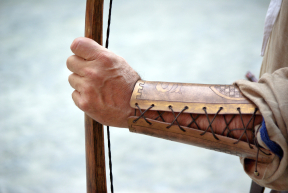
Adam Chapman debates the evidence for a Welsh presence among Henry V’s highly-successful force of archers at Agincourt in 1415. Michael Drayton, in his poem of 1627, The Bataille of Agincourt, described the Welsh presence in Henry V's army: ‘who no lesse honour ow'd To their own king, nor yet...
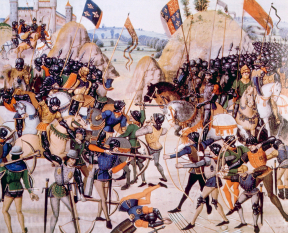
In the tradition of landscape historians, Peter Hoskins has explored some of the route marches taken by English armies during the Hundred Years War. After the battle of Crécy in 1346 and the capture of Calais by Edward III in the following year the Hundred Years War settled into an...
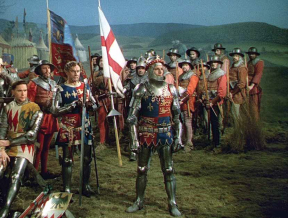
Public attitudes to Henry V are very much influenced by WilliamShakespeare's interpretation. Richard Inverne discusses howShakespeare's version has been translated into cinematic form byLaurence Olivier and Kenneth Branagh. Shakespeare indulges himself considerably with his own relatively recent history - Richards II and III, Henrys IV, V and VI, for example....
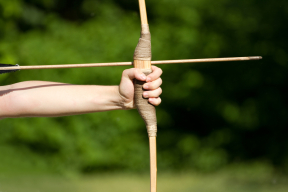
Our perspective on how archers performed in battle is enhanced byMark Hinsley's research into their use of protective stakes. On the approach to Agincourt in 1415 a small skirmish took place at Corbie, on the Somme. A force of French men-at-arms sallied out from the town and cut up some...
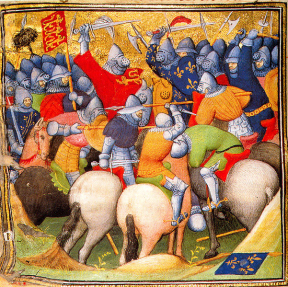
Agincourt has become one of a small number of iconic events in our collective memory. Anne Curry explores how succeeding generations have exploited its significance. In his budget statement of 18 March 2015 the Chancellor of the Exchequer, George Osborne, announced £1m had been awarded to commemorate the 600th anniversary...
(Historical Association Pamphlet, No. 124, 1942) Dunlop's research into the occupations and attitudes of Scots abroad during the 15th century uncovers some surprising revelations about all members of the Scottish ex-pat society. She particularly notes the ‘scurrilous' opinions of the French regarding Scotsmen's behaviour. While Scottish diplomatists and envoys tended...
‘When Kings and chief officers suffer their under rulers to misuse their subjects and will not hear nor remedy their people's wrongs when they complain, then suffereth God the rebel to rage and to execute that part of His justice which the partial prince will not.' Thus did the Tudor...
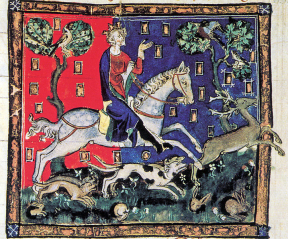
Magna Carta provided a commentary on the ills of the realm in the time of King John. Sophie Ambler looks at what grievances were addressed in the Charter, how the Charter was made, and what the Charter tells us about King John himself. The world from which Magna Carta came...
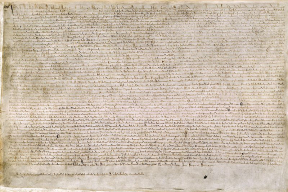
Magna Carta was to go through a number of revisions before it finally took its place on the statute book. Nicholas Vincent takes us through the twists and turns of the tale of the Charter's death and revival after June 1215. The Charter issued by King John at Runnymede is...
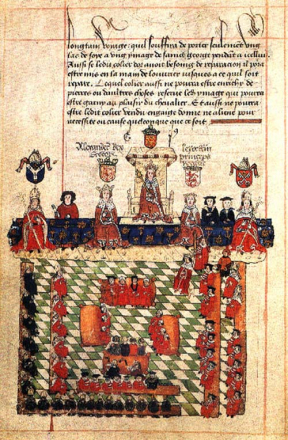
In February this year the four surviving originals of Magna Carta were briefly brought together in the Houses of Parliament. John Maddicott, examining the Charter's role in the early development of Parliament, shows that the setting was well chosen. What did Magna Carta contribute to the origins of parliament? If...
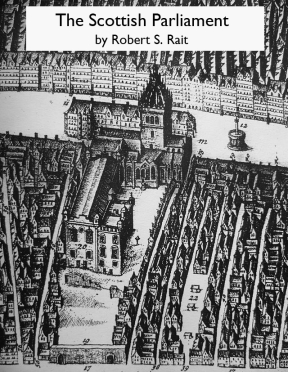
This short pamphlet by the former Historiographer Royal for Scotland, Robert S. Rait, provides an introduction to the Scottish Parliament from its early origins to the Acts of Union of 1707.