
Search results
Found 42 results matching “holocaust” in Periods and Themes
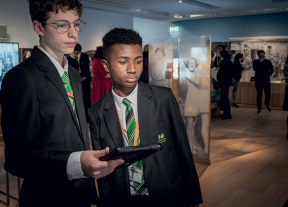
Educators at Imperial War Museums (IWM) have been leading voices in Holocaust education since the Holocaust Exhibition opened at IWM London in June 2000. In this article, Clare Lawlor shares the design of IWM’s new Holocaust Learning Programme for schools, and the pedagogic research that underpinned the design process. The...
S
Secondary Resource
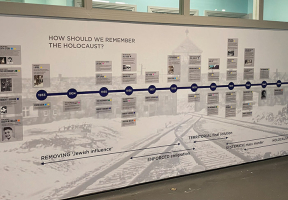
How can we help students understand the Holocaust in its full historical complexity, particularly when they often come to class with misconceptions arising from the representation of the Holocaust in popular culture? Over a three-year period, Sam Ineson set out to integrate the historical Holocaust into his school’s formal and...
S
Secondary Resource
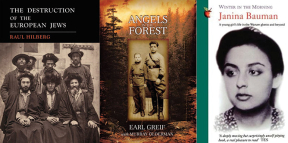
Inspired by the work of the social and cultural historian Tim Cole, Stuart Farley decided to look again at the way he teaches the Holocaust. He wanted to focus on the geographical concept of place as a way of enabling his Year 9 students to build far more diverse narratives,...
S
Secondary Resource
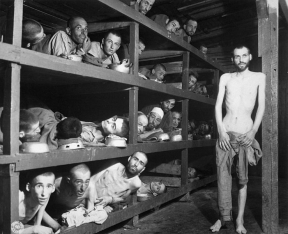
In August 1945, Zalman Grinberg, a doctor from Kovno and spokesman for the Liberated Jews in the American Zone of Germany, addressed 1,700 Jewish survivors. ‘What is the logic of destiny to let these individuals remain alive?!' he asked them: We are free now, but we do not know what...
S
Secondary Resource
Daniel Goldhagen defines anti-semitism as ‘negative beliefs and emotions about Jews qua Jews.' Nazis believed Jews to be the source of Germany's misfortunes, and that they must be denied German citizenship and removed from German society. Hitler never compromised on the need to settle what he regarded as the Jewish...
Sc
Secondary Corporate Resource
St
Student Resource
H
Historian Resource
The Holocaust is often framed, in textbooks and exam syllabi, from a perpetrator perspective as a narrative of Nazi policy. We are offered a different orientation here. Interrogating and understanding the Holocaust involves understanding why the people who perpetrated the Holocaust did the things that they did. As Wolf Kaiser...
S
Secondary Resource
To choose to act, to have no choice to be who you are, to live an ordinary life in extraordinary times? These are all questions that the Holocaust raises. Millions of people became victims of the Nazis, millions more choose not to act to stop the events around them, felt...
M
Member Resource

Please note: this unit was produced before the 2014 curriculum. This CPD unit focuses on the experience of Muslim rescuers during the Holocaust and the Second World War. It was written by Andrew Wrenn, Cambridgeshire Humanities Advisor, and complements the Muslim Tommies lesson sequence which deals with the experience of...
As more and more schools take students on visits to locations associated with the history of the Holocaust, history teachers have to find ways to make these places historically meaningful for their students. David Waters shows here how he introduced his students to the multiple narratives associated with the history...
S
Secondary Resource

The field of Holocaust studies has been hit by an intellectual earthquake whose precise magnitude and long-term consequences cannot be ascertained at this stage. In 2007 Saul Friedländer published The Years of Extermination: Nazi Germany and the Jews 1939-1945. The book has been rightly celebrated as the first victim-centred synthetic...
Sc
Secondary Corporate Resource
St
Student Resource
No institution is better known for its continuing work on the Holocaust than Jerusalem’s Yad Vashem. In this article Richelle Budd Caplan offers guidelines for teachers, based on its unrivalled experience. She demands that our teaching of this subject should aim to restore the identities of the victims. To do...
S
Secondary Resource
The new Holocaust Exhibition at the Imperial War Museum in London has been very favourably received by the general public, and by teachers and their students. Initially controversial - was a war museum the ideal site for such an exhibition, for example? - it has since been widely praised for...
S
Secondary Resource
International Journal of Historical Learning, Teaching and Research [IJHLTR], Volume 14, Number 2 – Spring/Summer 2017 ISSN: 14472-9474 Abstract In this article I seek to encourage those involved in Holocaust education in schools to engage not just with the Holocaust but also with its aftermath. I conceptualise the latter in...
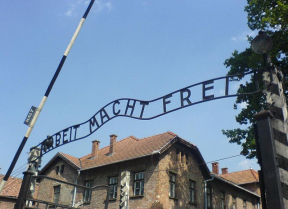
‘It made my brain hurt, but in a good way': helping Year 9 learn to make and to evaluate explanations for the Holocaust Why genocides occur is a perplexing and complex question. Leanne Judson reports a strategy designed to help students think about perpetration and evaluate and propose explanations for...
S
Secondary Resource
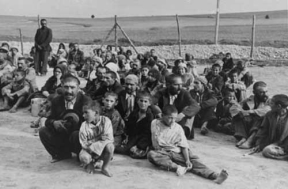
Students make sense of new learning on the basis of their prior understandings: we cannot move our students' thinking on unless we understand what they already know. In this article, Edwards and O'Dowd report how they set out to scope a group of Y ear 8 students' prior learning and...
S
Secondary Resource
Polychronicon was a fourteenth-century chronicle that brought together much of the knowledge of its own age. Our Polychronicon in Teaching History is a regular feature helping school history teachers to update their subject knowledge, with special emphasis on recent historiography and changing interpretation. This edition of 'Polychronicon' focuses on historians...
S
Secondary Resource
Clear themes run through the work of the history department at Huntington School. A remarkably consistent emphasis on language and literacy, including work on speaking and listening of many types, is a hallmark of this sequence of six Year 9 lessons on the Holocaust, described in detail by head of...
S
Secondary Resource
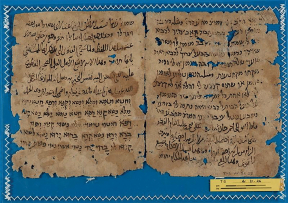
A conversation with some undergraduate students prompted Rob Kanter to explore how his own historical research on Jewish–Muslim relations could be integrated into the history curriculum in secondary schools. Kanter identified two stories of Muslim rescue during the Holocaust which he shares here to empower teachers to challenge misconceptions and...
S
Secondary Resource
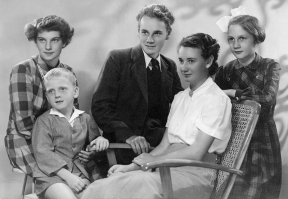
Lien de Jong celebrates her 90th birthday in September 2023. In lots of ways, her biography is similar to many Europeans of her generation. She was born, grew up and went to school in The Hague during the 1930s. She trained to work in a nursery. In the 1950s, she...
S
Secondary Resource
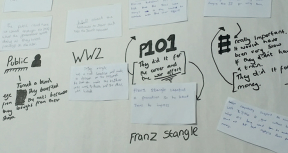
Building on research by the UCL Centre for Holocaust Education, Matthew Duncan was concerned that his students were drawn to simplistic explanations of Holocaust perpetrators’ actions. As well as the UCL Centre’s research, Duncan drew on history education research from Canada and history teachers’ theorisation in England for inspiration in...
S
Secondary Resource
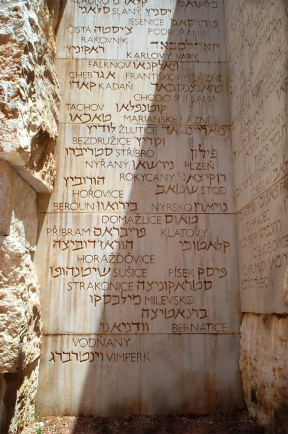
Peter Morgan represents what is best about the reflective practitioner - an experienced teacher of some 15 years' standing, he continues to challenge himself and to seek ways to improve and develop his classroom practice. Deeply influenced by the pedagogy and resources that he encountered on the CPD of the...
S
Secondary Resource
Challenging stereotypes and avoiding the superficial: a suggested approach to teaching the Holocaust
Alison Kitson provides a rationale for a scheme of work for Year 9 (13-14 year-olds). She argues that teachers should analyse the kind of historical learning that is taking place when the Holocaust is studied. Critical of the assumption that learning will take place as a result of exposure, she...
S
Secondary Resource
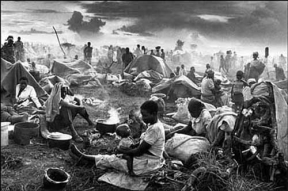
As an IOE Beacon School, St John's explored how learning about the Holocaust can improve understanding about other genocides and help strengthen efforts towards genocide prevention. ‘We Remember Rwanda' One important outcome is the impact on students, aged 13-17, who - in the 20th anniversary year of the genocide in...
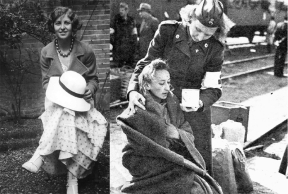
Responding to concerns about Dutch students’ citizenship education, Tim Huijgen, Paul Holthuis, Roel Nijmeijer and Iris van den Brand set out to design online materials to help students understand the decisions and dilemmas faced by past actors. They focused on the life and actions of Rosie Glaser (1914–2000), a Dutch...
S
Secondary Resource
Patterns of genocide: can we educate Year 9 in genocide prevention? Alison Stephen, who has wrestled for many years with the challenges of teaching emotional and controversial history within a multiethnic school setting, relished the opportunity to link her school's teaching of the Holocaust with a comparative study of other...
S
Secondary Resource