Europe

From the fall of Napoleon to Revolution in Russia and from the rise of Hitler to the fall of the Berlin Wall this period is one of major upheaval in Europe. We see the collapse of monarchies and empires and the changing status of women and working men. This is a time that witnesses the mass displacement of peoples and genocide on a scale never seen before it is also a time that sees changes in medicine and technology that make fundamental changes to our everyday lives. Read more

Sort by: Date (Newest first) | Title A-Z
Show: All | Articles | Podcasts | Multipage Articles
  • My Favourite History Place: the Berlin Wall

    Article

    Military history enthusiast David Wilson writes about why the Berlin Wall is still such an important symbol and reminder. I first visited Berlin in the mid 1980s when I was stationed in Germany as part of the British Army. It was an interesting place to go because until then the Cold...

    Click to view
  • Napoleon III and the French Second Empire

    Article

    The French Second Empire has been variously described as a precursor of Twentieth Century Fascism and a prime example of a modernising regime. Roger Price continues recents efforts to achieve a more balanced assessment by setting the regime within its particular social and political context. The origins of the Second...

    Click to view
  • Napoleon: First Consul and Emperor of the French

    Article

    Four years after the battle of Waterloo, Richard Whately publicised a philosophical essay in which he argued that there was no real proof of Napoleon's existence. The deeds attributed to him were either so wondrously good or so amazingly bad that they far outran the evidence available to support them:...

    Click to view
  • Nazi aggression: planned or improvised?

    Article

    Read more like this: Nazism and Stalinism Fascism in Europe 1919-1945 Kristallnacht Anti-semitism and the Holocaust The Coming of War in 1939 Political internment without trial in wartime Britain Neville Chamberlain: villain or hero? The Mechanical Battle of Britain Since the 1960s, there have been two main schools of thought...

    Click to view
  • Nazism and Stalinism

    Article

    Is it legitimate to compare the Nazi and Stalinist regimes? There might seem little room for doubt. It is often taken as self-evident that the two regimes were variations of a common type. They are bracketed together in school and university courses, as well as text books, under labels such...

    Click to view
  • Opposition and Resistance in the GDR

    Article

    A journalistic coup broke over Germany on 2 January 1978. The West German news magazine, Der Spiegel, published the first part of a longer piece in which an association calling itself the ‘Alliance of German Democratic Communists’ seriously criticized the policies of the East German Communist Party, the SED, and...

    Click to view
  • Out and About with Garibaldi

    Article

    One approach used by British local historians is to explore and examine patterns in the landscape, based on a belief that the patterns will instruct and develop our historical awareness and understanding. Although approaches to local history may be less developed abroad, we can still apply our techniques to the...

    Click to view
  • Personality & Power: The individual's role in the history of twentieth-century Europe

    Article

    What role do individuals wielding great power play in determining significant historical change? And how do historians locate human agency in historical change, and explain it? These are the issues I would like to reflect a little upon here. They are not new problems. But they are inescapable ones for...

    Click to view
  • Podcast: Richard Evans Medlicott -The Origins of the First World War

    Article

    This year the Historical Association's Medlicott medal for services to history went to Professor Sir Richard Evans. Richard Evans is the Regius Professor of History at Cambridge and President of Wolfson College, Cambridge. He has written numerous highly respected and internationally best-selling books. Evans is bests known for his works on...

    Click to view
  • Polychronicon 135: Post-modern Holocaust Historiography

    Article

    The field of Holocaust studies has been hit by an intellectual earthquake whose precise magnitude and long-term consequences cannot be ascertained at this stage. In 2007 Saul Friedländer published The Years of Extermination: Nazi Germany and the Jews 1939-1945. The book has been rightly celebrated as the first victim-centred synthetic history...

    Click to view
  • Polychronicon 162: Reinterpreting the May 1968 events in France

    Article

    As Kristin Ross has persuasively argued, by the 1980s interpretations of the French events of May 1968 had shrunk to a narrow set of received ideas around student protest, labelled by Chris Reynolds a ‘doxa’. Media discourse is dominated by a narrow range of former participants labelled ‘memory barons’ –...

    Click to view
  • Polychronicon 165: The 1917 revolutions in 2017: 100 years on

    Article

    The interpretive and empirical frameworks utilised by scholars in their quest to understand the Russian revolutions have evolved and transformed over 100 years. The opening of archives after the collapse of the Soviet Union enabled access to a swathe of new primary sources, some of which have had a transformative...

    Click to view
  • Radiating the Revolution: Agitation in the Russian Civil War 1917-21

    Article

    When the Bolsheviks seized power in what was essentially a carefully organised coup d’état in October 1917, they seized control only of the levers of central power in the then capital, Petrograd, which had already become the centre of working-class discontent. What they most emphatically did not do was to...

    Click to view
  • Radicalism and its Results, 1760-1837

    Article

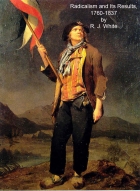
    Radicalism with a large "R", unlike Conservatism with a large "C" and Liberalism with a large "L", is not a historical term of even proximate precision. There was never a Radical Party with a national organization, local associations, or a treasury. But there were, and there are, "Radicals", generally qualified...

    Click to view
  • Real Lives: A German captain’s perspective on the end of WWI

    Article

    Our series ‘Real Lives’ seeks to put the story of the ordinary person into our great historical narrative. We are all part of the rich fabric of the communities in which we live and we are affected sto greater and lesser degrees by the big events that happen on a daily...

    Click to view
  • Recorded Webinar: Ukraine and the Soviet Politics of Empire

    Article

    Dr Zbigniew Wojnowski is a historian based at the University of Oxford. He specialises in the history of the Cold War and is particularly interested in the history of Soviet social, cultural, and political interactions with Eastern Europe after 1945. In 2017, he published a book entitled The Near Abroad:...

    Click to view
  • Recorded webinar: Mapping uncertainty - Holocaust Memorial Day 2025

    Article

    Click to view
  • Recorded webinar: Ordinary people - Holocaust Memorial Day 2023

    Article

    To choose to act, to have no choice to be who you are, to live an ordinary life in extraordinary times? These are all questions that the Holocaust raises. Millions of people became victims of the Nazis, millions more choose not to act to stop the events around them, felt...

    Click to view
  • Recorded webinar: Using 'One Day' to explore the actions that helped to lead to the Holocaust and actions of genocide

    Article

    This year's Holocaust Memorial Day the theme is 'One Day'. In this webinar with historian Paula Kitching, we will use the one day Wannsee Conference of January 1942 to help explore the actions of the perpetrators, the Holocaust victims and how decision making by people can lead to genocide. This...

    Click to view
  • Social Darwinism: the myth and its reinvention

    Article

    ‘Social Darwinism’ has been associated in academia and popular consciousness with negative concepts such as hyper-nationalism and eugenics. Geoffrey M. Hodgson challenges the notion that Social Darwinism or its proponents were ever well-defined. By tracing the use of ‘Social Darwinism’ across academic disciplines and globally over a long period, Hodgson...

    Click to view