Europe

From the fall of Napoleon to Revolution in Russia and from the rise of Hitler to the fall of the Berlin Wall this period is one of major upheaval in Europe. We see the collapse of monarchies and empires and the changing status of women and working men. This is a time that witnesses the mass displacement of peoples and genocide on a scale never seen before it is also a time that sees changes in medicine and technology that make fundamental changes to our everyday lives. Read more

Sort by: Date (Newest first) | Title A-Z
Show: All | Articles | Podcasts | Multipage Articles
  • Virtual Branch Recording: Hotel Exile: Paris in the Shadow of War

    Article

    Jane Rogoyska tells the story of the Hôtel Lutetia, the only ‘grand’ hotel on the city’s bohemian Left Bank, serving as a meeting place for artists, musicians and politicians. André Gide took his lunch here, James Joyce lived in one of its rooms, Picasso and Matisse were regular guests. But...

    Click to view
  • Social Darwinism: the myth and its reinvention

    Article

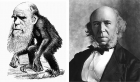
    ‘Social Darwinism’ has been associated in academia and popular consciousness with negative concepts such as hyper-nationalism and eugenics. Geoffrey M. Hodgson challenges the notion that Social Darwinism or its proponents were ever well-defined. By tracing the use of ‘Social Darwinism’ across academic disciplines and globally over a long period, Hodgson...

    Click to view
  • Real Lives: A German captain’s perspective on the end of WWI

    Article

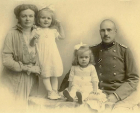
    Our series ‘Real Lives’ seeks to put the story of the ordinary person into our great historical narrative. We are all part of the rich fabric of the communities in which we live and we are affected sto greater and lesser degrees by the big events that happen on a daily...

    Click to view
  • Introductory film: Brezhnev - Interpretations

    Article

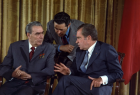
    Log in below to preview the introductory film - available to all registered users of the website. This open access introductory film forms part of our ongoing film series on Power and authority in Russia and the Soviet Union. All the films are available through the Student Zone with corporate secondary membership. ...

    Click to view
  • Recorded webinar: Mapping uncertainty - Holocaust Memorial Day 2025

    Article

    Click to view
  • Introductory film: Lenin - Interpretations

    Article

    Log in below to preview the introductory film - available to all registered users of the website. This open access introductory film forms part of our ongoing film series on Power and authority in Russia and the Soviet Union. All the films are available through the Student Zone with corporate secondary membership. ...

    Click to view
  • Introductory film: Khrushchev - Interpretations

    Article

    Log in below to preview the introductory film - available to all registered users of the website. This open access introductory film forms part of our ongoing film series on Power and authority in Russia and the Soviet Union. All the films are available through the Student Zone with corporate secondary...

    Click to view
  • The Battle of Monte Cassino and the D-Day Landings

    Article

    The Second World War is no longer a recent war. Very soon, there will be no veterans left to tell us how they saw things and what it was really like for them. While some eyewitnesses who were children at the time might be with us to see the centenary...

    Click to view
  • Women and the French Revolution: the start of the modern feminist movement

    Article

    Luke Rimmo Loyi Lego explores the role of women in the French Revolution, and how their challenges to traditional gender roles laid the foundations for the modern feminist movement.  The study of the French Revolution is often restricted to its impact on the Enlightenment ideas of influential men such as Rousseau,...

    Click to view
  • Film: Social & Cultural Change

    Article

    How did a new Germany rebuild itself from the legacy of the Second World War both physically, emotionally and culturally? Professor Stibbe explores the silences of many households and how that influenced the student rebellion of the late 1960s. He also puts into perspective the cultural impact that the war...

    Click to view
  • Film: Key Personalities and Opposition

    Article

    Professor Matthew Stibbe examines the key political leaders of West and East Germany and how their decisions and responses to political events shaped their international relationships and the lives of the divided German population under their control. He also looks at the opposition and resistance these governments faced domestically during...

    Click to view
  • Film: Ideas and Ideology

    Article

    Professor Matthew Stibbe assesses some of the contradictory factors at play in East Germany and how that related to the wider Soviet system. He contrasts this with the development of the capitalist system that was being developed in West Germany. If you're unable to see the film below, please use...

    Click to view
  • Film: The Two German Economies

    Article

    The speed at which both sides in Germany recovered economically is re-examined in this film. Professor Matthew Stibbe describes how the West Germany economy recovered and became a magnet for migrants as well as East Germans. However, he also examines how East Germany’s economy compared more successfully to some of...

    Click to view
  • Film: Germany 1945-1991: Introduction

    Article

    Germany as a divided and defeated nation is explored through the lens of how the two new Germanys rebuilt their States politically and culturally. Professor Anna Saunders reflects on the different inequalities that existed between the two states and how stability was established between political leaders, even when political dissent...

    Click to view
  • Film series: Power and authority in Germany, 1871-1991

    Article

    The rise and fall of Germany in the 20th Century is one of the major political arcs of the modern period, and one that many feel familiar with – from the unification of the Germanic states, the defeat of the Kaiser in 1918, revolution, a weak Weimar Republic all the...

    Click to view
  • Film: The Weimar Republic

    Article

    Professor Tim Grady takes us back to the final days of the First World War to examine the developing splits in German society that turned into revolutionary chasms following the country’s defeat. From this he reassesses some of the factors that led to the Weimar Republic’s collapse while also allowing...

    Click to view
  • Germany 1914-1929: Discussion

    Article

    Professors Tim Grady and Matthew Stibbe consider changing interpretations of Germany in 1914-1929, from a negative continuum of authoritarianism culminating in Hitler's regime to a modern approach of seeing the Weimar Republic through a sociocultural lens. If you're unable to see the film below, please use the link for your Membership...

    Click to view
  • Film: Nazi Germany

    Article

    Dr Victoria Taylor provides an overview of the rise to power of Hitler from disillusioned veteran to political operator. She goes on to explore the messaging and state interventions that brought many Germans under Hitler and the Nazis spell as they enacted their ideas of what a powerful Germany should...

    Click to view
  • Film: Heligoland: Britain, Germany, and the Struggle for the North Sea

    Article

    Professor Jan Rüger joined the Virtual Branch on 9th February 2023 to talk about his book Heligoland: Britain, Germany, and the Struggle for the North Sea, tracing a rich history of contact and conflict from the Napoleonic Wars to the Cold War. For generations this North Sea island expressed a German...

    Click to view
  • Evelyn Waugh’s books on the Italo-Ethiopian War, 1935–36

    Article

    Philip Woods discusses Evelyn Waugh’s contribution to understanding the nature of journalism before the Second World War. This article compares the value to historians of the two books Evelyn Waugh wrote based on his experiences as a war correspondent covering the Italo-Ethiopian war of 1935–36. The popular satiric novel Scoop (1938) is...

    Click to view