
Past event resources
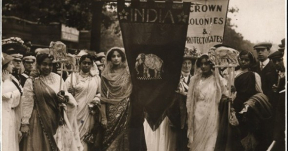
Between 1917 and 1947, women in the Indian subcontinent were engaged in active debates and noteworthy demonstrations for the vote, building up a national suffrage movement. In this talk Professor Sumita Mukherjee discusses the activities of Indian suffragettes in this period, showing how they were connected with British and other...
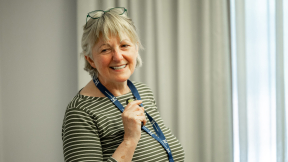
The Historical Association's Medlicott Medal 2025 was awarded to Dr Christine Counsell. The award seeks to recognise individuals from a diversity of backgrounds in their service to history. Read more about Christine, her work and her award here. As is the custom, Dr Christine Counsell received her award and presented...
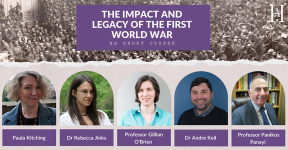
Beyond the mud and blood: The First World War and the social, political and cultural impact and legacy on ordinary people While the first global conflict of the modern world fuelled military and leadership challenges, it also created an environment of social, political and cultural unrest. 2024 was 110 years...
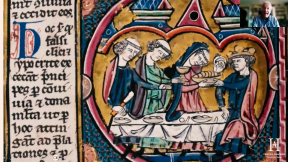
In his recent book The Monastic World, Andrew Jotischky looks at how from the late Roman Empire onwards, monasteries and convents were a common sight throughout Europe. The history of monasticism is defined by the fierce and passionate abandonment of the ordinary comforts of life, the most striking being food...
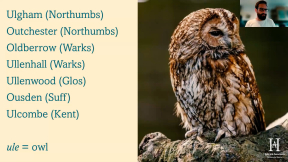
In his recent book The Cuckoo's Lea Michael J Warren provides a exploration of how birds are entwined with British history, particularly in our place names. Join us for an exclusive Q&A with the author to weave together literature, history and ornithology and discover a fascinating heritage that matters deeply...
The Reformations, both Protestant and Catholic, have long been told as stories of men. But women were central to the transformations that took place in Europe and beyond. What was life like for them in this turbulent period? How did their actions and ideas shape Christianity and influence societies around...
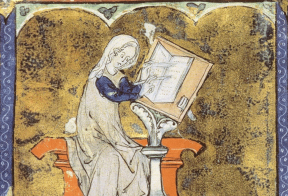
What was life really like for women in the medieval period? How did they think about sex, death and God? Could they live independent lives? Few women had the luxury of writing down their thoughts and feelings during medieval times. But remarkably, there are at least four who did: Marie...
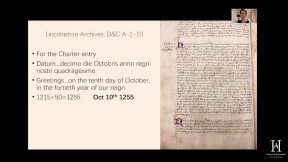
As part of a project to identify and write biographies of all of the Jews of the medieval Lincoln Jewry, Natasha Jenman, Luka Liu, and Josh Outhwaite have been working on records of Jewish property ownership in the city across the thirteenth century. This allows them to identify those individuals...
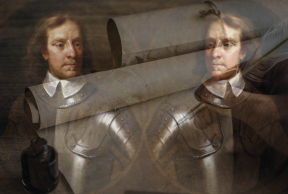
Oliver Cromwell’s death in 1658 sparked a period of unrivalled turmoil and confusion in English history. In less than two years, there were close to ten changes of government; rival armies of Englishmen faced each other across the Scottish border; and the Long Parliament was finally dissolved after two decades....
The religious wars of the Crusades are renowned for their military engagements. But the period was witness to brutality beyond the battlefield. More so than any other medieval war zone, the Holy Land was rife with unprecedented levels of criminality and violence. In the first history of its kind, Steve...
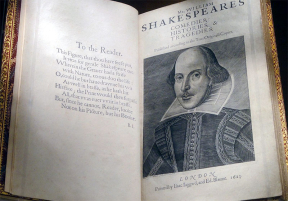
To mark the anniversary of the publication of Shakespeare’s first folio in 1623–24, our 2024 winter webinar series focused on ‘The history that Shakespeare gave us’. The representation of the past in Shakespeare’s plays has shaped many people’s understanding of history. In this webinar series, leading academics explore the history...
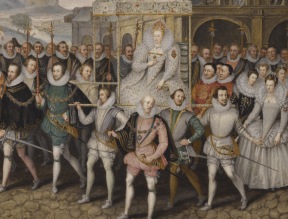
In this Virtual Branch talk Professor Emma Smith provides a preview of her current research, which explores the lives and cultural undercurrents of Elizabethan England. What was influencing their cultural tastes and how much of it was new, or had it all been seen before? Emma Smith is Professor of...
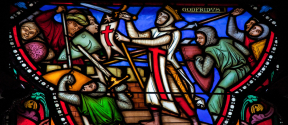
As Christianity had spread across Europe, Islam had spread across the Middle East. At the end of the eleventh century the relationship between the Muslim leader of Jerusalem and the Christian communities and travellers to the city fractured. Along with other key relationships across Europe, the Middle East and around...
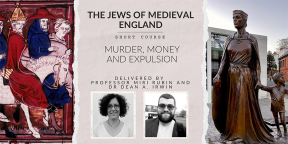
A Jewish community was established in England shortly after the Norman Conquest. Initially confined to London, from the 1130s onwards Jews began to settle in other parts of the country, where they lived as English Jews for more than two centuries. Their life in England came to an end in...
In this Virtual Branch talk, Dr Alvin Finkel challenges claims that egalitarian, peaceful societies disappeared with the founding of agriculture or with the founding of state-level social organisation. Different authors have suggested that early human society was essentially egalitarian in nature, with hierarchies only later becoming common. The point at...
Red Lion Square was long one of London's most genteel addresses, home to nobles, scholars, and professionals. But on 25 March 1818, one house on the south side opened its doors to quite another class of person, as the Mendicity Society began its business. Set up to solve the growing...
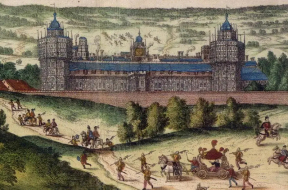
During his lifetime, Henry VIII journeyed throughout his kingdom in what are known as royal 'progresses'. In this webinar, Anthony Musson will share research from the AHRC-funded 'Henry on Tour' project which seeks to reassess these progresses by exploring archival sources, archaeology, music and material culture. In addition to contributing...
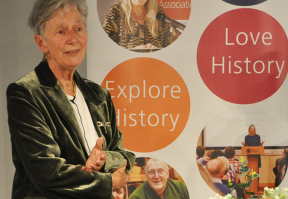
Addressing issues of the legacies of racism created by the transatlantic slave trade and the narratives of its abolition The Medlicott Medal is awarded annually for outstanding services and contributions to history. This year the Medal went to Professor Catherine Hall, who is Emerita Professor of Modern British Social and...
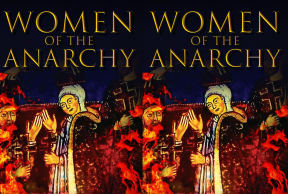
In 1135 Stephen of Blois usurped the throne, stealing it from his cousin Empress Matilda and sparking a nineteen-year civil war that would become known as the Anarchy, one of the bloodiest periods in English history. On the one side is Empress Matilda. On the other side is her cousin,...