
Past event resources
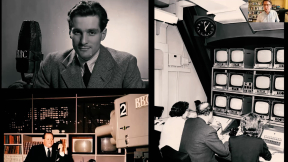
In the 1950s, Britain fought a series of brutal wars against insurgents in the colonies of Malaya, Kenya, and Cyprus. How did people at home experience these wars? How did they learn about the use of torture and other unsettling tactics? And how did they respond to this knowledge? In...
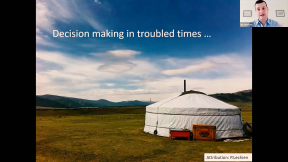
The Mongol invasions into the Near East had a devastating effect upon many societies, sultanates, empires and kingdoms. For decades, wave after wave of armies swept across the area, defeating every army sent against them and utterly reshaping the area’s complex political ecosystem. Some powers fell in battle; some submitted...
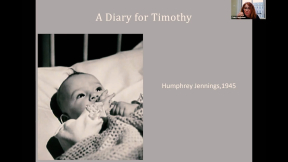
Mass-Observation is probably the most consistently useful source for the study of mid and late 20th social lives Britain. It was established in 1937 with the aim of investigating ordinary life and developing an 'anthropology of ourselves.' It used a range of different methods to collect information, from recording overheard...
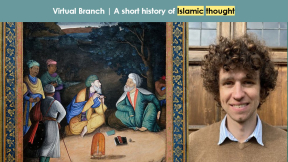
In his book of the same name, A short history of Islamic thought, Dr Fitzroy Morrissey provides a concise introduction to the origins and sources of Islamic thought, from its beginnings in the 7th century to the current moment. In this talk he explores the major ideas and introduces the...
In this first webinar about writing historical fiction, author Tony Bradman will talk about how ideas grow from reading and thinking about history. Once you have a good idea, then you need to research it properly, starting with secondary sources for context, then moving on to more specific reading. Visits...
In this second webinar in our series on writing historical fiction, author Tony Bradman talks about the actual process of writing the story, with examples. The difficulty of the first page - how to start your story with impact and make sure the reader is gripped from the first line....
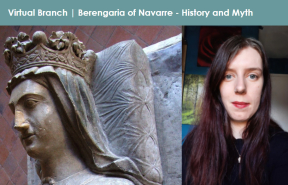
In this talk Dr Gabrielle Storey discusses the life and times of Berengaria of Navarre, queen of England, lord of Le Mans, and wife of Richard I. Berengaria of Navarre has been inaccurately labelled as the only queen never to have stepped foot in England. This talk will present new...
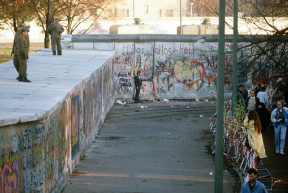
The Berlin Wall became a symbol of a time in history, and a physical defining point in an otherwise covert series of battles. To study and explore the Berlin Wall is to explore how the Cold War manifested itself in Central Europe and the impact it had on one nation...
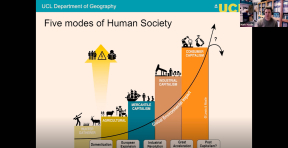
Meteorites, mega-volcanoes, plate tectonics and now human beings; the old forces of nature that transformed Earth many millions of years ago are joined by another: us. Our actions have driven Earth into a new geological epoch, the Anthropocene. For the first time in our home planet's 4.5-billion year history a...
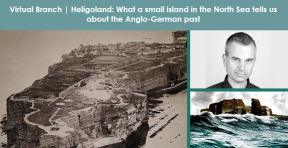
Professor Jan Rüger joined the Virtual Branch on 9th February 2023 to talk about his book Heligoland: Britain, Germany, and the Struggle for the North Sea, tracing a rich history of contact and conflict from the Napoleonic Wars to the Cold War. For generations this North Sea island expressed a...
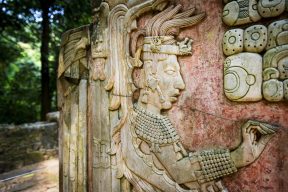
The discovery in 1952 of the tomb of King Pakal II of Palenque has been called the most important archaeological find in the history of the Americas. Protected by a magnificently sculpted stone sarcophagus depicting Pakal’s descent to the underworld and re-birth as the maize god lay the body of...
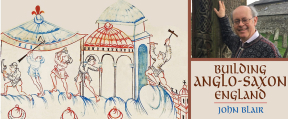
Building Anglo-Saxon England demonstrates how recent excavations enable us to grasp for the first time the diversity of the Anglo-Saxon built environment. The book explores how the natural landscape was modified for human activity, and how settlements were laid out with geometrical precision by specialist surveyors. It also shows how...
Dr Zbigniew Wojnowski is a historian based at the University of Oxford. He specialises in the history of the Cold War and is particularly interested in the history of Soviet social, cultural, and political interactions with Eastern Europe after 1945. In 2017, he published a book entitled The Near Abroad:...
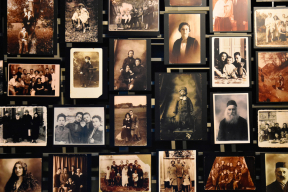
To choose to act, to have no choice to be who you are, to live an ordinary life in extraordinary times? These are all questions that the Holocaust raises. Millions of people became victims of the Nazis, millions more choose not to act to stop the events around them, felt...
As British and Irish migrants sought new lives in the Caribbean, Asia, North America and Australasia, they left a trail of physical remains where settlement occurred. Between the 17th and 20th centuries, gravestones and elaborate epitaphs documented identity and attachment to both their old and new worlds. In this Virtual...
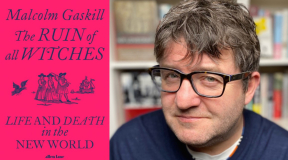
Professor Malcom Gaskill joined the HA Virtual Branch on Thursday 10 December 2022 to discuss the subject of his book, The Ruin of all Witches, Life and Death in the New World, which was shortlisted for the Wolfson History Prize in 2022. His research explores the attitudes, beliefs and treatment...
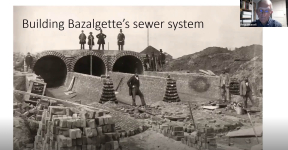
In this HA Virtual Branch talk Peter Hounsell drew on his recently published book Bricks of Victorian London, exploring the crucial role brick production played in the creation of Britain's capital and why the important place of bricks in the fabric of the city isn't always obvious. Peter Hounsell has...
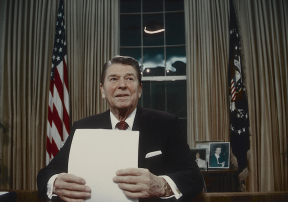
The 1980s are often viewed as marking the repudiation of the political order marked by the New Deal and the 1960s, both periods of enormous social, political, and cultural change. Yet the decade symbolised by President Ronald Reagan, far from being a period of triumphant conservative counterrevolution, was a period...
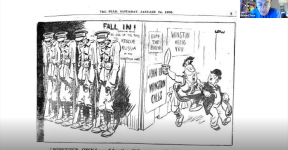
In this HA Virtual Branch talk Professor Richard Toye explores Churchill’s response to the USSR and how his actions during the early Cold War years intersected with his views of traditional Anglo-Russian tensions and the legacy of the ‘Great Game’. Richard Toye is Professor of Modern History at the University...
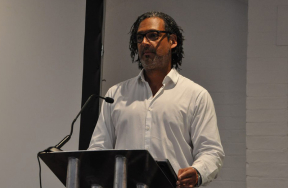
Professor David Olusoga is a revered TV historian, a writer and a practising academic at Manchester University. In 2022 he was the recipient of the Historical Association's annual Medlicott medal, awarded for outstanding contributions to history. The recipient of the medal provides the closing lecture of the HA's annual awards...