Diversity

Diversity is based on an understanding of the past of the many individual experiences and localities in order to establish a broadly based understanding of the past. In the same way that the big picture relates to local, national and world dimension. Diversity needs to include an appreciation of experiences from rich and poor, men, women and children and different ethnic groups and different period of the past.

Sort by: Date (Newest first) | Title A-Z
Show: All | Articles | Podcasts | Multipage Articles
  • Scheme of work: Journeys - the story of migration to Britain

    Article

    This unit is designed as a thematic course looking at the big picture of migration to Britain over time. There are many ways that the course can be adapted to include different content which may be more relevant for the local community around your school. Most of the content described in...

    Click to view
  • History in the news: George Floyd protest in Bristol – Colston statue toppled

    Article

    The killing of George Floyd by a police officer in Minneapolis, Minnesota on 25 May 2020 sparked off protests against the way in which black people are treated both in America and many countries across the world. Thousands of people attended an anti-racist demonstration in Bristol. A group of the...

    Click to view
  • Re-evaluating the role of statues

    Article

    Like them or loathe them, statues are excellent learning resources and the recent events in Bristol and elsewhere should not dissuade us from using them to aid children’s historical knowledge and enquiry skills. In fact, in the current climate, statues need a careful re-evaluation of their role within our towns....

    Click to view
  • Migration to Britain through time

    Article

    Migration is rarely absent from the news and arouses political, social cultural and emotional responses which range from compassion to hostility, racism and anti-racism. By exploring migration in the past, it is possible for children to go beyond current issues and appreciate that, rather than being a recent characteristic of...

    Click to view
  • Scheme of Work: Grace O'Malley

    Article

    This unit encourages pupils to explore the past by examining their ideas about pirates, with particular reference to Grace O’Malley. The key question leads children to consider what are the characteristics of a pirate and to challenge stereotypes in the light of historical enquiry. The key question also leads to...

    Click to view
  • Primary History Summer Resource 2019: Diversity

    Article

    This free summer resource for primary members is designed to help primary subject leaders and teachers consider the implications of developing a school policy for teaching of diversity in history. This comprehensive guide provides timely advice and considers questions associated with teaching diversity and provides a rationale for its essential role in providing an understanding...

    Click to view
  • Three first-class ladies – teaching significant individuals in Key Stage 1

    Article

    The turn of the 20th century was in many ways a golden age of aviation. In 1903 the Wright brothers conquered heavier-than-air flight. From that time onward there were many other visionaries who wanted to be part of the dream of flying. The topic of early aviation history is an...

    Click to view
  • Ideas for assemblies: LGBT History Month

    Article

    LGBT History Month was established in 2004. It not only raises awareness of discrimination still faced by the LGBT+ community but also celebrates LGBT+ people and their achievements. February is LGBT History Month and its theme this year was ‘History: Peace, Reconciliation, and Activism’. 

    Click to view
  • World War I: widening relevance in the modern world

    Article

    Hayyan Bhabha introduces a project that is using newly-discovered documents to show the contribution of Allied Muslim soldiers in the First World War, with the aim of developing empathy, mutual respect and religious understanding in young children of all ages. At a time of rising nationalism across the world, where Muslims are...

    Click to view
  • For whose God, King and country? Seeing the First World War through South Asian eyes

    Article

    In October 1914 France faced defeat on what would later become the Western Front. If the Germans captured the channel ports then the small British Expeditionary Force (BEF) supporting the French would be cut off from Britain, and the channel ports themselves might be used to launch a German invasion of...

    Click to view
  • Women’s History Month: Female Voices

    Article

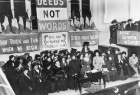
    March is Women’s History Month each year. We have produced resources to support primary school assemblies exploring the history of female suffrage in the UK. If you would like some ideas for a special assembly during Women’s history month, download our assembly ideas and powerpoint presentation to support your school assembly....

    Click to view
  • Is There a Place for The Holocaust in the Primary Curriculum?

    Article

    The Holocaust – the murder of approximately six million Jewish men, women and children by Nazi Germany and its collaborators during the Second World War – is possibly the most difficult event that any history teacher will ever have to teach. Most obviously, it can be deeply upsetting, for educators...

    Click to view
  • Ideas for Assemblies: Refugee stories

    Article

    Please note: this piece was written before Sir Mo Farah’s 2022 disclosure that he was trafficked to the UK as a child, so some of its content is no longer accurate. An assembly could focus on the achievements of their lives, experiences as child refugees and migrants, and how they overcame...

    Click to view
  • Why is diversity so important and how can we approach it?

    Article

    Imagine what the following scenarios tell you about the past – a Tudor role-play of Queen Elizabeth visiting Kenilworth Castle; a photograph of London during the Blitz; a picture of Viking warriors attacking Lindisfarne monastery. The first of the images can perhaps draw on a family visit to an event...

    Click to view
  • Anglo-Saxon Women

    Article

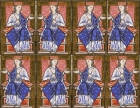
    The Anglo-Saxon era is a diverse period that stretches across just over 650 years. Those we call Anglo-Saxons were not homogenous nor were their experiences. In AD 410 the Roman legions leave and the first Anglo-Saxon raiders appear. These pagan warrior bands would come to terrorise Romano-British settlements until, inevitably,...

    Click to view
  • History supporting global learning

    Article

    I am the teaching head of a small village primary school, Hawkshead Esthwaite Primary, in Cumbria. We have, for the last year been one of the first Centres for Excellence for the Global Learning Programme (GLP).The GLP is a Department for International Development (DFID) initiative which began in September 2013...

    Click to view
  • Ancient Sumer

    Article

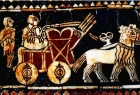
    For many teachers and children alike, Ancient Sumer will be completely new. Although Sumer has always been an option for teaching about Early Civilisations, the fame of Ancient Egypt, as well as being a tried-and-tested topic, has meant that Sumer has perhaps been overlooked. There is little danger of failing...

    Click to view
  • From Home to the Front: World War I

    Article

    Events which encapsulate family, community, national and global history provide rich opportunities for engaging children. Some of these draw on positive memories associated with past events: the coronation of Queen Elizabeth II, how people responded to the first flight to the moon, the Millennium celebrations. Yet it is perhaps gruelling...

    Click to view
  • Early Islamic civilisation

    Article

    The Primary National Curriculum pinpoints Early Islamic Civilisation as Baghdad c. AD 900 - yet it was so much more. For approximately a thousand years after AD 700 there was an extraordinary amount of activity that radiated out from Baghdad and along a glittering crescent through North Africa and into...

    Click to view
  • Assessment and Progression without levels

    Article

    The new (2014) Primary History National Curriculum is finally upon us. The first thing you might notice is that the level descriptions have gone. These were first introduced in 1995 and became the mainstay for assessing pupil progression and attainment in Key Stages 1, 2 and 3 across schools in...

    Click to view