Individuals & Events

Of course, individuals and events permeate history. However, the Key Stage 1 units of study particularly require the study of significant individuals and events. What makes an individual significant? What might be considered a significant event? The emphasis is upon a comparison of individuals and events that can be used to make links across time, themes and geographical space. In this section you will find resources and articles to help you to plan innovative units of work based around individuals and events that can either be used to reveal a local, national and international picture, or that can be used to illustrate themes over time or geographical space.

Sort by: Date (Newest first) | Title A-Z
Show: All | Articles | Podcasts | Multipage Articles
  • Take one day: undertaking an in-depth local enquiry

    Article

    Local history units of study provide teachers with valuable opportunities, but these can also seem daunting. Potential challenges for teachers include the perceived overwhelming scope of the topic, difficulties in developing subject knowledge and knowing where to find resources. However, none of these is insurmountable, if teachers identify a clear learning...

    Click to view
  • Teaching Famous People at Key Stage One

    Article

    Please note: this article pre-dates the 2014 National Curriculum and some content may be outdated Studying famous people at Key Stage One has obviously been an issue for many years and no matter how long you have been teaching the name Florence Nightingale seems to appear as the only famous...

    Click to view
  • Teaching about racism, fairness and justice through key people

    Article

    Please note: this article pre-dates the 2014 National Curriculum and some content may be outdated. Our school has no uniform. You can’t predict what most children or teachers will wear from one day to the next. So the children were rather surprised one day in July 1996 when most of...

    Click to view
  • Teaching about the Kindertransport without the Kinder

    Article

    The Kindertransport, literally ‘children’s transport’, was the rescue operation of almost 10,000 unaccompanied Jewish child refugees to Britain between December 1938 and the outbreak of the Second World War in September 1939.  Many of the Kinder (children) regularly share their experiences in primary schools, where their visit is regarded as...

    Click to view
  • Teaching about the Russian invasion of Ukraine and events happening there

    Article

    The events of the last few days appear to have come out of nowhere to many people, especially children. While tensions have existed in the region for some time Russia’s decision to attack Ukraine was without provocation. To have war return in such a way to the edges of Europe...

    Click to view
  • Teaching and learning about Grace O'Malley as a significant woman at Key Stage 1

    Article

    "Why are you so angry Grace?" Teaching and learning about Grace O'Malley as a significant woman at Key Stage 1 Grace O'Malley was an Irish queen in the Tudor period and her story provides insights about life in Ireland at the time of the Elizabethan conquests. Grace, also known as...

    Click to view
  • Teaching famous people at key stage one

    Article

    The draft English NC for history highlights the study of ‘significant individuals and people'. Michelle Dexter provides an insight on how to approach this biographical requirement; it also opens up biography as a major genre for pupils to master - augmenting their development of literacy...

    Click to view
  • Teaching sensitive subjects: slavery and Britain’s role in the trade

    Article

    See also: Teaching Slavery - HA guide Slavery in Britain Sarah Forbes Bonetta - scheme of work Teaching Emotive and Controversial History Diversity guidance for primary teachers and subject leaders Slavery is a part of our history, and its impact can be seen in the statues of influential men, the...

    Click to view
  • Ten texts for the Platinum Jubilee

    Article

    With the Platinum Jubilee approaching later this year and celebrations planned for June 2022, here is a round-up of ten fiction and non-fiction books which will help you plan and find resources for your school celebrations...

    Click to view
  • The Charles Dickens Primary School Project

    Article

    For many years London South Bank University [LSBU] trainee teachers have been engaged in a wide range of mini history-led, cross-curricular projects in local primary schools, culminating in the students teaching lessons to groups of children. Some of these projects have been on different aspects of community history, including in-depth...

    Click to view
  • The Coronation

    Article

    On 6 May 2023 King Charles III, together with Camilla, the Queen Consort, will be crowned in Westminster Abbey. The Coronation provides rich opportunities for history lessons at both Key Stage 1 and Key Stage 2. At Key Stage 1 it naturally lends itself to Key Stage 1 ‘changes within living...

    Click to view
  • The Coronation of King Charles III

    Article

    2023 will see the first coronation of a British monarch for 70 years. Only those now in their 70s or above will remember the last one. The UK is the only country in Europe still to carry out a coronation, a ceremony that has its roots in traditions over a...

    Click to view
  • The Diary of Samuel Pepys Online

    Article

    In 1660 Samuel Pepys, an increasingly-important 26 year-old civil servant in London, began writing his diary. He stopped a decade later. This site contains the full text of his diary, along with several letters sent or received by Pepys, plus thousands of pages of further information about the people, places...

    Click to view
  • The Great Fire of London and the National Curriculum

    Article

    The Great Fire of London is a favourite National Curriculum teaching topic. This paper draws on the latest resources and teaching ideas to suggest how you can meet both the NC history requirements and the wider ones of the National Curriculum, particularly in integrated programmes that include teaching about the Great...

    Click to view
  • The Queen in procession

    Article

    Today’s children in reception and nursery were probably not born at the last jubilee and it is possible that they will not remember this one, nevertheless they will have the chance to be part of this historic occasion. If we help prepare them to understand what is going to happen...

    Click to view
  • The Roaring Twenties: teaching a decade of change across Key Stages 1 and 2

    Article

    This article explores how one topic can be used in different ways to support historical understanding at Key Stage 1 or Key Stage 2. The themes highlighted could link into possible golden threads to enable connections to be made across a school’s curriculum. The ‘Roaring Twenties’ also provide a real...

    Click to view
  • The back cover image: Malachite Urn

    Article

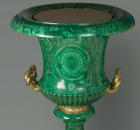
    This large green urn was given as a gift to Queen Victoria in 1839 by Emperor Nicholas I, to thank her for the way in which his son Alexander had been welcomed in England the previous year. It was placed in the Grand Reception Room of Windsor Castle, and has...

    Click to view
  • The history of medicine – warts and all – for Key Stage 2

    Article

    The story of the history of medicine is HUGE! In fact, it’s a story within story within a story… You only have to note the substantial amounts that have been written on the subject in the past, to realise that this is a story that could baffle and perplex even...

    Click to view
  • The new King

    Article

    King Charles III acceded to the throne on 8 September 2022 on the death of Queen Elizabeth II. This article looks at the lives of the three kings named Charles and investigates how things will change with our new king. It includes activities and a timeline of British monarchs from Tudors to present...

    Click to view
  • The year without a summer and other cautionary tales

    Article

    Susie Townsend explores the story of the Tambora volcanic explosion of 1815 and the catastrophic effect that this had on climate around the world. She uses contemporary accounts and images to set the scene. She demonstrates how this one event far away in Indonesia affected climate across the whole world....

    Click to view