
Teaching History articles

How do we relate to the past? Does it tell us who we are? Is it a source of examples to follow and mistakes to avoid? Or can we go beyond that to something genuinely historical? Arthur Chapman and Jane Facey argue that as history teachers we have a responsibility...
In this article David Lambert argues powerfully for teachers of the humanities to place citizenship at the centre of their work. He seeks to demonstrate that the division between subject-boundaries needs to be broken through if students are not to be denied what they are entitled to: an understanding of...
During discussions about planning, Tim Kemp and Charlotte Bickmore recently concluded that despite the name they give to their major Year 8 unit (The Making of the United Kingdom), they tend mainly to focus on England, and even more especially, on London. They have a good point. Ask an average...
In this article Paul Sutton examines the concerns associated with place in films. He points out the problems that this poses for our students - problems mainly, but not only, associated with a common lack of geographical authenticity. But this, he suggests, can be turned to our advantage. For what...
Cunning Plan for teaching geography: How do earthquakes affect a place?
Helping pupils to understand sectarian divisions in Northern Ireland is not easy. For pupils to comprehend the origins and complexities of ‘the Troubles’ they need a big picture. That big picture could be viewed as the interaction of three concepts: time, place and identity. If pupils can at least glimpse...
Polychronicon was a fourteenth-century chronicle that brought together much of the knowledge of its own age. Our Polychronicon in Teaching History is a regular feature helping school history teachers to update their subject knowledge, with special emphasis on recent historiography and changing interpretation. This edition of 'Polychronicon' examines the study...
This Issue's Problem: Henry Plant is having problems with his mentor.
In this article, Simon Butler advances a strong case for ‘comments only’ marking. Good assessment, he argues, is about encouraging students to reflect on their current performance and take responsibility for their own progress. Assigning Levels to pupils’ work is often justified in terms of the generation of targets which...
Andrew Wrenn describes his work with Barry Williams and the teachers of the history department at Ailwyn School (11-14 comprehensive), Ramsey in Cambridgeshire. Devoting equal attention to the ‘what’ and the ‘how’ of history assessment, he shows how this group of teachers developed a fresh approach to assessment out of...
Here in the United Kingdom, we are used to the idea of assessing pupils’ work against Levels. In fact, perhaps we are a little too used to it. Our familiarity with the Level Descriptions in the National Curriculum, and the ways they might inform our Key Stage 3 assessments, can...
Polychronicon was a fourteenth-century chronicle that brought together much of the knowledge of its own age. Our Polychronicon in Teaching History is a regular feature helping school history teachers to update their subject knowledge, with special emphasis on recent historiography and changing interpretation. This edition of 'Polychronicon' focuses on historians...
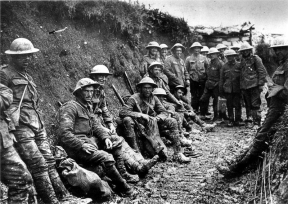
This Issue's Problem: Vera is worried that her Year 9 class already know all about World War One.
This was an opportunity all good historians dream about. A large box crammed with artefacts about a soldier who fought in the First World War, just begging to be read, studied, sorted and organised. Being faced with such a wealth of uncatalogued primary evidence could have proved daunting enough without...
Helping students to understand how and why people in the present interpret the past differently is a challenge. It is also vital if we are to develop an understanding of why the meanings we ascribe to the past are not fixed, but rather are subject to our own prejudices or...
Empathy may have disappeared from official documents but the history teacher who does not still regularly think about it, plan for it and teach it would be hard to find. What is history if not, in part, an attempt to understand how people thought and felt in the past? This...
What would you expect the differences to be between Japan and England in how pupils learn history in the post-14 phase? Perhaps your guess would be: Japanese school students learn a lot of historical facts and focus upon their own identity and English school students talk a lot more in...
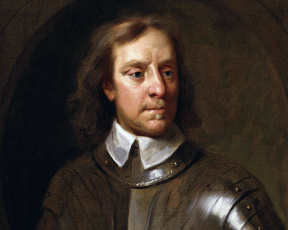
Polychronicon was a fourteenth-century chronicle that brought together much of the knowledge of its own age. Our Polychronicon in Teaching History is a regular feature helping school history teachers to update their subject knowledge, with special emphasis on recent historiography and changing interpretation. This edition of 'Polychronicon' investigates the differing...
This five-lesson sequence gradually builds overview understanding of aspects of 19th century social history through a depth study of the campaigner and reformer, Josephine Butler. Through the sequence, pupils build on earlier work on historical significance, first, by reviewing their understanding of the huge range of reasons why things get...
This Issue's Problem: Louis is having problems teaching the history of medicine course at GCSE.