
Historian articles
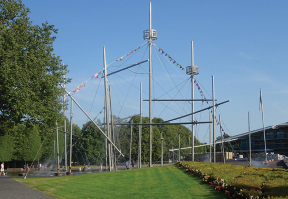
The Duchy of Courland’s attempts to establish outposts in the Caribbean and Africa were not the only Baltic ventures across the Atlantic during the seventeenth century. However, the expeditions of the small vassal dukedom were possibly the most unlikely. The article introduces the motivations behind the Couronian colonial project, as...
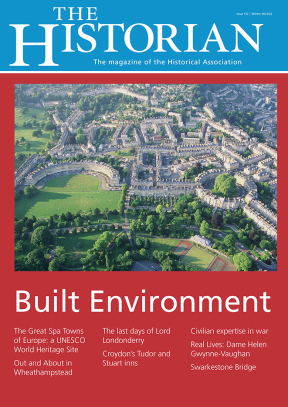
Read The Historian 152: Built environment From its inception The Historian has been built on the voluntary efforts of both its editorial leadership and also its contributors. This voluntary context has been delivered in as professional a manner as possible. One of our recent strategies has been to identify a...
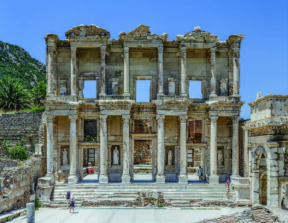
History Abridged: This feature seeks to take a person, event or period and abridge, or focus on, an important event or detail that can get lost in the big picture. See all History Abridged articles The collecting of stories through written record is one of the most important methods societies...
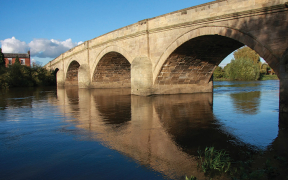
Trevor James reveals his continued fascination with this major Midland scheduled monument. Almost 40 years ago, my role as a Nottingham University extra-mural tutor took me to Melbourne in Derbyshire. For the first few weeks I followed a cross-country route to Melbourne, via Burton-upon-Trent, Woodville and Hartshorne, but, on a...
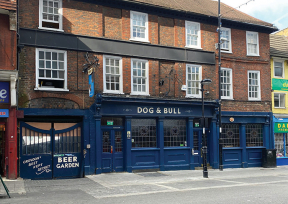
Trevor James offers a case study in how to define and identify inns as part of the historic urban environment. Croydon’s Tudor and Stuart inns Croydon’s Tudor and Stuart inns had a remarkable and formative effect on its urban landscape, an effect which still endures into modern times. Topographers and...
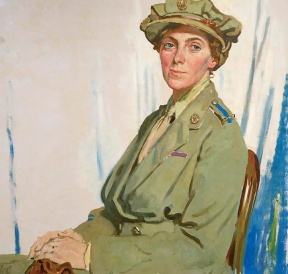
Our series ‘Real Lives’ seeks to put the story of the ordinary person into our great historical narrative. We are all part of the rich fabric of the communities in which we live and we are affected to greater and lesser degrees by the big events that happen on a...
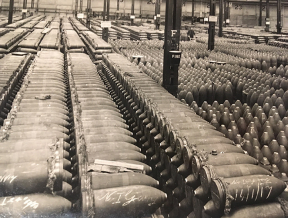
Philip Hamlyn Williams introduces us to the commercial and industrial background to modern-day warfare. When I think of war, I immediately see men and women in one of three uniforms: Royal Navy, RAF and Army. My research over the past seven years into how the British army was supplied in...
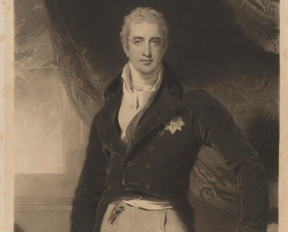
Richard A. Gaunt explores a tragedy at the heart of early nineteenth century British politics, with the suicide of Viscount Castlereagh. At 7.30 in the morning on Monday 12 August 1822, Robert Stewart, second Marquess of Londonderry, died from self-inflicted injuries caused by cutting the carotid artery in his neck...
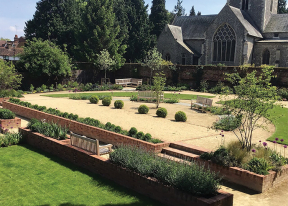
Dianne Payne examines the structural local history of Wheathampstead and provides a template for wider comparisons. The rural village of Wheathampstead in Hertfordshire, situated about four miles from St Albans, lies on the River Lea. The village and surrounding land has a long history and in ancient times was owned...
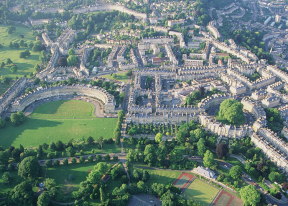
Catherine Lloyd introduces us to an international heritage initiative to celebrate ‘spa’ culture. From ancient times, people believed that gods and spirits brought the means of natural healing. Step back in time to imagine an eerie wilderness, a glade in a wood, or a pool by a river, where the...
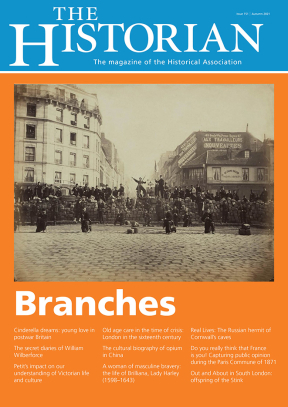
Read The Historian 151: Branches As life begins to return to some semblance of normality for many people, numerous HA branches are also resuming in-person meetings this autumn. Although online platforms such as Zoom offered branches the opportunity to continue running lectures and email allowed us to keep in touch...
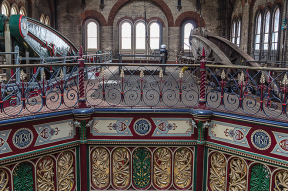
In an unusual Out and About feature, the Young Historian Local History Senior Prize winner Flora Wilton Tregear shows us what her local area can tell us about the history of public health. Taking the DLR out from Lewisham you pass through Deptford Bridge station towards Greenwich. Here my father...
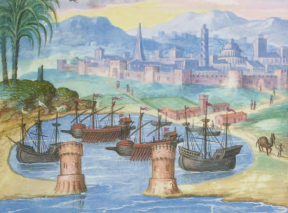
History Abridged: This feature seeks to take a person, event or period and abridge, or focus on, an important event or detail that can get lost in the big picture. Think Horrible Histories for grownups (without the songs and music). See all History Abridged articles One of the oldest cities...
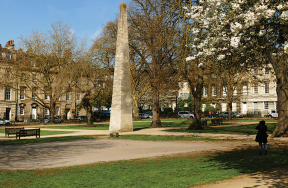
Some years ago, on the shore of Loch Lomond, I met a Scotsman. As we started to converse he asked me where I was from. When I replied ‘Bath’, his response was ‘Ah, the most beautiful city in Britain,’ adding, out of patriotism or good judgement, ‘Edinburgh is second.’ The...
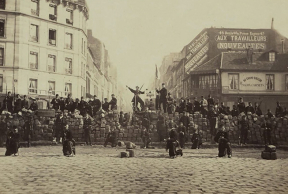
In the year of its 150th anniversary, Jason Jacques Willems offers his thoughts on the importance of centrist opinion to our understanding of the Paris Commune. 2021 is the 150th anniversary of the Paris Commune, when a revolutionary Parisian movement was pitted against the French government. The Franco-Prussian War of...
Our series ‘Real Lives’ seeks to put the story of the ordinary person into our great historical narrative. We are all part of the rich fabric of the communities in which we live and we are affected to greater and lesser degrees by the big events that happen on a...
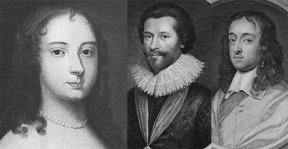
Sara Read introduces us to a woman who challenged expectations during the turbulent years of the early seventeenth century. In 1622 a pious young woman with a highly unusual first name, Brilliana Conway, sat at her desk doodling her signature on her commonplace book. She had lofty ambitions for her...
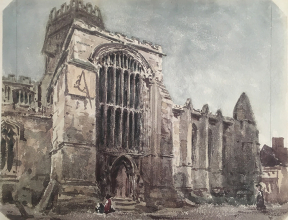
Tiffany Igharoro, a Young Historian Award-winner, introduces us to the artwork of Revd John Louis Petit, showing that art not only reflects the times in which it is created, but can also be used to shape opinions. The Revd John Louis Petit (1801–68) created thousands of paintings in his lifetime,...
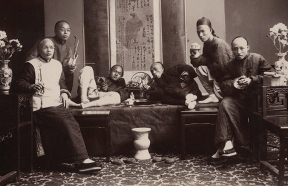
Zheng Yangwen shows that despite its association with trade, war and politics, opium was first of all a history of consumption. Opium has fascinated generations of scholars and generated excellent scholarship on the opium trade, Anglo-Chinese relations, the two opium wars, and Commissioner Lin. The field has diversified in the...
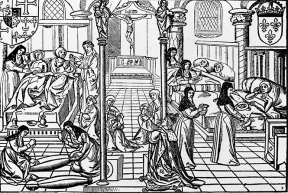
In her lecture to the General Strand of the HA Conference, Christine Fox describes the successes and failures of London institutions in dealing with the sixteenth-century crisis of poverty and elderly care. In late medieval and early modern thinking, human life was divided into three stages; youth, maturity, and old...