
Historian articles

Terry Bennett provides an introduction to the earliest surviving photographs of Korea. It is, on the face of it, remarkable how late it was before the camera ventured into Korea. If we accept that photography effectively began with Louis Daguerre’s invention in 1839, it was a full 32 years later,...
Alan O’Day reviews and reassesses the career of the major Irish Nationalist figure before Charles Stewart Parnell. Once the most respected man in Irish nationalist circles, Isaac Butt became merely a footnote in Anglo-Irish history after his death on 5 May 1879. Yet, from the mid-1860s until he died his...
Rosemary Thacker writes about one unusual area of expansion of war-time work for women in the Great War.
Amy de Gruchy provides an account of a short-lived newspaper of the Conservative Right which published work by Charlotte Yonge. The Constitutional Press was born in March 1858 following the formation of the second minority Conservative government under Lord Derby. It was a weekly paper containing Parliamentary reports, British and...
On the eve of the 400th anniversary of Philip II’s death James Casey rejects the traditional portrayal of the Spanish ruler as a cruel despot and argues his achievements were more the result of an extraordinary sense of duty fully in tune with the hopes and aspirations of his people....
William Kenefick considers two views of the dockers and the dockland community in Britain in the 19th and early 20th centuries. 'Quixotically generous and economically worthless’! But what does this mean? How does this curious descriptor help us understand the docker or the waterside community? Indeed, does it tell us...

Ian Arthurson reasseses the Cornish rising of 1497 on its 500th anniversary. On the 400th anniversary of this rebellion there was a good deal of agreement about the Wars of the Roses: ‘The slaughter of people was greater than in any former war on English soil ... The standard of...
Sarah Davies explores the evidence that even in the most repressive phases of Stalin’s rule, there existed a flourishing ‘shadow culture’, a lively and efficient unofficial network of information and ideas. 'Today a man only talks freely with his wife — at night, with the blankets pulled over his head.’...
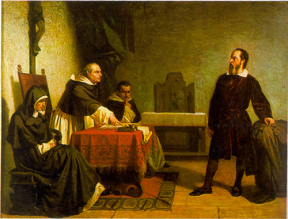
Helen Rawlings reviews the recent literature which has prompted a fundamental reappraisal of the Spanish Inquisition. The Spanish Inquisition — first established in 1478 in Castile under Queen Isabella I and suppressed in 1834 by Queen Isabella II — has left its indelible mark on the whole course of Spain’s...
Irene Collins provides a fresh assessment of the life and work of one of this country’s greatest novelists, whose own wit and charm, combined with a deep insight into human nature, is reflected in her novels. Jane Austen was not the first woman novelist in England to achieve popularity and...
Graham Darby gives an anniversary account of the later Spanish Armadas, long forgotten, but comparable in size and as threatening to contemporaries as the more famous Armada of 1588. As every schoolboy and schoolgirl should know, the Spanish Armada set sail in 1588: ‘God blew and they were scattered.’ However,...
While cartoons have been widely used by historians of ‘High Politics’ or diplomacy, they have been used less often by social historians. Alan Fowler and Terry Wyke examine a source for the social history of the Lancashire cotton industry. Cartoons have long held a fascination for historians, though when using...
A previously unpublished survey of British history by A.J.P. Taylor. It is a characteristic piece, though marked by gloom about the then recent inflation. Introduced by Historical Association President Chris Wrigley.
With the collapse of communism in Russia and Eastern Europe, archival material is becoming available not only on these regimes but also on communist parties in the West. Matthew Worley surveys the latest writing on the Communist Party of Great Britain. Since the collapse of Communism, a number of books...
Andrew Whitfield examines the recovery of Hong Kong from the Japanese, 52 years before its return to China. As the clock ticks ever closer to midnight on 30 June 1997, the sun will set on Britain’s last major colonial outpost. Thousands of miles from the motherland, the colony originally acted...
A.D. Harvey discusses a once-familiar feature of the inner city landscape. A generation ago one often saw advertisements, or the names of commercial enterprises, painted directly on to the brickwork of old buildings. With the destruction, or renovation, of the older sections of most British towns, these advertisements are now...
Michael Sturma examines an aspect of the cultural impact of the West in the South Pacific. ‘States of undress, or the partially clad body, invite particularly ambivalent responses.’ One of the main preoccupation’s of early European visitors to the South Pacific was the nudity or partial nudity of the indigenous...
A century ago Britain celebrated Queen Victoria’s diamond jubilee – her reign having provided 60 years of stability at the height of Britain’s imperial power. Dorothy Thompson profiles the woman at the heart of the Empire. More than any other British monarch, with the possible exception of her one-time model,...
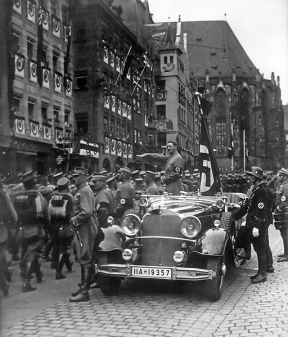
Kenneth Thomson reflects on major aspects of the ‘era of the dictators’ after the collapse of Soviet Communism and its satellite regimes. In 1939, on the eve of the Second World War, almost the whole of continental Europe was ruled by dictatorships of various political hues. Even countries, like France,...
While migration from Europe to North America and elsewhere is well known, that from India is less familiar to Western readers. Ananda Dulal Sarkar provides an account of Indian migrants to the former British and Dutch Guianas. Within India, particularly during British rule, young and able-bodied males migrated hundreds of...