
Historian articles
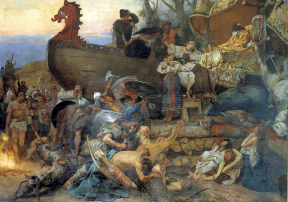
Martyn Whittock explores the lesser-known world of the Vikings who travelled east, forging the early state of Kyivan Rus and leaving a legacy still debated in Russia and Ukraine today. From silver routes and sagas to modern political claims, this article explores how their story and origins remain as dramatic...
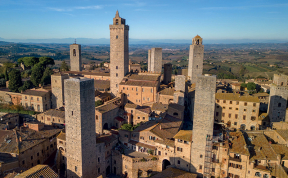
The northern Italian town of San Gimignano is famous for its high-rise medieval towers. The size of these fortified buildings might lead to the assumption that the town was a place of constant conflict and discord. Here John Law uses a wide variety of evidence to argue that San Gimignano...
From the 1940s to the late twentieth century, the visual arts in England were promoted and encouraged in a variety of ways by politicians and other policymakers, at both national and local level. Recent decades have seen a marginalisation of the arts, particularly in education. In this article Pauline Wood...
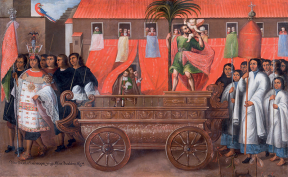
In this article, Emily C. Floyd explores a rare eighteenth-century self-commissioned engraved portrait of an elite Indigenous man in colonial Lima. By comparing this unassuming image with a more overtly Inca portrait, the article reveals how Indigenous leaders navigated identity, loyalty, and colonial restrictions, using portraiture to assert agency in...
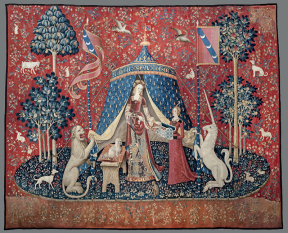
As well as being admired for their aesthetic beauty, medieval and early modern tapestries often conveyed deeper symbolic meanings. Here Damien Dessane examines a famous sixteenth century tapestry and reveals the insights it provides into Anglo-French relations in that period and into the increasing agency of some important women...
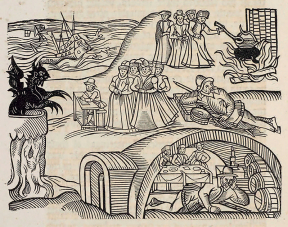
During the European witch craze, visual art played a powerful role in shaping belief in witches. The printing press allowed images of witchcraft to circulate widely, amplifying fear and suspicion. In this article, Natasha Brockman explores how such imagery did more than illustrate witchcraft: it helped create it, teaching people...
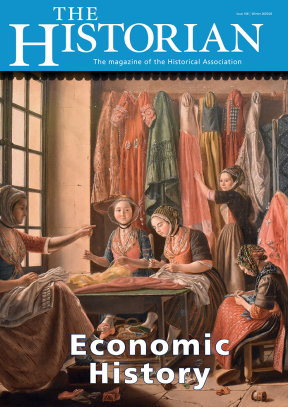
Read The Historian 168: Economic History It is only in recent decades that economic history has become integrated into the mainstream work of historians. Those of us who were undergraduates in the late twentieth century can remember university economic history departments being located in buildings on the other side of...
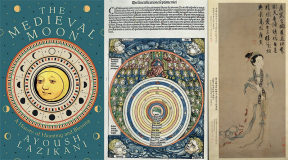
Ayoush Lazikani’s The Medieval Moon follows the moon between roughly 700 and 1600, tracing how it became a meeting-place for prophecy, medicine, devotion, and art across a globally conceived Middle Ages. Carolin Gluchowski met with Ayoush Lazikani to explore the many moons of the Middle Ages...
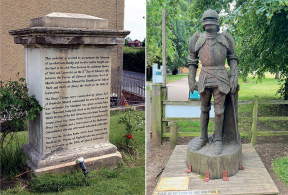
This article examines how the Wars of the Roses have been remembered through memorials and presents the Battlefields Trust’s Wars of the Roses Memorial Database Project, launched in 2023. The open-access, crowd-sourced database maps monuments, plaques, battlefield markers and local commemorations linked to the conflicts. David Grummitt shows that remembrance...
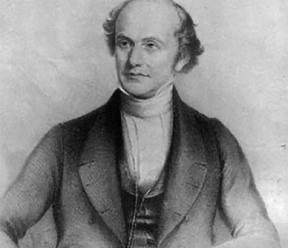
Our series ‘Real Lives’ seeks to put the story of the ordinary person into our great historical narrative. If you have any people that you think might also fit this category and would like to write about them, please do contact: martin.hoare@history.org.uk Alexander Stewart’s life combined hardship, resilience and moral...
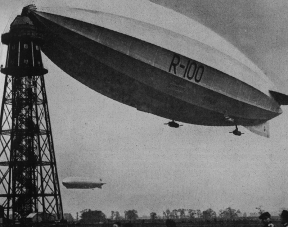
This article explores the Cardington airship hangars in Bedfordshire as reminders of Britain’s ambitious but short-lived airship programme. Built during the First World War, Cardington became central to the 1924 Imperial Airship Scheme and the construction of the R-100 and R-101. Celebrated as symbols of technological optimism, the programme ended...
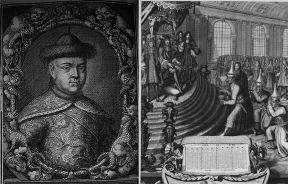
Recently the French and Chinese governments have joined together in a nostalgic reflection on cultural interactions between King Louis XIV and Emperor Kangxi in the late seventeenth and early eighteenth centuries. As Sean Heath explains here, these modern reflections are particularly interesting for an aspect of the relationship which they...
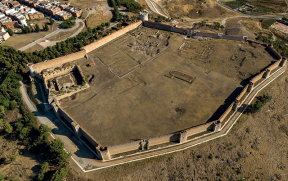
The later medieval period can often be seen as a time of bitter ideological and military conflict between Christians and Muslims. In this article Paola Laviola tells the story of the southern Italian city of Lucera, where occasional religious division was interspersed with periods of toleration between faiths that allowed...
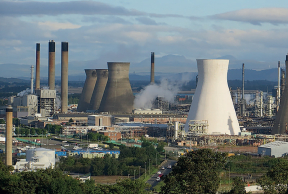
British history flows through energy. Changes to fuel sources, technologies, workplace organisation and power along with government policy and ownership have been defining turning points in British economic history. In this article Ewan Gibbs traces the making, development and subsequent breaking of a national British energy order across the second...

In this article Folusho Alabi reveals a relatively unknown story from the history of the British Empire. She analyses the issues and strategic manoeuvres in an ongoing struggle between Nigerian market women and the British colonial authorities in the early twentieth century. Despite an innate imbalance of power in this...
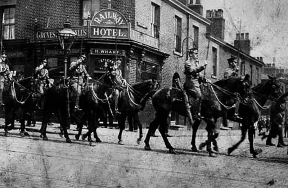
As we approach the centenary of Britain’s only national general strike, this article by Steve Illingworth tells the story of a successful local sympathetic strike in Salford in 1911. He analyses the reasons for the success of the Salford workers and considers why this kind of concerted industrial action could...
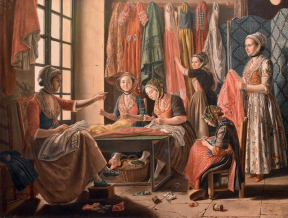
Traditional histories of the East India Company have had a focus on the largely male characters who were involved as merchants, politicians and soldiers. Here Karin Doull considers the significance of the women who were part of the company’s story, discussing some of the issues encountered in researching and retelling...
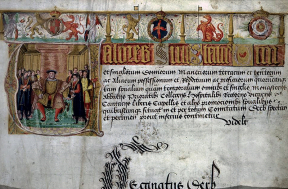
While conceding that medieval accounting and tax records can appear to be dull at first sight, Alisdair Dobie demonstrates here how they can provide fascinating insights into many aspects of life at the time. Not only do these records teach historians about economic and financial affairs: they also enhance our...
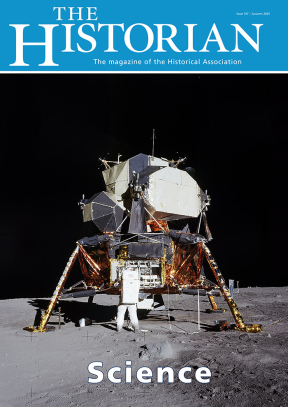
Read The Historian 167: Science 2025 is a memorable year for scientific anniversaries: it is 350 years since the foundation of the Royal Observatory at Greenwich; 200 years since the start of the Royal Institution Christmas Lectures and Michael Faraday’s discovery of benzine; and for the contemporary historians among our...
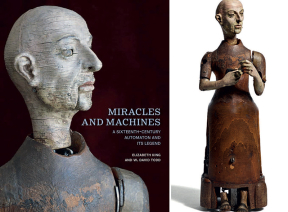
Elizabeth King’s Miracles and Machines (2023) is a vivid, searching account of a small sixteenth-century automaton – a robed figure, nicknamed ‘the monk’ – that walks, beats its breast, turns its head, and appears to pray. Co-authored with clockmaker David Todd, the book is at once a material history of...