
Pamphlets

Prehistory is an attempt to reconstruct the story of human societies inhabiting a given region before the full historical record opens there. Its data, furnished by archaeology, are the constructions members of such societies erected and the durable objects they made. The events which should form its subject matter naturally...
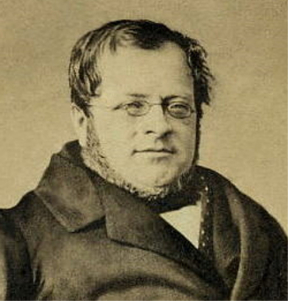
It may seem a little perverse to write a pamphlet on Cavour in 1972, the centenary year of the death of Mazzini, but no doubt there will be more than one publication on Mazzini to mark the occasion. To pretend that the two men had much in common would be...
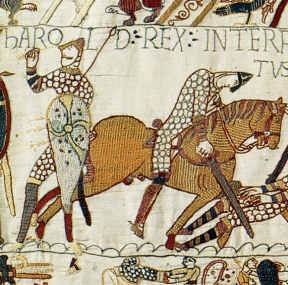
To lecture on Harold Godwinson, earl of Wessex, King Harold II of England, in the year 1966 at Hastings is a presumption. We appear to know much about him, and yet in fact there are many gaps in knowledge. Much information, so plausible at first sight, proves unreliable on closer...
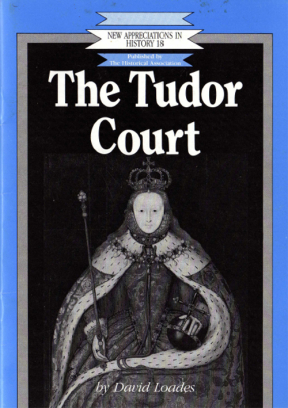
In 1976, in one of his challenging Presidential addresses to the Royal Historical Society, Professor Geoffrey Elton drew attention to the importance of the court as a ‘point of contact' between the Tudors and their subjects. It was, he suggested, a central and essential aspect of personal government, but in...
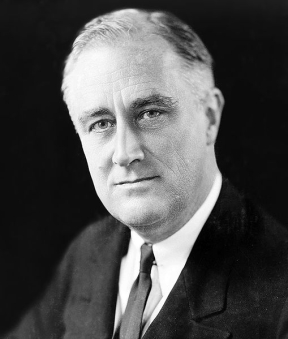
New Deal is the name given to the policies of the American president Franklin D. Roosevelt during the 1930s. Elected in 1932, at a time of great economic depression, he sought to alleviate distress by using the inherent powers of government, and the New Deal era come to be seen...
On 5 September 1939 the German Führer, Adolf Hitler, paid a surprise visit to the corps which was in the forefront of his army's ferocious assault upon Poland. As they passed the remains of a smashed Polish artillery regiment, the corps commander, General Guderian, astonished Hitler by telling him that...
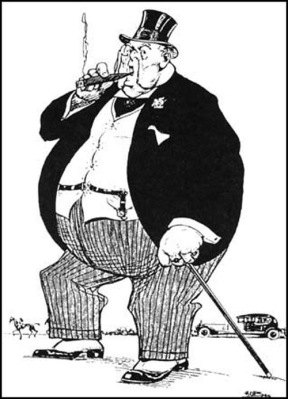
‘The General Strike is a challenge to Parliament and is the road to anarchy and ruin.' (Stanley Baldwin, Prime Minister, 6th May 1926). ‘The General Council does not challenge the Constitution ... the sole aim of the Council is to secure for the miners a decent standard of life. The...
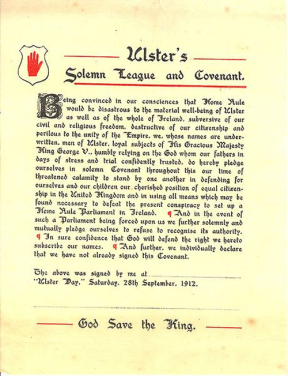
It is difficult to exaggerate the importance of Irish unionism for British and Irish politics in the late nineteenth and early twentieth centuries. The movement was supported almost exclusively by Irish Protestants who were of Anglo-Irish or Scotch-Irish descent and who comprised roughly one-quarter of the population of Ireland. Its...
In the last weeks of his life Lord North, we are told, expressed anxiety about his place in history - ‘how he stood and would stand in the world'. This, he owned, ‘might be a weakness, but he could not help it'. It was a weakness one suspects that he...
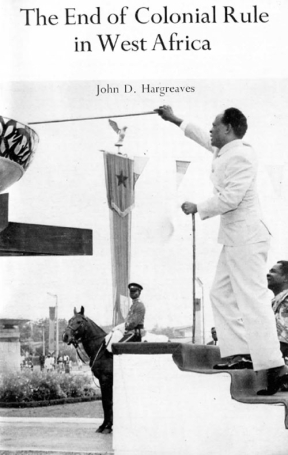
The dissolution of colonial empires since the Second World War is a major theme of contemporary history, and one which will challenge historians for many years to come. There are still sharp disagreements as to how this change should be described. European scholars tend to use the term ‘decolonization' (at...
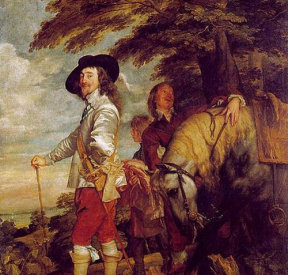
The principles involved in the great religious and constitutional conflicts of the seventeenth century are so important to us today, that it seems desirable on the occasion of the present tercentenary to lay before the members of the Historical Association some means of examining and re-examining their views on the...
The conclusions of historians change over the years, not only as a result of the discovery of new evidence, but as a result of the changing times in which historians themselves live and work. We have become familiar with the notion that each generation of historians may have its own...
In 1944, in response to the Education Act, the HA issued a report with input from teachers and academics on the planning of a school history syllabus. In the context of current discussions about a review of the school curriculum the 1944 report makes interesting reading.
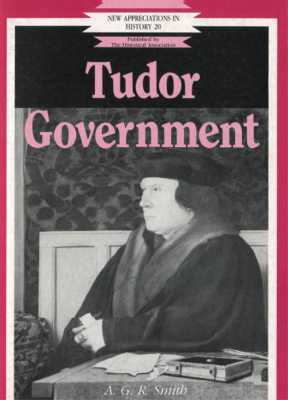
On 21 August 1485 Henry Tudor won the battle of Bosworth in Leicestershire and established himself as Henry VII, King of England. He had landed in Wales two weeks before, the Lancastrian claimant to the throne against the incumbent Yorkist, Richard III. He had received assistance from Charles VIII of...
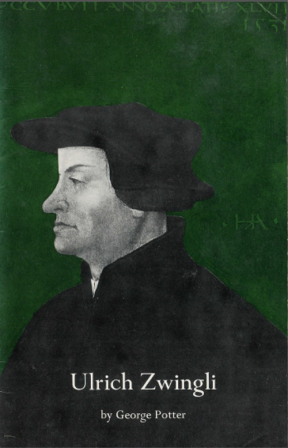
The Reformation of the sixteenth century has many sides, and not the least significant of these is the contribution from Switzerland. How under the leadership of Zwingli, Zurich, Berne, Basle and St Gall broke away from Rome, how this led to civil war, how and why agreement with the German...
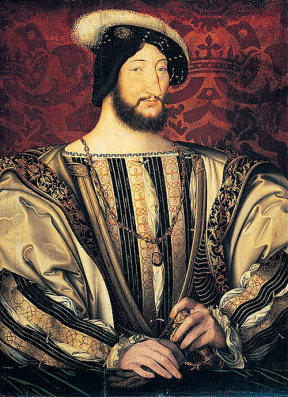
Francis I of France reign lasted for more than thirty years and coincided with movements as significant as the Renaissance and the Reformation. Text-books are apt to gloss over the domestic history of France before the outbreak of the Wars of Religion and convey the impression that Francis was more...
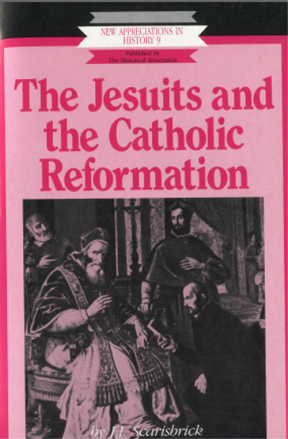
The society of Jesus, formally approved by Pope Paul III in his bull Regimini Militantis Ecclesiae of September 1540, was one of many new religious orders of men and women - such as Barnabites, Capuchins, Oratorians, Piarists and Vincentians among the male orders, and Daughters and Sisters of Charity, Ursulines,...
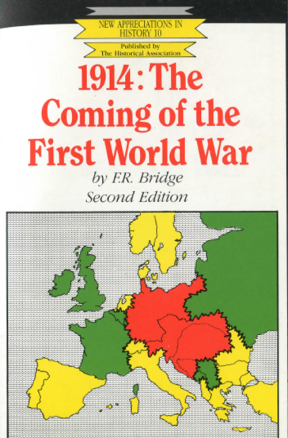
This pamphlet argues that the outbreak of the First World War represented not so much the culmination of a long process started by Bismarck and his successors, as the relatively sudden breakdown of a system that had in fact preserved the peace and contained the dangerous Eastern Question for over...
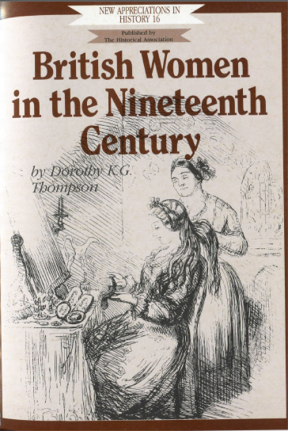
A short pamphlet surveying the historical record of rather more than half the population of Britain over a period of a hundred years must of necessity be sketchy and incomplete. The great interest in history of women which has arisen in the last few decades has produced a great deal...
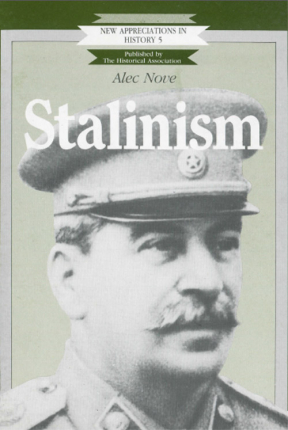
Stalin's remarkable career raises quite fundamental questions for anyone interested in history. Marxists, whose philosophy should cause them to downgrade the role of ‘great men' as an explanation of great events, have problems in fitting Stalin into the materialist interpretation of history: did not this man ride rough-shod over the...