
Pamphlets
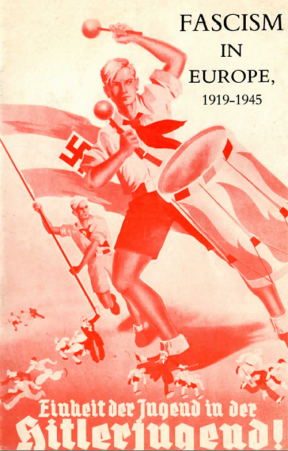
The importance of fascism in 20th Century Europe is beyond question. But what was - or is - fascism?It is synonymous with authoritarian rule or the totalitarian state, or with both? In political terms, is fascism ‘right-wing' or ‘left-wing', revolutionary or reactionary? Why did it develop? Was it truly only...
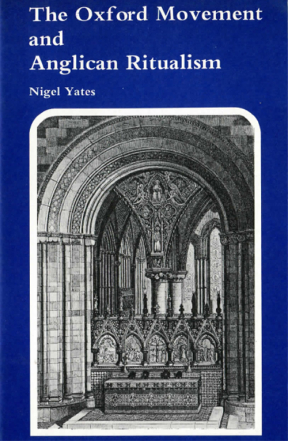
The English Reformation of the Sixteenth century had been a compromise, both politically and theologically. The administrative framework of the medieval church, with its system of church courts, private patronage, pluralism, the social and financial gulf between the lower and higher clergy, its inadequacy of clerical education and its hierarchical...
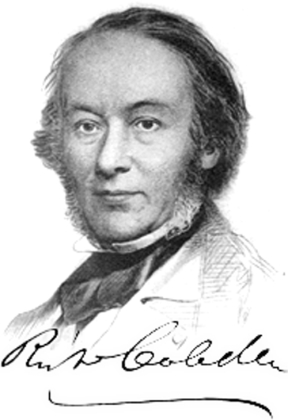
The struggle for parliamentary reform between 1830 and 1832 has long been regarded as one of the decisive battles of British political history. The Tories lamented that the passage of the Reform Bill meant the destruction of the constitution. Middle class Radicals welcomed the Reform Bill as the instrument that...
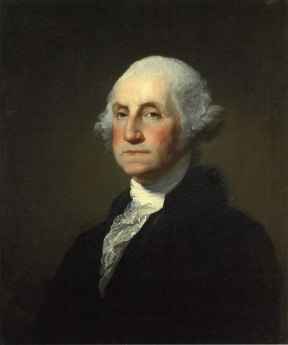
In the two-hundredth year of American Independence, it is proper to ask: why did it occur? It need not have happened; it was the act of men, not immutable forces. But once the tensions became acute, the three thousand miles of ocean were a difficult chasm to bridge. The War...
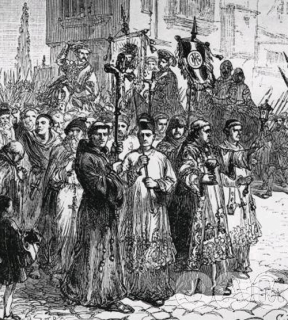
"The king, intending also the suppression of the greater Monasteries, which he effected in the 31st of his Reign for the preventing of future Dangers and keeping those Northern Counties in Quiet, raised a President and Council at York, and gave them his several Powers and Authorities, under one great...
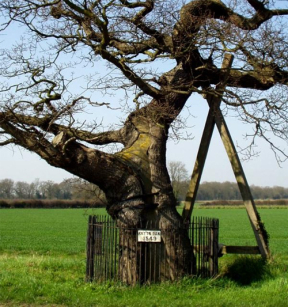
On 20 june, 1549, the men of the town of Attleborough and of the neighbouring hamlets of Eccles and Wilby, in South Norfolk, threw down the fences recently erected by John Green, lord of the manor of Beckhall in Wilby, round part of the common over which they all had...
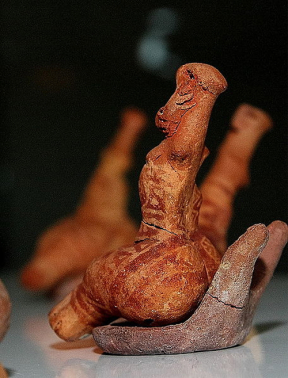
This period is represented in the valley of the Bristol Avon by the Acheulian industries, named from the type station of St. Acheul in the Somme valley, which has yielded many ovate and pear-shaped hand-axes characteristic of the period. These industries flourished during the very long Second Interglacial phase, a...
When the modern world was christened Puritanism appeared as a bad fairy and bestowed upon it certain dubious gifts: capitalism, democracy, America. This is a fairy story, but like all fairy stories it contains a small grain of truth. But what was Puritanism? Already in the seventeenth century a critic...
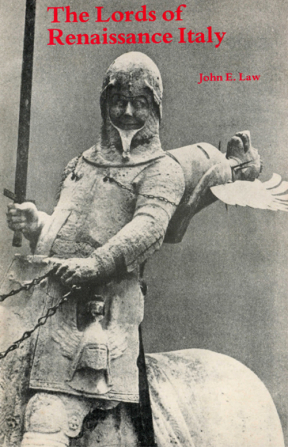
The Lords of Renaissance Italy: the signori, 1250-1500 Among the many city states into which Italy was divided in the late medieval and early modern period, the republics of Florence and Venice are comparatively well known. Republicanism was not, however, the most common form of government. This pamphlet deals with...
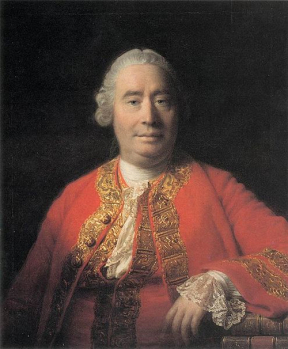
In recent decades, Scotland's distinctive contribution to the Enlightenment has been of increasing interest to scholars. Often very remarkable in an analytical view, such studies may nevertheless miss their sense of the story by treating Scottish insight in abstraction from Scottish life. Taking a more concrete approach, the present study...
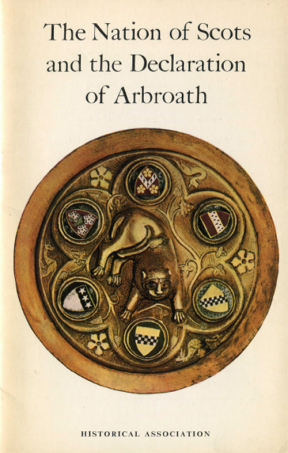
This pamphlet seeks to chart the progress of the Scottish struggle for independence after 1291 by considering the changing nature of the Scottish resistance. The primary sources are exiguous when compared to those bearing upon the English attempt at subjugation, and the interpretation offered is at best tentative: that initially...
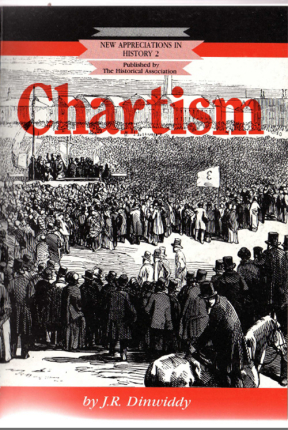
It is not surprising that Chartism has attracted a great deal of interest from historians and students, for at no other period in British history, with the possible exception of the second and third decades of the twentieth century, has so much excitement and activity been aroused at the working-class...
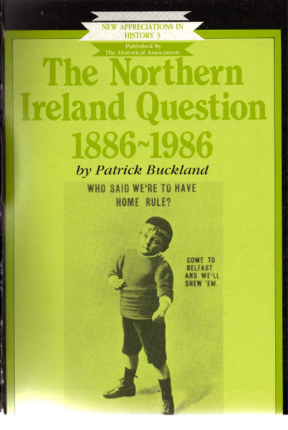
The nature of the rights of majorities and minorities is one of the most intractable of the issues raised by the Northern Ireland question, especially since much depends on definitions. Ulster Protestants are a majority in that province but a minority in both Ireland and the United Kingdom, while Catholics,...
Louis XIV was born on 5 September 1638 and became King on May 14 1643 at the age of four years and eight months on the death of his father Louis XIII. He attended the Conseil d'en haut from 1649 when he was eleven years old. He announced his coming...
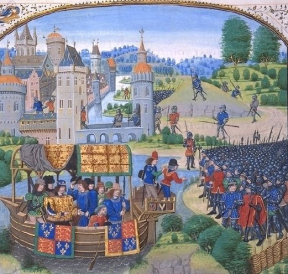
The Great Revolt of 1381 began in South-West Essex sometime between late May and 2 June: contemporary narratives and record sources differ irreconcilably about the dates. It all started with the arrival of a royal tax commissioner, John Bampton, at Brentwood inBarnstable Hundred. He came to inquire into the evasion...
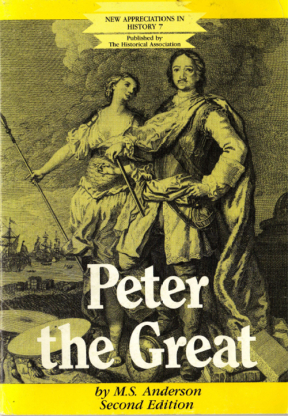
No European ruler except Napoleon I has impressed both contemporise and later historians so profoundly as Peter I of Russia by the originality and the personal character of his achievements. Like Napoleon, Peter appeared to some observers, at least in his later years, as almost more than human. He seemed...
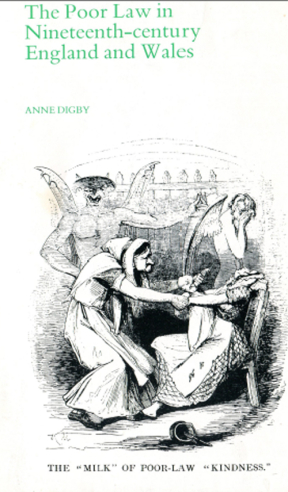
Variety rather than uniformity characterised the administration of poor relief in England and Wales, and at no period was this more apparent than in the decades before the national reform of the poor law in 1834. Unprecedented economic and social changes produced severe problems for those responsible for social welfare,...
Four years after the battle of Waterloo, Richard Whately publicised a philosophical essay in which he argued that there was no real proof of Napoleon's existence. The deeds attributed to him were either so wondrously good or so amazingly bad that they far outran the evidence available to support them:...
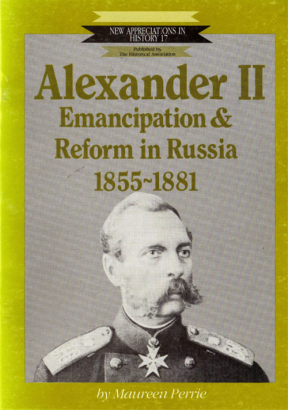
The ‘great reforms' of Tsar Alexander II (1855-81) are generally recognised as the most significant events in modern Russian history between the reign of Peter the Great and the revolutions of 1905 and 1917. The most important of Alexander's reforms, the emancipation of he serfs in 1861, has been described...
Numismatics may be defined as the science of money in its physical aspects. It is only indirectly connected with the theory of money, which belongs to the sphere of economics. Its subject-matter consists of the material objects which in most societies are used to measure the worth of goods and...