
Britain & Ireland
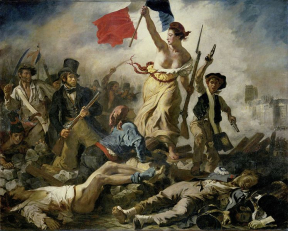
This podcast series was commissioned as part of the HA’s education programme on the Age of Revolutions period, funded by the Age of Revolution legacy project. They were recorded with leading academic historians and are intended to shed light on a variety of perspectives on the period. These podcasts were...

This classic pamphlet is being re-published in digital form to coincide with the special edition of The Historian devoted to the memory of Asa Briggs. He was one of the most illustrious members of the Historical Association and a devotedly loyal member all his life. One Historian has said that...
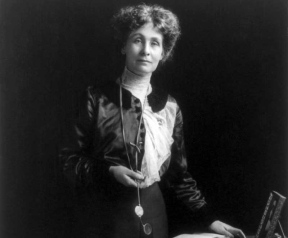
In Part 2 of our series on Social and Political Change in the UK 1800-present we look at the Women's Movement in the UK from its early origins through to the end of the 20th century Part 2 features Dr Anne Logan, Professor June Hannam and Ms Jean Spence. Also...
In the first part of this series we look at UK political history, political reform and the domestic impact of the World Wars. This series features Professor Eric Evans, Professor Stanley Henig, Professor Richard Grayson, Professor Keith Laybourn, Dr Daniel Todman and Dr Helen Parr. Also in the series: The...
In Part 5 of our series on Social and Political Change in the UK 1800-present we look at religion in the U.K. This set of podcasts features Dr Janice Holmes of the Open University, Revd Dr Jeremy Morris, Dean, Fellow, and Director of Studies in Theology at King's College, Andrew...
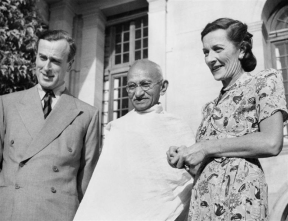
Mountbatten was a controversial figure who died in tragic circumstances but Adrian Smith demonstrates that, behind his aristocratic facade, he was a very adept, talented and formative personality. Four years have passed since the re-opening of Broadlands, the Hampshire home of Lord and Lady Brabourne. The house was subject to...
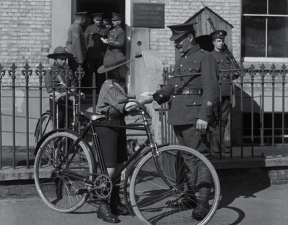
This posthumously published article by John Springhall was presented to us, with recommended illustrations, shortly before his death. It reflects his interest in popular culture and how people lived their lives in quite a remarkable manner. Adult-directed British uniformed youth movements played a significant but often overlooked role during the...
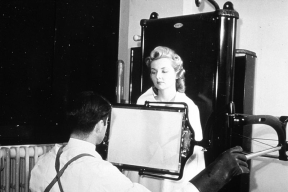
Health as a specific feature of central government strategy is a relatively recent phenomenon and Hugh Gault identifies how this feature of everyday headlines in our newspapers has been managed until the present time. At the start of the twentieth century Lord Salisbury’s Cabinet comprised four Secretaries of State –...
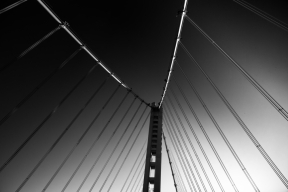
Many communities have cataclysmic disasters which tend to dominate or define their local history. Gareth Davies reveals that the sudden collapse of the Great Yarmouth Suspension Bridge is a telling example of this trend. Beside the waters of the River Bure in Great Yarmouth, Norfolk stands a shiny black memorial...
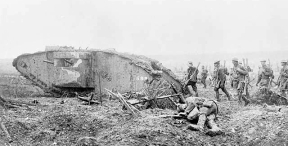
The emergence of the tank as a further weapon of war is inextricably associated with Lincoln where various early models were developed. By 1915 the Great War had gone just about as far as it could and for the first time, the way an entire war was fought was described...
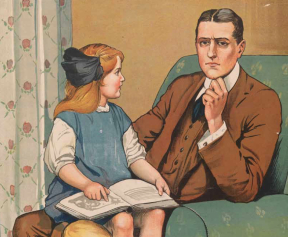
The popular image of the First World War is of young men leaving the tedium of the factory or the mine to volunteer for service on the Western Front in one of Kitchener’s new armies. Less well known is the background effort that went into maintaining and strengthening morale as...
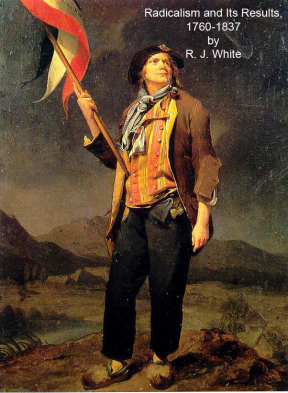
Radicalism with a large "R", unlike Conservatism with a large "C" and Liberalism with a large "L", is not a historical term of even proximate precision. There was never a Radical Party with a national organization, local associations, or a treasury. But there were, and there are, "Radicals", generally qualified...
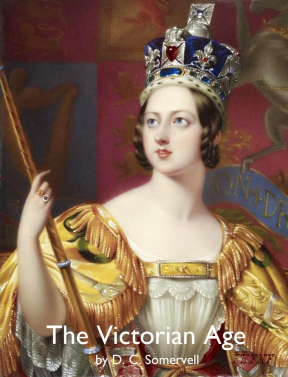
This Classic Pamphlet was published in 1937 (the centenary of the accession of Queen Victoria, who succeeded to the throne on June 20, 1837). Synopsis of contents: 1. Is the Victorian Age a distinct 'period' of history? Landmarks establishing its beginning: the Reform Bill, railways, other inventions, new leaders in...
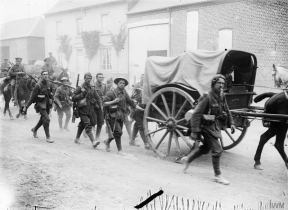
The versions of history on our cinema screens have an important influence upon public perceptions of the past. In his article Taylor Downing explores how the wartime British government used the cinema for propaganda purposes and how the film Battle of the Somme contributes to portrayals of that battle to...

Joe Smith, Kim Hammond and George Revill share some of the findings of their work examining what digital broadcast archives are available and which could be made available in future. The BBC’s archives hold over a million hours of programmes, dating back to the 1930s (radio) and 1940s (television). It...
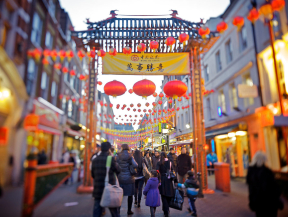
In Part 3 of our series on Social and Political Change in the UK we look at diversity in the UK and examine African and Caribbean UK History, South Asian UK History and British Chinese History. The first set of podcasts feature Dr Hakim Adi, Marika Sherwood, Dr Sumita Mukherjee...
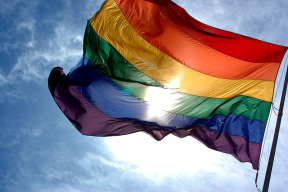
In Part 4 of our series on Social and Political Change in the UK since 1800 we focus on UK LGBTQ+ History. This series of podcasts features Dr Matt Cook and Dr Sean Brady of Birkbeck, University of London, Professor Sally R Munt of the University of Sussex and Dr...
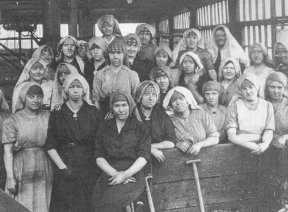
With the final closure of Britain’s deep coal mines, Chris Wrigley examines the long-standing involvement of women in and around this challenging and dangerous form of work. With the closure in 2015 of Thoresby and Kellingley mines, the last two working deep coal mines in Britain, leaving only open-cast coal...
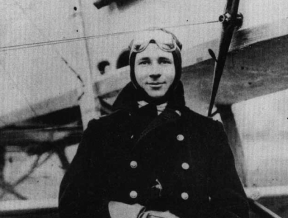
Ronan Thomas introduces the bravery of Rex Warneford who was the first pilot successfully to bring down a Zeppelin in 1915. Rex Warneford was one of Britain’s ‘bravest of the brave’. A Royal Navy fighter pilot during the First World War, he was awarded the Victoria Cross by King George...
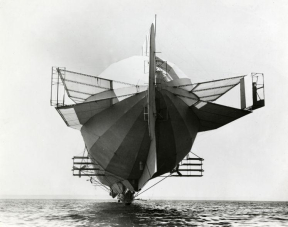
In the First World War Britain suddenly became vulnerable to aerial attack. Alf Wilkinson records a memorable turning-point in the battle against the Zeppelin menace. On the night of the 2-3 September 1916 Lieutenant William Leefe Robinson became the first pilot to shoot down a Zeppelin raider over Britain. He...