
Europe
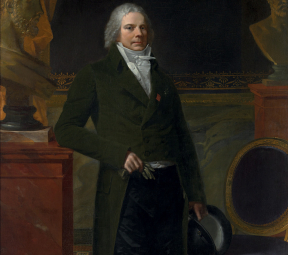
In France during the turbulent decades of revolution, republic and empire around the turn of the nineteenth century, political leaders were fortunate if they kept their heads; forging any kind of lasting legacy was out of the question for most. Bucking the trend was Talleyrand, lesser-known as a revolutionary, but...
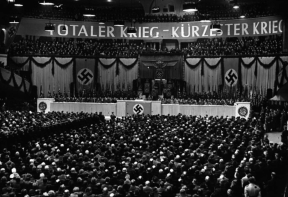
Throughout history, war has been one of the great producers of disability, and the disabled veteran has often provoked feelings of pride and pity. In this article, Christopher Thomas Goodwin explores the multiple meanings of the disabled soldier in Nazi Germany...
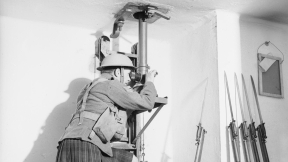
Why did the the Maginot Line – that marvel of 1930s engineering with its miles of fortifications and bunkers to deter German invasion – fail so spectacularly in 1940? Its vast underground forts were designed to withstand artillery and chemical attack, yet France fell in just six weeks, leaving the...
Dr Samantha K. Knapton [she/her] is an Assistant Professor in History at the University of Nottingham, UK. She is an historian of central and east-central Europe, forced displacement, and international humanitarianism. In 2023, she has published her first monograph, Occupiers, Humanitarian Workers, and Polish Displaced Persons in British-occupied Germany and...
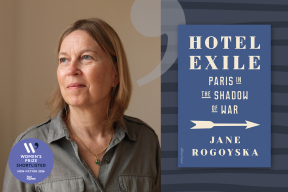
Jane Rogoyska tells the story of the Hôtel Lutetia, the only ‘grand’ hotel on the city’s bohemian Left Bank, serving as a meeting place for artists, musicians and politicians. André Gide took his lunch here, James Joyce lived in one of its rooms, Picasso and Matisse were regular guests. But...
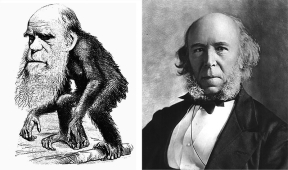
‘Social Darwinism’ has been associated in academia and popular consciousness with negative concepts such as hyper-nationalism and eugenics. Geoffrey M. Hodgson challenges the notion that Social Darwinism or its proponents were ever well-defined. By tracing the use of ‘Social Darwinism’ across academic disciplines and globally over a long period, Hodgson...
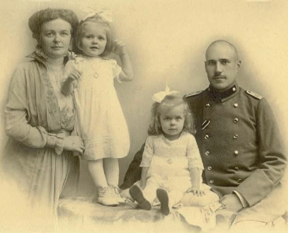
Our series ‘Real Lives’ seeks to put the story of the ordinary person into our great historical narrative. We are all part of the rich fabric of the communities in which we live and we are affected sto greater and lesser degrees by the big events that happen on a...
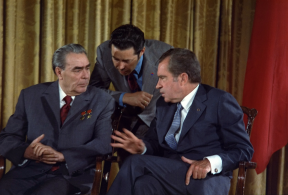
Log in below to preview the introductory film - available to all registered users of the website. This open access introductory film forms part of our ongoing film series on Power and authority in Russia and the Soviet Union. All the films are available through the Student Zone with corporate...
Log in below to preview the introductory film - available to all registered users of the website. This open access introductory film forms part of our ongoing film series on Power and authority in Russia and the Soviet Union. All the films are available through the Student Zone with corporate...
Log in below to preview the introductory film - available to all registered users of the website. This open access introductory film forms part of our ongoing film series on Power and authority in Russia and the Soviet Union. All the films are available through the Student Zone with corporate...
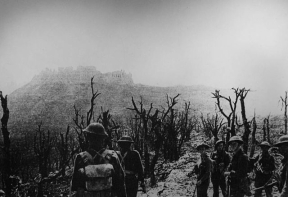
The Second World War is no longer a recent war. Very soon, there will be no veterans left to tell us how they saw things and what it was really like for them. While some eyewitnesses who were children at the time might be with us to see the centenary...
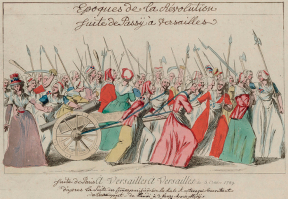
Luke Rimmo Loyi Lego explores the role of women in the French Revolution, and how their challenges to traditional gender roles laid the foundations for the modern feminist movement. The study of the French Revolution is often restricted to its impact on the Enlightenment ideas of influential men such as...
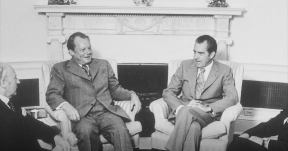
Germany as a divided and defeated nation is explored through the lens of how the two new Germanys rebuilt their States politically and culturally. Professor Anna Saunders reflects on the different inequalities that existed between the two states and how stability was established between political leaders, even when political dissent...
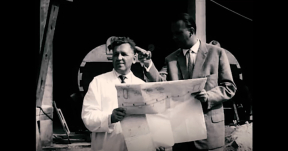
The speed at which both sides in Germany recovered economically is re-examined in this film. Professor Matthew Stibbe describes how the West Germany economy recovered and became a magnet for migrants as well as East Germans. However, he also examines how East Germany’s economy compared more successfully to some of...
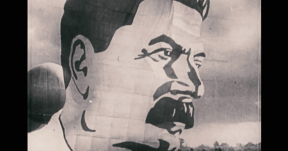
Professor Matthew Stibbe assesses some of the contradictory factors at play in East Germany and how that related to the wider Soviet system. He contrasts this with the development of the capitalist system that was being developed in West Germany.
Professor Matthew Stibbe examines the key political leaders of West and East Germany and how their decisions and responses to political events shaped their international relationships and the lives of the divided German population under their control. He also looks at the opposition and resistance these governments faced domestically during...
How did a new Germany rebuild itself from the legacy of the Second World War both physically, emotionally and culturally? Professor Stibbe explores the silences of many households and how that influenced the student rebellion of the late 1960s. He also puts into perspective the cultural impact that the war...
The rise and fall of Germany in the 20th Century is one of the major political arcs of the modern period, and one that many feel familiar with – from the unification of the Germanic states, the defeat of the Kaiser in 1918, revolution, a weak Weimar Republic all the...
Professor Tim Grady takes us back to the final days of the First World War to examine the developing splits in German society that turned into revolutionary chasms following the country’s defeat. From this he reassesses some of the factors that led to the Weimar Republic’s collapse while also allowing...