
Europe
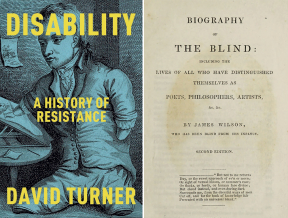
Disabled people have always been present in Britain’s past. Yet they have often appeared only at the edge of historical narratives: as recipients of charity, as objects of medical attention, as casualties of war or work, or as figures in stories told by institutions rather than by themselves. In Disability:...
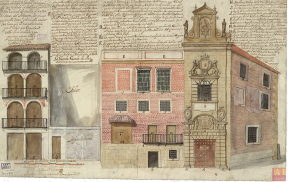
Justice in the early modern period was discretionary, which meant it could be both violent and deeply unfair. Elites often escaped the most severe punishments inflicted on the poor and minoritised groups. Clare Burgess shows how a Jesuit chaplain in sixteenth- century Seville used his spiritual discretion and zealous belief...
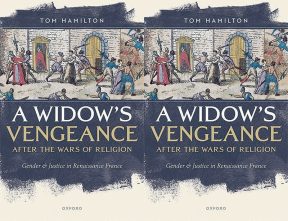
The Historian sat down with Tom Hamilton to discuss his recent work, A Widow’s Vengeance after the Wars of Religion, which uncovers the story of a revealing criminal trial during the French Wars of Religion...
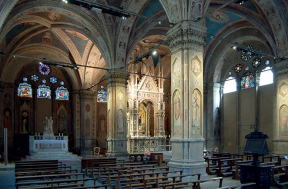
Joanne Allen reveals a fundamental structural and architectural development in Italian churches in the Renaissance era, demonstrating that careful observation of structures and archives can substantially inform our appreciation of all church buildings. In the opening to The Decameron (c. 1350), Boccaccio described how the ten young people who would...
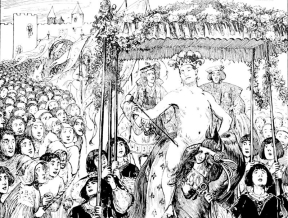
Fairy tale princesses and mysterious castles are just part of the way that historically story tellers have been connected to royalty. In this article some of the most famous story tellers are discussed with their royal patronage and experiences. Hans Christian Andersen couldn’t believe his luck. In 1854, he was...
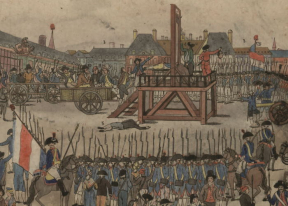
After a revolution to remove the monarchy did the French revolutionaries create another leadership of power over ideals? William Doyle re-evaluates the reputation of the so-called architect of terror during the French Revolutionary years. Two recent books reflect a seemingly endless fascination with the man whose downfall brought the end...
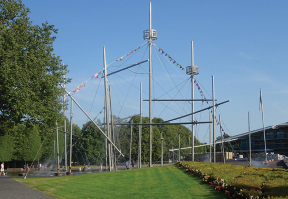
The Duchy of Courland’s attempts to establish outposts in the Caribbean and Africa were not the only Baltic ventures across the Atlantic during the seventeenth century. However, the expeditions of the small vassal dukedom were possibly the most unlikely. The article introduces the motivations behind the Couronian colonial project, as...
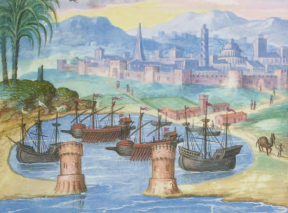
History Abridged: This feature seeks to take a person, event or period and abridge, or focus on, an important event or detail that can get lost in the big picture. Think Horrible Histories for grownups (without the songs and music). See all History Abridged articles One of the oldest cities...
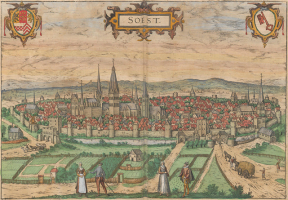
Alexander Collin examines the significance of cities within the Holy Roman Empire in early modern times. With a strong political identity of their own, cities were at the heart of the Empire’s economy and, also, centres of theological and social change. If you have ever read a description of a...
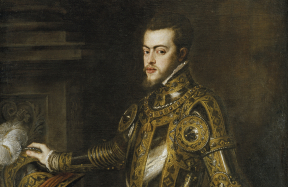
In this film Professor Sue Doran, Jesus College, University of Oxford and Professor Steven Gunn, Merton College, University of Oxford discuss the role foreign relations played in Tudor royal authority and the amount of power Tudor monarchs were able to exercise. The film will explore common threads and differences in...
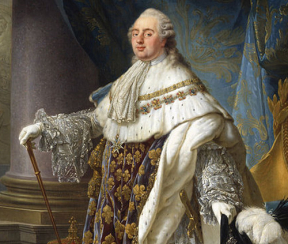
On the night of 20 June 1791 a portly middle-aged man, dressed inconspicuously in brown, with a dark green overcoat and his hair covered by a grey wig, walked out of the Tuileries palace past the guards. For the past 12 nights the Chevalier de Coigny, dressed in a similar...
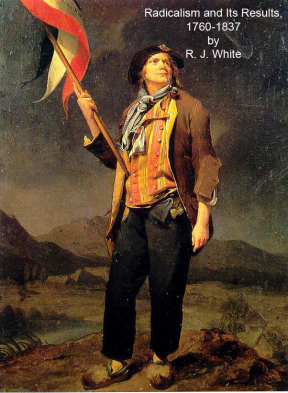
Radicalism with a large "R", unlike Conservatism with a large "C" and Liberalism with a large "L", is not a historical term of even proximate precision. There was never a Radical Party with a national organization, local associations, or a treasury. But there were, and there are, "Radicals", generally qualified...
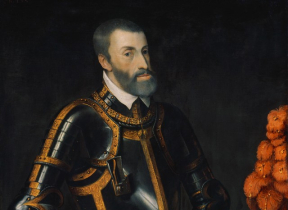
An HA Podcasted History of the Spanish Golden Age featuring Dr Glyn Redworth of Manchester University and Dr Francois Soyer of the University of Southampton.
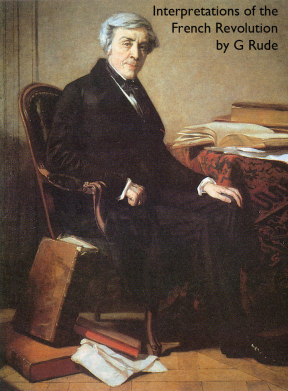
The French Revolution raises many questions not least: What sort of Revolution was it - one of "poverty" or "prosperity" ? a bourgeois revolution that overthrew feudalism? A national struggle for liberty, democracy, or "eternal Justice" ? or, again, a criminal conspiracy against the old social order? What did it...
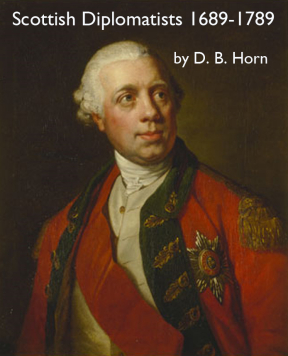
The object of this pamphlet is to show the gradual penetration of Scotsmen after the Union into a particular branch of the public service - what may be conveniently though not very accurately described as the diplomatic service. This essay makes a study of the actual negotiations conducted by Scottish...
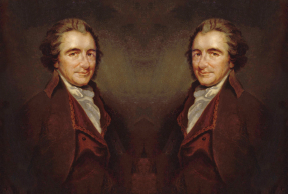
In this set of podcasts Emeritus Professor W. A. Speck of the University of Leeds looks at the life and ideas of Thomas Paine.

This classic pamphlet takes you through some of the key ideas on the shape, size and movements of the Earth as they changed over time from classical cosmology to the work of Galileo and Isaac Newton.
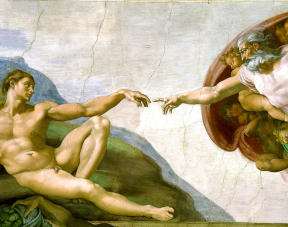
In this podcast Dr Gabriele Neher of the University of Nottingham provides an introduction to the Renaissance.
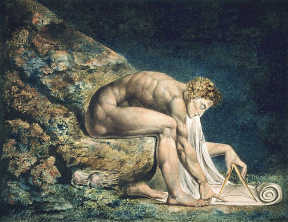
In this series of podcasts we take a look at the history of the Royal Society and the influence it has had on the history and development of science. This series features: Keith Moore, Head of Libraries and Archives at the Royal Society, Dr Jordan Goodman, Dr Patricia Fara of...
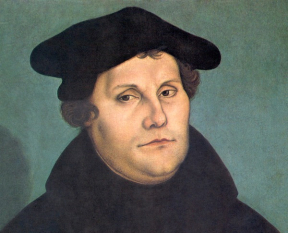
An HA Podcasted History of the Reformation featuring Professor Peter Marshall, Dr Henry Cohn, Dr Penny Robert and Professor Beat Kümin of Warwick University.