
Britain & Ireland
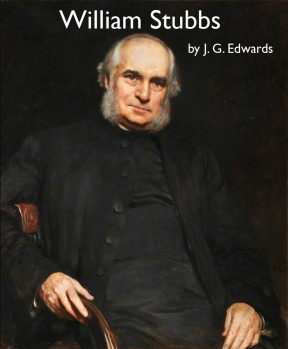
William Stubbs was among the earliest, and is still one of the greatest of the academical English historians. His life (1825-1901) fell in a period that produced a notable succession of distinguished historians in England. He was the first of them to do his historical work as a resident teacher...
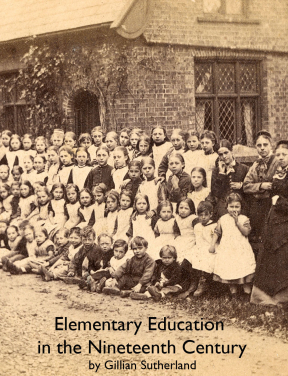
All schemes for education involve some consideration of the surrounding society, its existing structure and how it will-and should-develop. Thus the interaction of educational provision and institutions with patterns of employment, social mobility and political behaviour are fascinatingly complex. The spate of valuable local studies emphasizes this complexity and makes...
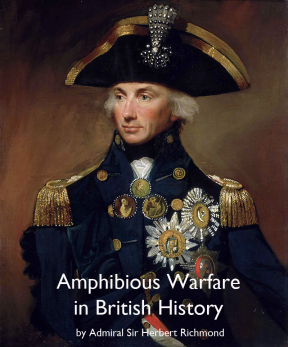
The term "Amphibious Warfare" was adopted a few years ago to indicate a form of a strategy of which the characteristic was the descent of the sea-borne armies upon the coasts and ports of an enemy. It is not a method peculiar to Great Britain, for all maritime nations from...
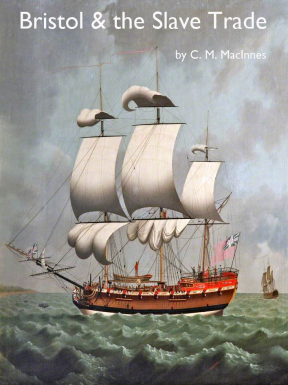
Captain Thomas Wyndham of Marshfield Park in Somerset was on voyage to Barbary where he sailed from Kingroad, near Bristol, with three ships full of goods and slaves thus beginning the association of African Trade and Bristol. In the late sixteenth and seventeenth centuries, Bristol was not a place of...
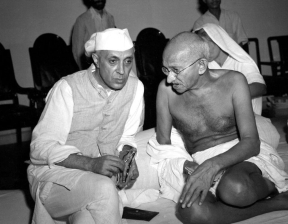
An HA Podcasted History of the British Empire 1800-Present featuring Dr Seán Lang of Anglia Ruskin University, Dr John Stuart of Kingston University London, Professor A. J. Stockwell and Dr Larry Butler of the University of East Anglia.
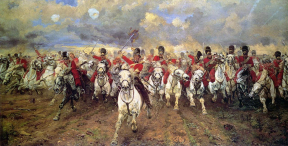
John Morewood explores the events of 18 June 1815 in detail and asks just how accurate is our view of what happened on the field of Waterloo. Summary Waterloo is the most famous battle in a four-battle campaign fought from 15 June to 19 June 1815. On one side were...
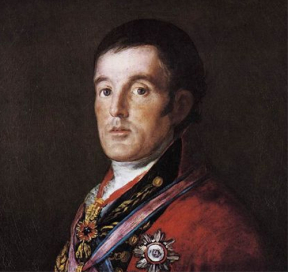
Scum of the earth – or fine fellows? Carole Divall asks whether the men of the British Army really were ‘the scum of the earth’, as often asserted, or willing soldiers who earned the respect of the French. ‘Soldiers were regarded as day labourers engaged in unsavoury business; a money...
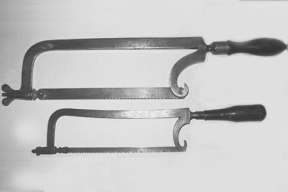
Michael Crumplin explores the medical facilities of the British Army and asks how likely soldiers wounded at Waterloo were to survive. The road to Waterloo One of the very few benefits of conflict is the advancement of medical practice. The recent wars in Iraq and Afghanistanhave been dealing with relatively...
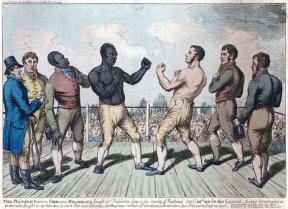
Image: 'Pierce Egan celebrates the Boxiana touch as Napoleon is floored' David Snowdon examines the impact of the world of ‘pugilism' on the army during the Napoleonic Wars and looks at some famous boxers who perished in the battle. By 1815, one writer, and one sporting publication, had become synonymous...
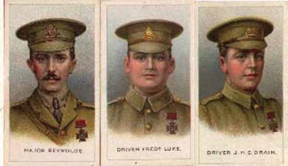
Alf Wilkinson asks why three men were awarded the Victoria Cross during the retreat from Mons in August 1914 and the fourth involved in the action wasn’t. What does that tell us about Britain during the arly days of the Great War? In August 1914, when war broke out, the...
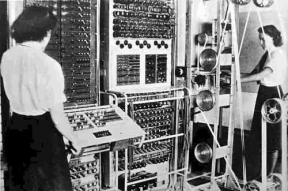
Bletchley Park was the most important of the top secret intelligence sites during the Second World War. The quiet Buckinghamshire village hosted 10,000 people dedicated to defeating the Nazis, 75% of those were women. In this podcast we are lucky enough to have some of those women talking about their...
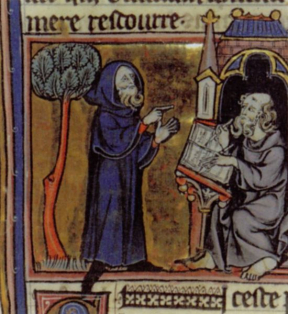
Robert Blackburn explains why, 800 years on, Magna Carta still has relevance and meaning to us in Britain today. Magna Carta established the crucial idea that our rulers may not do whatever they like, but are subject to the law as agreed with the society over which they govern. In...
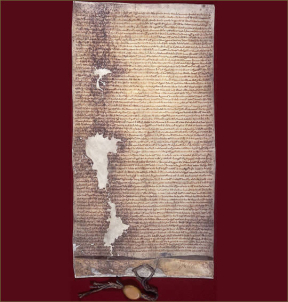
Magna Carta is a document not only of national but of international importance. Alexander Lock shows how its name still has power all over the world, especially in the United States. Although today only three of its clauses remain on the statute book, Magna Carta still flourishes as a potent...

Professor Linda Colley CBE, FBA, FRSL, FRHistS is a British Historian and a Fellow of the Historical Association. At the start of 2014 she wrote and presented a BBC Radio 4 series about the Acts of Union and Disunion, now a book. Over the summer she came into the HA...

Our World War I commemorative series continues with Robert Hopkinson's introduction to what the Imperial War Museum believes is the oldest war memorial in Britain. Wolsingham School and Community College, in Weardale, County Durham, celebrated its 400th anniversary in 2014. As part of the celebrations, there was an exhibition, a...
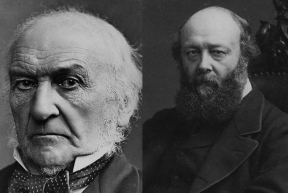
At a time when the United Kingdom continues to review its internal constitutional arrangements, Matthew Kelly explores how this constitutional debate can be traced back to Gladstone's decision to promote Home Rule for Ireland and how these proposals evolved over time and were challenged. Irish political history decisively entered a...
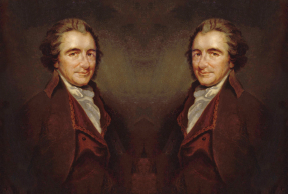
In this set of podcasts Emeritus Professor W. A. Speck of the University of Leeds looks at the life and ideas of Thomas Paine.
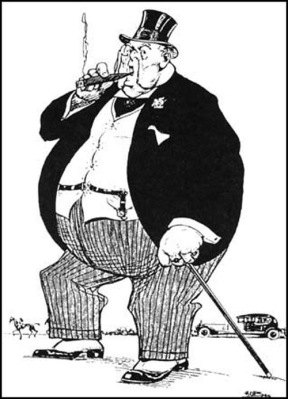
The nine-day General Strike of May 1926 retains a totemic place in the nation's history nearly 100 years later. The Chancellor of the Exchequer Winston Churchill was among those who attempted to characterise it as anarchy and revolution, but this was hyperbole and largely inaccurate for, as Ellen Wilkinson (then...
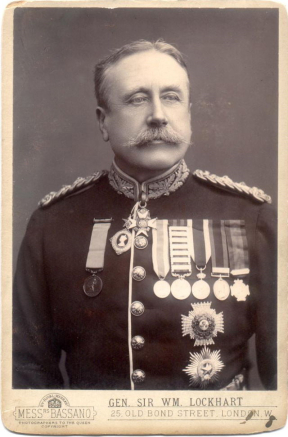
The Tirah memorial stands in a corner of Borough Gardens, a Victorian park in Dorchester, county town of Dorset. It is a granite obelisk decorated with a motif of honeysuckle and laurel wreaths standing 4.5 metres high on a square granite plinth. This in turn stands upon a circular concrete...
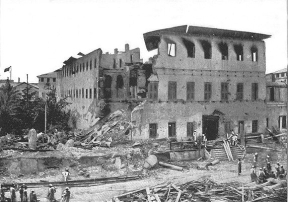
At 9am on 27 August 1896, following an ultimatum, five ships of the Royal Navy began a bombardment of the Royal Palace and Harem in Zanzibar. Thirty-eight, or 40, or 43 minutes later, depending on which source you believe, the bombardment stopped when the white flag of surrender was raised...