
Past event resources
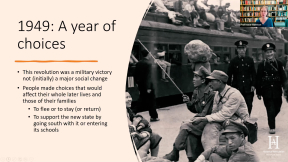
In this talk Professor Henrietta Harrison uses diary records to think about the experience of living through the revolution in China in 1949, focussing on what it meant to Chinese people, how they learned about its practices and ideology, and how this changed their lives - whether they were radical...
This is the story of the Venice Ghetto, the corner of the city where Jews were exiled; free to walk the streets by day, locked behind gates and walls at night. Yet, gates and walls notwithstanding, from its establishment in 1516 until the fall of Venice in 1798, the ghetto...
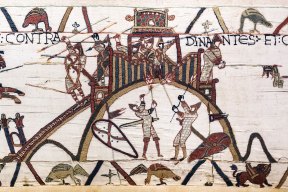
Normandy originated from a grant of land to Rollo, a Viking leader, in the early tenth century. By the end of that century Normans were to be found in southern Italy, then in Britain and, at the end of the eleventh century, in the near East on the First Crusade....
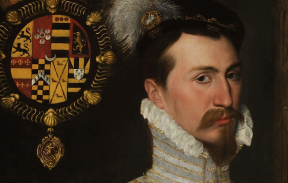
The Dudleys thrived at the court of Henry VII, but were sacrificed to the popularity of Henry VIII. Rising to prominence in the reign of Edward VI, the Dudleys lost it all by advancing Jane Grey to the throne over Mary I. That was until the reign of Elizabeth I,...
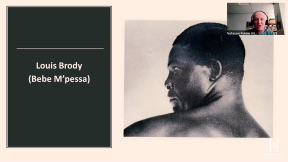
In this webinar, Professor Robbie Aitken looks at the experiences of Black residents in Germany during the Nazi period. Why have they been largely written out of larger histories of the Third Reich? Professor Aitken suggests that there was a genocidal intent in Nazi policy towards them, signalled partly by...
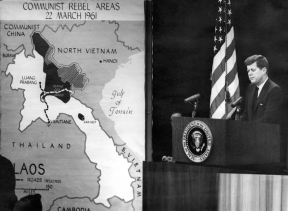
Would US President John F. Kennedy have avoided the catastrophe that became the Vietnam War if Lee Harvey Oswald had not assassinated him in Dallas on that fateful day of 22 November 1963? This question – or a version of it – has animated discussions of the Vietnam War for...
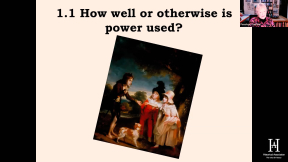
Eighteenth-century Britons were ruled by a restricted oligarchy of landowners and plutocrats. Yet the wider population had a proud tradition of assertiveness and readiness to protest. ‘Britons never will be slaves!’ as the chorus of 'Rule Britannia' (1740) announced pointedly (if somewhat ironically, in view of Britain’s role in the...
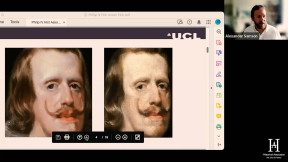
Decline, decadence, crisis, stagnation, and adversity are terms powerfully associated with the reign of Spain’s Planet King; sombre tones that contrast sharply with the glittering cultural and artistic achievements (enhanced by his patronage) that led the period to be dubbed ‘the’ Golden Age, a label consciously competing with France’s later...
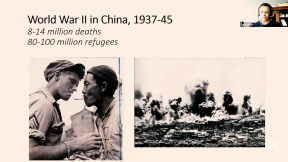
The Chinese regime never used to want to talk about their country’s experience in World War Two. The Japanese occupation of parts of China was felt to be a humiliating episode that was best forgotten, and the Communists were uncomfortable that their nationalist enemy Chiang Kai-Shek had been China’s main...
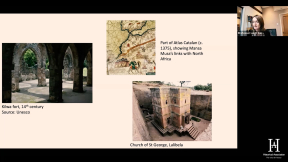
Popular discussions of Africa often focus on the region’s relative poverty, and ask what role historical events like colonialism and the slave trade have played in shaping its development over time. For a long time, the absence of systematic data on African economies before c. 1960 meant these discussions were...
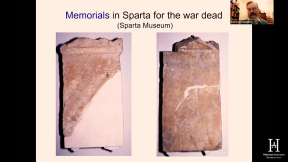
This webinar starts with a basic overview of the city-states of Classical Greece (roughly 500 to 350 BC) and Sparta’s place within their geography and history. It then looks at some common myths about the nature of Spartan society and politics, focusing on areas where recent research has transformed our...
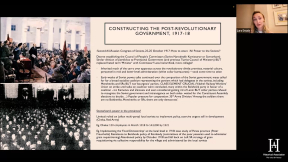
In this webinar Dr Douds examines the nature of political authority in the nascent Soviet Republic and the institutional structures, practices and ideology of government in the Lenin period. She considers how Communist Party dictatorship and the monolithic party-state emerged in the early years following the October Revolution of 1917...
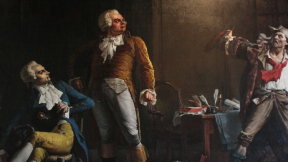
One of the oldest myths of the French Revolution is the lethal rivalry between Robespierre and Danton: Robespierre the cold, bloodthirsty dictator who ruled France through Terror, versus Danton, the warm, humane, inspirational orator who wanted to stop Terror. Throughout the 19th century Robespierre was mostly depicted as a villain,...
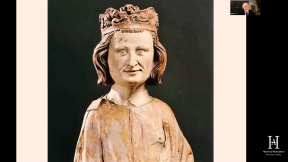
David Carpenter brings to life the dramatic events in the last phase of Henry III’s momentous reign, provides a fresh account of the king’s strenuous efforts to recover power and sheds new light on the rebel figure Simon de Montfort. Professor David Carpenter is a Professor of Medieval History at...
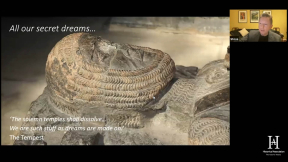
The word Templars conjures up a variety of images and ideas – much of which are fiction rather than fact. In this talk Dr Steve Tibble will unpick some of the stories surrounding this group and place them in a proper historical and factual context. He will explore why the...
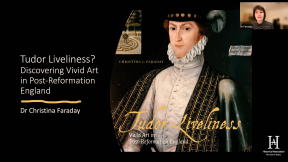
In Tudor England, artworks were often described as ‘lively’. What did this mean in a culture where naturalism was an alien concept? And in a time of religious upheaval, when the misuse of images might lure the soul to hell, how could liveliness be a good thing? In this talk...
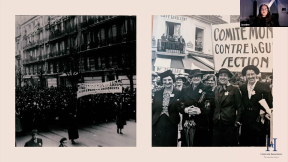
How did a group of women activists with varied ideological backgrounds construct several important campaigns against fascism in the interwar period? How did this Women's World Committee against War and Fascism (Comité Mondial des Femmes contre la Guerre et le Fascisme) undertake effective humanitarian and propaganda work and forge extensive...
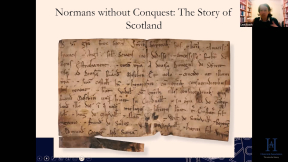
How did descendants of Viking marauders come to dominate Western Europe and the Mediterranean, from the British Isles to North Africa, and Lisbon to the Holy Land and the Middle East? In this Virtual Branch talk Levi Roach, author of Empires of the Normans, tells a tale of ambitious adventures...
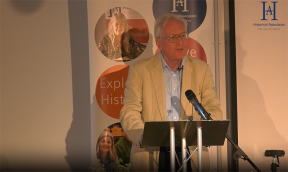
The Medlicott Medal is awarded annually for outstanding services and contributions to history. This year the Medal went to renowned historian and author Professor Diarmaid MacCulloch who is currently Professor of the Church at Oxford. His 2008 book History of Christianity: the first three thousand years is the leading authority...
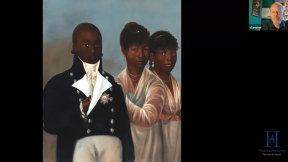
How did a man born enslaved on a plantation triumph over Napoleon's invading troops and become king of the first free black nation in the Americas? This is the forgotten, remarkable story of Henry Christophe. Christophe fought as a child soldier in the American War of Independence, before serving in...