
Britain & Ireland
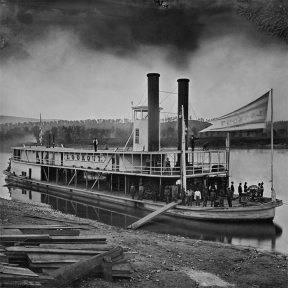
From the time when primitive man first went adrift on a bundle of reeds or learnt to balance himself on a floating log, to the days where his descendants, no more than a few generations ago, raced scrambling aloft to trim the towering sails of a full-rigged ship, the skill...
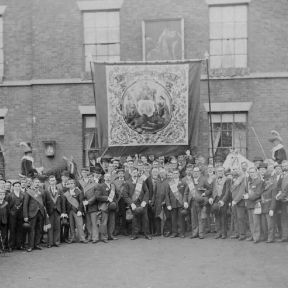
Friendly societies were designed to help members to cope with the illness, death or unemployment of a household's breadwinner. Each month members, mostly men, paid into the society, often at a meeting in a pub and in return payments from the pooled funds were made to ill members and to...
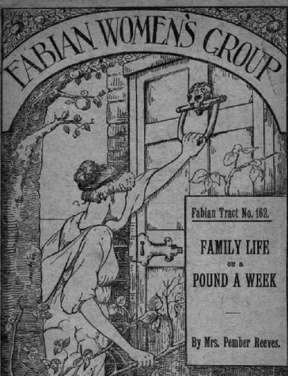
In this edition, we begin a new occasional feature, where we explore a classic text that had a major impact both at the time it was published, and since. Alf Wilkinson discusses a book first published in 1913, and still in print, and explains why he thinks it is as...
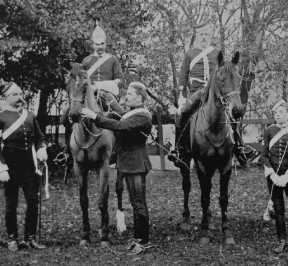
The Territorial Force, as formed in 1908, had 54 cavalry regiments organised in 14 brigades and known collectively as the Yeomanry. This meant that the Yeomanry consisted of 1,168 officers and 23,049 other ranks in September 1913 out of a Territorial Force which numbered 9,390 officers and 236,389 other ranks....
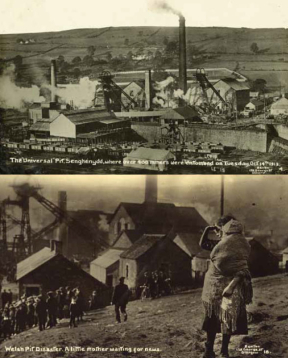
Alf Wilkinson explores Britain's biggest coal mining disaster, at Senghenydd Colliery, in South Wales, in October 1913. At ten past eight in the morning of Tuesday 14 October 1913, just after 900 men had started work underground, an explosion ripped through Senghenydd Colliery, near Caerphilly, killing 439 miners and, later...
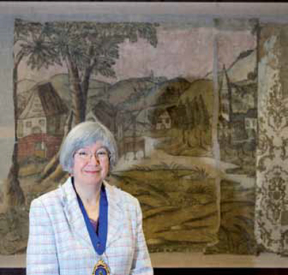
As 2014 starts I am conscious that I am entering the last few months of my time as President. The past two and a half years have flown by for me, partly because I have really enjoyed meeting so many of our members at my talks and finding out what...
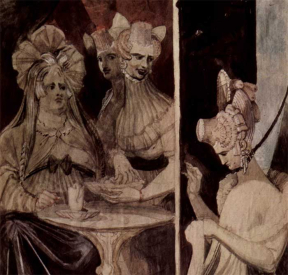
Petticoat Politicians: Women and the Politics of the Parish in England The history of women voting in Britain is familiar to many. 2013 marked the centenary of the zenith of the militant female suffrage movement, culminating in the tragic death of Emily Wilding Davison, crushed by the King's horse at...
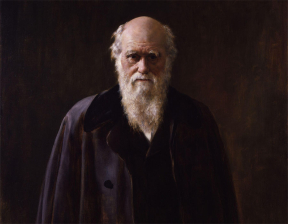
In this set of podcasts Project Director Professor Jim Secord and Associate Director Dr Alison Pearn of the Darwin Correspondence Project discuss the life, work and legacy of Charles Darwin.
The final version of the National Curriculum for History was published over the summer. It is pleasing to see that the improvements recommended by the Historical Association and other History societies have been included. There is now provision for longer chronological study at both Key Stage 2 and 3, as...
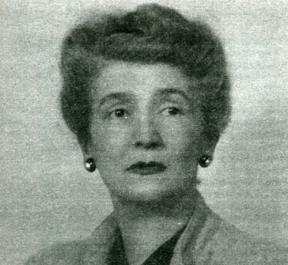
Meeting in Berlin Three days before the outbreak of the Second World War, William Joyce, the leader of the British Nazi group, the National Socialist League, was in Berlin. He and his wife, Margaret, had fled there fearing internment by the British government if war broke out. Yet as war...
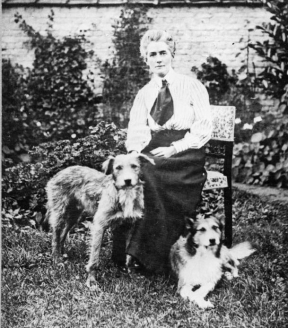
With the centenary approaching, article after article will appear on battles, the men who fought, those who refused, those that died, those who returned and those that made the decisions. There will be articles on the home front and the women that stepped into the men's shoes often to be...
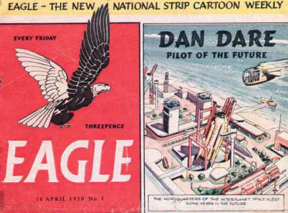
Marcus Morris and Eagle: Approved reading for boys in the 1950s & 1960s The National Art Library of the Victoria and Albert Museum in London's South Kensington held an exhibition in the first five months of 2012 devoted entirely to British adventure comics of the 1950s and 1960s, many taken...
The last three months have been a very busy period for the HA. The consultation on the draft National Curriculum for History ended on 16 April and we remain in dialogue with the Department for Education on the revised proposals. In May the HA's annual conference was held at York...

An HA Podcasted History of the Cold War featuring Dr Elena Hore of the University of Essex, Dr Matthew Grant of Teeside University, Dr Holger Nehring of the University of Sheffield, Dr Michael Shin of the University of Cambridge, Professor Mark White of Queen Mary University of London, Professor Charles...
On 10 December an advance copy of a report (History for all) by the All-Party Parliamentary Group on History and Archives was publicised, which relied heavily on research and expert witness from the Historical Association. The report noted that ‘there is a great deal to be positive about in the...
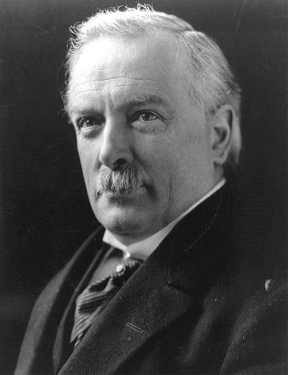
Sandwiched between the Parliament Act and the Home Rule Act, the National Insurance Act 1911 is easily overlooked and often forgotten. Yet, as Gilbert has pointed out, it was critical both of itself and as the foundation for social legislation up to current times. It came into force on 15...
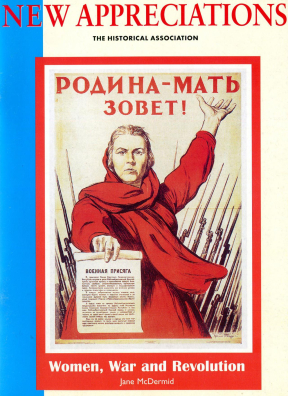
On the surface, the period 1914 to 1945 seems to have encompassed massive changes in the position of women in Europe, in response to the demands of war and revolution. Yet historians have questioned the extent of the transformation, since the acquisition of the vote, as well as improvements in...
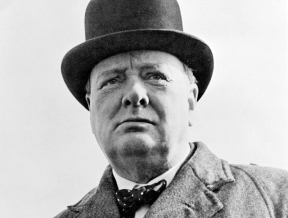
In this set of podcasts our author Dr Helen Parr examines Britain's role in the Cold War. Katharine Hudson, General Secretary of CND, looks at the history of the Campaign for Nuclear Disarmament (CND) in Britain.
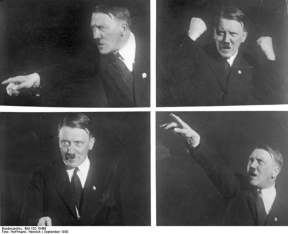
This pamphlet provides a detailed account of the events leading up to the outbreak of war in 1939, covering the various factors that played a role in the outbreak of war such as tension over Poland and the Spanish Civil War, as well as the nature and effect of diplomatic...
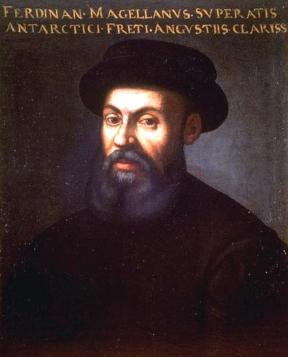
This pamphlet covers a very large period of history in a very important region with great detail and focus. Themes that are covered include the transition of power and dominance in the pacific region, the conflicts that frequently arose in the struggle for pacific dominance throughout the centuries, as well...