World

The medieval world takes us to Byzantium to explore the continuities with the ancient world and the multi-ethnic and multi-lingual empire that endured throughout the period. Or you can discover the many reasons and arguments for the rise and spread of Islam in the sixth and seventh centuries and the formation of the Umayyad and Abbasid Caliphates. Read more

Sort by: Date (Newest first) | Title A-Z
Show: All | Articles | Podcasts | Multipage Articles
  • In conversation with Ayoush Lazikani

    Article

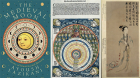
    Ayoush Lazikani’s The Medieval Moon follows the moon between roughly 700 and 1600, tracing how it became a meeting-place for prophecy, medicine, devotion, and art across a globally conceived Middle Ages. Carolin Gluchowski met with Ayoush Lazikani to explore the many moons of the Middle Ages...

    Click to view
  • More than skin deep: unmasking the history of cold cream

    Article

    From the ancient Mediterranean to the shelves of twenty-first century pharmacies and cosmetic counters, cold cream has a long history. In this article, Farhana Qayoom Shaikh explores how Galen’s simple formula for treating skin complaints transitioned over the centuries into a luxury beauty product.

    Click to view
  • Virtual Branch Recording: Crusader Criminals

    Article

    The religious wars of the Crusades are renowned for their military engagements. But the period was witness to brutality beyond the battlefield. More so than any other medieval war zone, the Holy Land was rife with unprecedented levels of criminality and violence. In the first history of its kind, Steve Tibble explores...

    Click to view
  • The Chinese National Anthem

    Article

    The history of the Chinese national anthem gives Derek Ying a new perspective on society and culture from the era of the Qing dynasty to the People’s Republic of China. It reveals the strengths and weaknesses of different regimes, and the power of song to unite and divide...

    Click to view
  • American Vikings past and present: untangling myth from reality

    Article

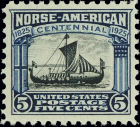
    There is now compelling evidence that Norse people – popularly known as Vikings – had some interaction with the First Peoples of North America. Martyn Whittock looks at how the appeal of a Viking legend has combined with archaeological discoveries to create a powerful attachment in the North American imagination...

    Click to view
  • A probable silk heirloom from Central Asia...

    Article

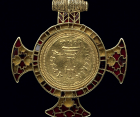
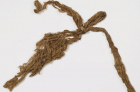
    This article explores precious fragments of silk, manufactured in the Byzantine Empire and Central Asia, discovered in archaeological excavations in Dublin. Dublin, situated on the east coast of Ireland, grew out of a fortified riverside camp (longphort) for overwintering marauding Vikings or ‘northmen’, who were plundering wealthy ecclesiastical establishments from the late eighth...

    Click to view
  • Theodore of Tarsus, Archbishop of Canterbury (602–690)

    Article

    The remarkable career of Theodore of Tarsus, Archbishop of Canterbury, shows how the political and religious turmoil in the seventh-century eastern Mediterranean had a direct impact upon the English kingdoms. Asked to name the most significant archbishops of Canterbury, it is likely that few would name the seventh-century monk, Theodore of...

    Click to view
  • Reconciling historical accounts and archaeological remains

    Article

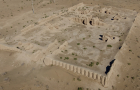
    Paul Wordsworth traces the route ways across the Karakum Desert, Turkmenistan, going in search of the wells and watering places essential to desert travel. There are many risks when arriving at a well in the middle of the Karakum (black sand) desert in the modern Republic of Turkmenistan, not least...

    Click to view
  • Living on the Silk Roads: Voices from Dunhuang

    Article

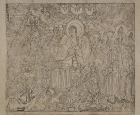
    In Autumn 2024, the British Library will mount an exhibition exploring the stories of the people who inhabited or passed through the oasis town of Dunhuang during the first millennium. Located in modern-day Gansu province, in northwest China, Dunhuang was originally established as a garrison town and became an important commercial...

    Click to view
  • My Favourite History Place: Bulguksa Temple, Korea

    Article

    Set among the forested Toham mountains in southeast Korea, Bulguksa (Bulguk Temple, the Temple of the Buddha Land), was founded during the Silla Dynasty (57 BC–AD 935). The history of this 1,300 year old sacred site reflects the long and sometimes turbulent history of Buddhism and its heritage in Korea, up to its...

    Click to view
  • From Norwich to Nara

    Article

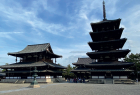
    Simon Kaner explores the fascinating parallels revealed by the international research project From Nara to Norwich between life and religious belief at the ends of the Silk Roads. Nara is the ancient capital region of Japan. The eighth century imperial treasury, the Shōsōin, with its treasures from China and central Asia, is...

    Click to view
  • Iron Age Scandinavia and the Silk Roads: a new frontier

    Article

    Both public and scholarly perceptions of the Viking Age (c.AD 750–1050) have long been dominated by a western outlook, emphasising raiding and trading in Europe and the North Atlantic, with only limited attention paid to Scandinavian contacts to the east. In recent years, this viewpoint has shifted dramatically, not only acknowledging the borderless...

    Click to view
  • Crusade in Crisis: the Siege and Battle of Antioch, 1097–98

    Article

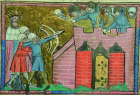
    On 28 June 1098, the forces of the First Crusade marched out from the great north Syrian city of Antioch to do battle with Karbugha, the Muslim ruler of Mosul. The odds were not in their favour: not only was the Muslim army vastly superior in size, but the crusaders had...

    Click to view
  • The First Crusade, 1095–99

    Article

    As Christianity had spread across Europe, Islam had spread across the Middle East. At the end of the eleventh century the relationship between the Muslim leader of Jerusalem and the Christian communities and travellers to the city fractured. Along with other key relationships across Europe, the Middle East and around...

    Click to view
  • Out and About on Uzbekistan’s Silk Road

    Article

    “For lust of knowing what should not be known— We make the Golden Journey to Samarkand.” So wrote poet James Elroy Flecker in 1913, who had perhaps an unduly romantic view of what motivated many of Uzbekistan’s earlier visitors. A more realistic explanation was proffered in the thirteenth century by the Persian...

    Click to view
  • Out and About in Madagascar

    Article

    Madagascar is one of the world’s more intriguing destinations. If it is famous for anything – apart from sharing a name with a truly terrible film franchise – it is probably for its wildlife, much of which is found nowhere else. But whereas most people have at least an idea of...

    Click to view
  • The throne and the fairy tellers

    Article

    Fairy tale princesses and mysterious castles are just part of the way that historically story tellers have been connected to royalty. In this article some of the most famous story tellers are discussed with their royal patronage and experiences. Hans Christian Andersen couldn’t believe his luck. In 1854, he was...

    Click to view
  • History Abridged: Libraries

    Article

    History Abridged: This feature seeks to take a person, event or period and abridge, or focus on, an important event or detail that can get lost in the big picture. See all History Abridged articles The collecting of stories through written record is one of the most important methods societies...

    Click to view
  • Out and About in Cairo

    Article

    Nicolas Kinloch guides us round the fascinating city of Cairo. Cairo has always been a traveller’s destination. That indefatigable explorer, ibn Battuta, arrived there in 1326, and declared that it was ‘boundless in its multitude of buildings, peerless in beauty and splendour...extending a friendly welcome to strangers’. Most of this is...

    Click to view
  • The Christian Kingdoms of Nubia and Ethiopia

    Article

    Adam Simmons draws our attention to the need for further research into the relationship between the medieval Kingdoms of Ethiopia and Nubia – a fascinating time and place in African history which is neglected in the historical archive and about which, so far, there are only limited sources. The kingdoms of Ethiopia...

    Click to view