
World
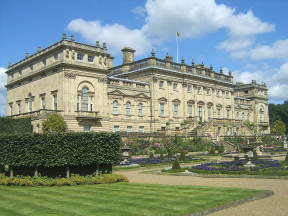
What really paid for the ballgowns, portraits and country estates of Georgian Britain? Historian Miranda Kaufmann peels back the polished veneer of Britain’s heiresses to reveal fortunes forged in Caribbean slavery. Beneath the elegance of marriage markets and inheritance battles lies a darker story of exploitation, empire and human resilience....
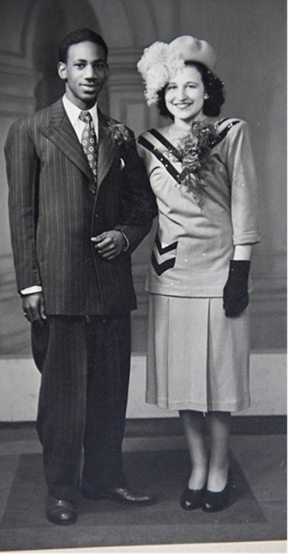
What does this series cover? This series covers the sometimes hidden and controversial history of how the RAF has recruited and treated its black service personnel over time, particularly from the British Caribbean from 1918 onwards. Using newly researched evidence from surviving black RAF veterans of the West Midlands it...
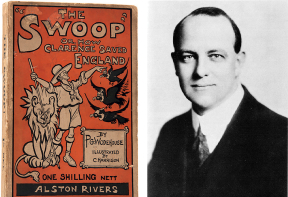
The writer P.G. Wodehouse is best remembered for his comic portrayals of the exploits of wealthy, young ‘men about town’ during the interwar years, but his writing often contained a multi-layered commentary on British society and politics, the extent of which has not yet been fully appreciated. In this article,...
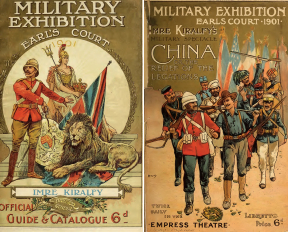
In 1901, at the height of empire, public shock at the vulnerability of British colonial interests was accompanied by public appetite for spectacular re-enactments of British battlefield victories. Robert Brown shows how one performance of the ‘Relief of the Legations’ at the Military Exhibition in Earl’s Court, London, was reshaped...
Disabled peoples could be found across the British Empire; at the same time, the process of colonisation could create forms of disability, while the concept of ‘disability’ became embedded in discourses of race and gender. In this article, Esme Cleall demonstrates how thinking about disability is essential to understanding the...
Expansion into new periods and places, new revelations of human diversity and difference, and a rethink of the tools we use to recover the past – disability history is not just thriving but is also exciting, as Daniel Blackie and Alexia Moncrieff demonstrate in their update on the state of...
For the last two and a half centuries, the USA has been shaped by a remarkable sense of its own unique place in world history, yet consumed by never-ending battles over what this means. 250 years after the Declaration of Independence was signed, the United States appears to be at...
When the Bolsheviks seized power in October 1917, they inherited responsibility for around two million foreign prisoners of war – mostly soldiers from the Germany and Austro-Hungarian armies – captured during the First World War. Dispersed across the former Russian Empire, from the Baltic to Siberia and Central Asia, these...

Concerns about demobilised soldiers after the Second World War were widespread, reflecting both the practical challenges faced by returning servicemen and broader anxieties about their reintegration into civilian life. In this article, Helen George explores how a temporary education facility in Hertfordshire helped prepare demobilised Canadian soldiers for higher education...
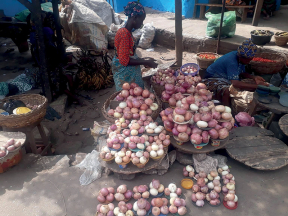
In this article Folusho Alabi reveals a relatively unknown story from the history of the British Empire. She analyses the issues and strategic manoeuvres in an ongoing struggle between Nigerian market women and the British colonial authorities in the early twentieth century. Despite an innate imbalance of power in this...
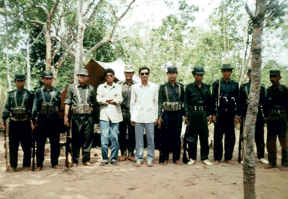
How did groups resisting the creation of new borders after 1947 use shadow state structures? Luke Rimmo Lego, Abigail Tamang and Sneha Singh with Laishram Bullion and Chinglai Ngamba Moirangthem explore the history of these structures and their development over the past half century.
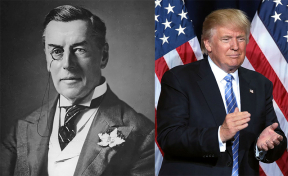
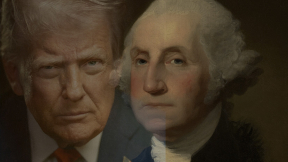
What are the pitfalls and pluses of comparing historical figures with contemporary politicians? Chris Godden argues that recent comparisons of Donald Trump with one of his predecessors may be wide of the mark, but that a more illuminating parallel may be found with one of Britain’s most controversial nineteenth-century politicians.
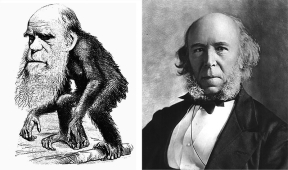
‘Social Darwinism’ has been associated in academia and popular consciousness with negative concepts such as hyper-nationalism and eugenics. Geoffrey M. Hodgson challenges the notion that Social Darwinism or its proponents were ever well-defined. By tracing the use of ‘Social Darwinism’ across academic disciplines and globally over a long period, Hodgson...
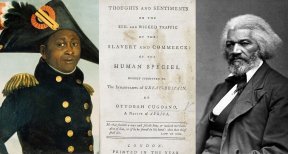
This talk explored the struggle for liberation from the perspective of the enslaved, wherever possible in their own words. Dr Sudhir Hazareesingh shines a light on the lives of revolutionaries like Toussaint Louverture, José Antonio Aponte, Nat Turner, and the pregnant rebel Solitude; touching on the stories of the freed...

In his work on the local history of his hometown in Panama, Miguel Elias Escobar Cornejo highlights the importance of understanding the geography of the historical sites we study. Here, he explains how a defensive route from the coast to the rugged mountain interior developed into one of the most...
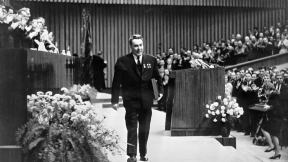
In this film Dr Edwin Bacon takes us through Brezhnev’s early life and career: his birth in Ukraine in 1906, the opportunities brought by the revolution, his role in the battle of Ukraine and his eventual arrival to the Politburo at the end of the 1950s. Dr Bacon looks at...
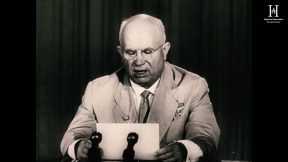
In this film Dr Edwin Bacon reflects upon the instability of the Khrushchev era and how Brezhnev positioned himself as the perfect replacement for a Soviet Communist party desperate for stability in the wake of the Cuban missile crisis. Brezhnev would be the first amongst equals looking to move forward...
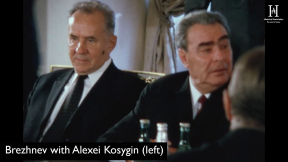
In this film Dr Edwin Bacon talks about Brezhnev’s change in direction and approach after Khruschev, making collective leadership work and the Kosygin reforms. Whilst there were changes from the era of Khruschev, Brezhnev’s response to the Prague Spring in 1968 showed that some things had not changed. The events...
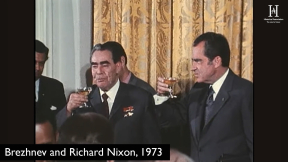
In this film Dr Edwin Bacon blanks about the modernisation of the soviet union in the 1960s and 70s under Brezhnev, with some scholars predicting that as the East and West evolved, they would eventually converge as modern developed industrialised societies. The problem with convergence theory is that it didn’t...
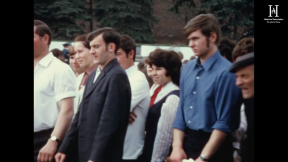
In this film Dr Edwin Bacon looks back at Brezhnev’s 18 years and how is has been described as an era of stagnation, producing an appetite for change from younger leaders such as Mikail Gorbachev. Dr Bacon reflects that this was a period of relative peace, stability and predictability which...