
Britain & Ireland
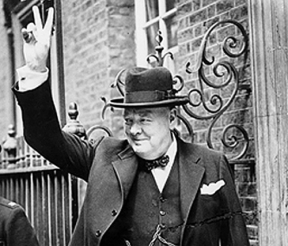
Winston Churchill is generally regarded as one of the most prominent figures of the twentieth century. As Prime Minister he led Britain to victory against the Nazi war machine, leading Time to name him ‘Man of the Year' in 1940 and ‘Man of the Half Century' in 1949. As recently...
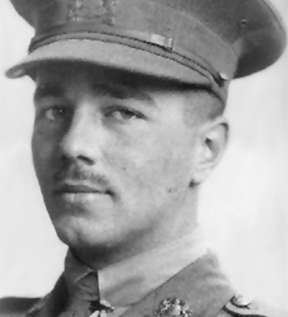
The last two decades have seen a slow shift in the academic understanding of the impact of the Great War on interwar Britain. The work of a small group of cultural historians has challenged strongly held pre-existing interpretations of the cultural impact of the Great War. However, there is still...
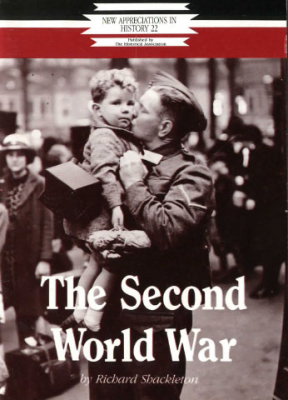
On 5 September 1939 the German Führer, Adolf Hitler, paid a surprise visit to the corps which was in the forefront of his army's ferocious assault upon Poland. As they passed the remains of a smashed Polish artillery regiment, the corps commander, General Guderian, astonished Hitler by telling him that...
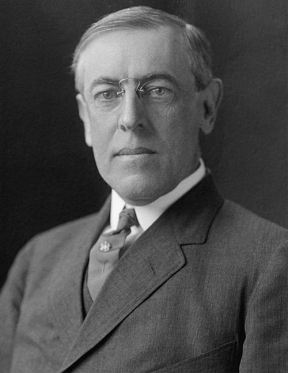
Unpublished papers in Britain's National Archives at Kew reveal curious undercurrents in Anglo-American relations. After the conclusion of the Boer War, for example, the British Army supposed that the next major conflict would be not with Germany but with the U.S. A memo printed for circulation in July 1904 entitled...
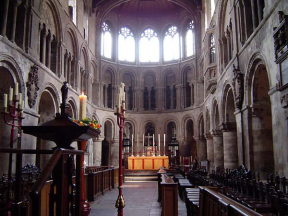
On the north-western side of the City of London, directly in front of St Bartholomew's Hospital near the ancient church of St Bartholomew the Great, there once lay a ‘smooth field', now known as Smithfield. This open space of around ten acres had a long and turbulent history. In medieval...
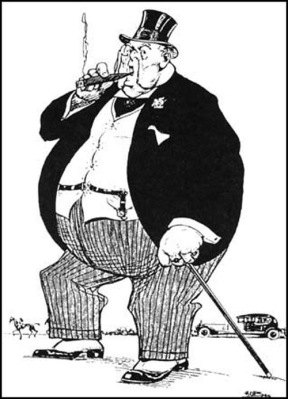
‘The General Strike is a challenge to Parliament and is the road to anarchy and ruin.' (Stanley Baldwin, Prime Minister, 6th May 1926). ‘The General Council does not challenge the Constitution ... the sole aim of the Council is to secure for the miners a decent standard of life. The...
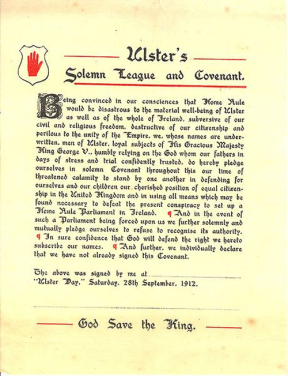
It is difficult to exaggerate the importance of Irish unionism for British and Irish politics in the late nineteenth and early twentieth centuries. The movement was supported almost exclusively by Irish Protestants who were of Anglo-Irish or Scotch-Irish descent and who comprised roughly one-quarter of the population of Ireland. Its...
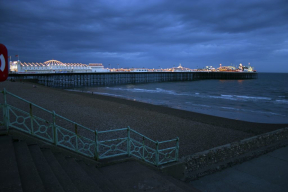
October 2010 was a memorable month for England's historic pleasure piers. Early in the month, fire ravaged Hastings Pier, to the extent that there is some doubt as to whether it can be restored, but, by contrast, at the end of the month there was the delightful news that the...
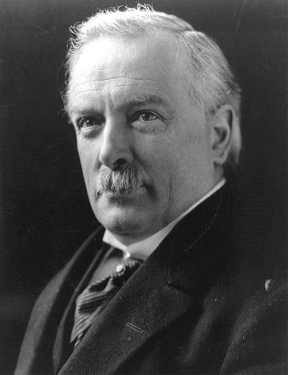
When Lloyd George succeeded Asquith as Chancellor of the Exchequer in April 1908, his first task was to introduce the old age pensions Asquith had initiated. His second was to prove even more momentous. On 29 April 1909 he presented what has become known as "The People's Budget". The task...
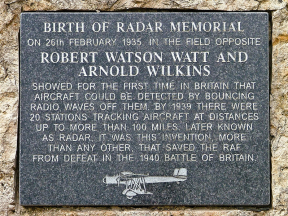
Whenever British radar is discussed the name that usually comes to mind is that of Robert Watson Watt. Our history books and our dictionaries of biography consistently attribute the discovery of radar in Britain solely to Watson Watt, with little or no mention of the key role played by his...
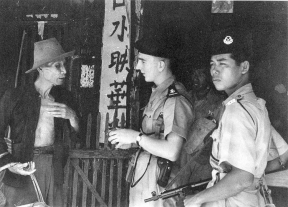
‘To think that the people of Indochina would be content to settle for less [from the French] than Indonesia has gained from the Dutch or India from the British is to underestimate the power of the forces that are sweeping Asia today'. An American adviser in 1949 cited: Robin Jeffrey...
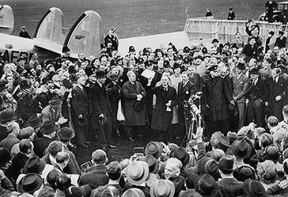
Brent Dyck is a Canadian teacher and a previous contributor to The Historian. In this short essay he offers us his objective interpretation of the achievements of Neville Chamberlain. For some what he says may seem surprising and for others it might even be controversial. However, editorially it seemed entirely...

I am writing this in early September. Although some universities have altered their academic year so that it begins earlier, I am lucky that Southampton does not have students returning until the end of the month. For me, September is vital for research and writing. It began with a bang...
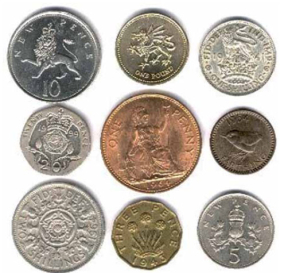
Decimal Day in Britain was Monday 15 February 1971. New coins and notes were circulated. There was no special issue postage stamp to commemorate the occasion, only a new series with some unfamiliar values, such as 7½p instead of 1s 6d. The fortieth anniversary of the arrival of decimal currency...
I wrote my last column shortly after the Great Debate. This time it is a few weeks after the AGM in Sheffield, which I much enjoyed, and I hope others did too. In recent years the AGM has become the main means whereby the HA can get together as a...
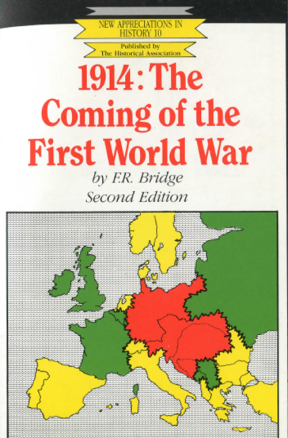
This pamphlet argues that the outbreak of the First World War represented not so much the culmination of a long process started by Bismarck and his successors, as the relatively sudden breakdown of a system that had in fact preserved the peace and contained the dangerous Eastern Question for over...
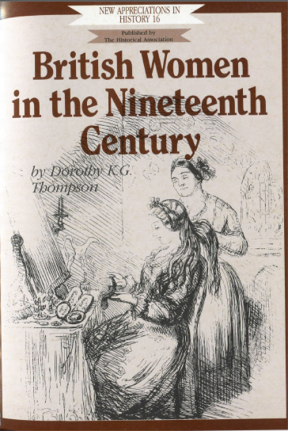
A short pamphlet surveying the historical record of rather more than half the population of Britain over a period of a hundred years must of necessity be sketchy and incomplete. The great interest in history of women which has arisen in the last few decades has produced a great deal...
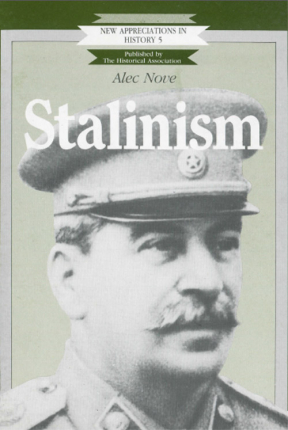
Stalin's remarkable career raises quite fundamental questions for anyone interested in history. Marxists, whose philosophy should cause them to downgrade the role of ‘great men' as an explanation of great events, have problems in fitting Stalin into the materialist interpretation of history: did not this man ride rough-shod over the...
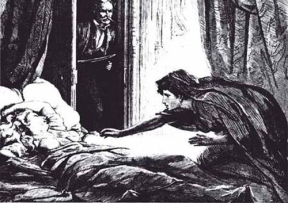
The now legendary film company Hammer made such classics as The Curse of Frankenstein (1957) and Dracula (1958), plus their numerous sequels and subsequent remakes of old Universal Gothic chillers (The Curse of the Werewolf, The Mummy, The Phantom of the Opera), as well as making international stars out of...
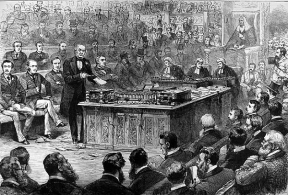
One hundred and twenty years ago the advent of the first red May Days caused major concern across Europe. To general surprise, in 1890 and the next few years some of the largest rallies occurred in London. In Britain the main demonstration on the nearest Sunday to May Day passed...