
Latest Podcasts
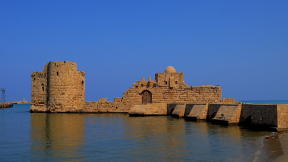
During the twelfth and thirteenth centuries the crusaders constructed tens of castles across the Middle East, some merely small watchtowers, others massive strongholds or fortress cities - but why did the crusaders place so much importance on fortifications? Nicholas Morton explores the development of this remarkable phenomenon asking key questions...
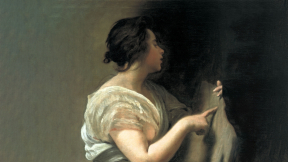
In Episode 11, Dr Mary Jo MacDonald of the University of Jyväskylä explores how the end of the Licensing Act, sweeping political change, and a revolution in intellectual culture opened unprecedented opportunities for women to shape political, social, and intellectual life in Britain and Ireland. The film highlights major proto‑feminist...
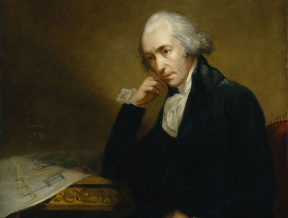
The 18th century represents a pivotal moment bridging early modern Britain with the social, economic and technological transformations of the Industrial Revolution. In Episode 3, Professor Emma Griffin (Queen Mary University of London), explores this period of invention, innovation and entrepreneurialism, how it affected ordinary families, and its role in...
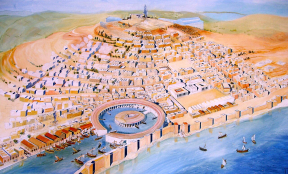
Ancient Carthage was an ancient Semitic civilisation based in North Africa. Initially a settlement in present-day Tunisia, it later became a city-state and then an empire. Founded by the Phoenicians in the ninth century BC, Carthage reached its height in the fourth century BC as one of the largest metropolis...
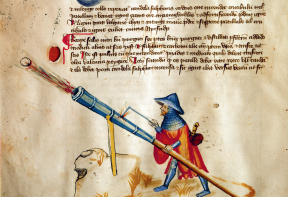
In this podcast Dr Nicholas Morton (Nottingham Trent University) discusses the role the Near East played in the development and transmission of technology and innovation during the medieval period. Dr Morton looks examines the significance of gunpowder, the navigational compass and maritime chart, and also how the changing civilisations of...
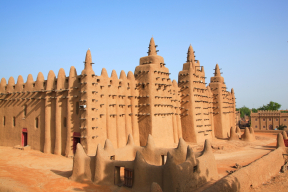
In this podcast Professor Kevin MacDonald (University College London) examines the history of the Mali Empire, discusses the importance of using both oral history and archaeology to construct this history and also reflects upon the empire’s legacy. The Mali Empire was an empire in West Africa from c. 1226 to...
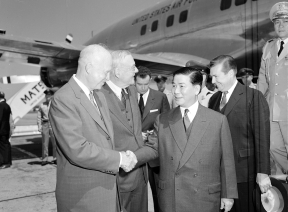
In July 1954, France and the Viet Minh signed the Geneva Peace Accord, which resulted in dividing Vietnam along the 17th parallel into a northern section, under the control of the communists, led by Ho Chi Minh, and a southern section, led by the Catholic anticommunist Ngô Đình Diệm who...
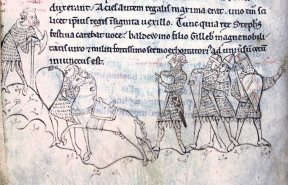
The so-called Anarchy of the twelfth century, that is the conflict between two royal cousins – Empress Matilda, heiress to the English throne, and Stephen, Count of Blois, from 1135-1148 for the rulership of the Anglo-Norman realms – continues to fascinate historians. The term Anarchy, coined by historian Kate Norgate,...
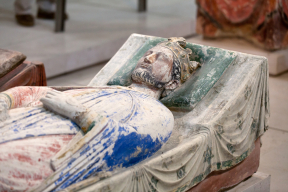
In this podcast, Dr Gabrielle Storey, discusses sexuality in the medieval world through an examination of the relationship of Richard I of England and Philip Augustus/Philip II of France. To what extent can we apply modern concepts of sexuality to the medieval period?
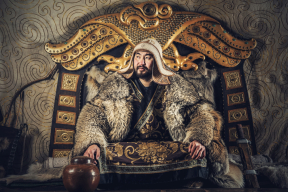
In this podcast, Dr Nicholas Morton of Nottingham Trent University, looks at the rise of Chinggis Khan and the Mongol Empire and the impact it had on the civilisations of the Near East. The podcast examines some of the themes and perspectives that he covers in his book: The Mongol...
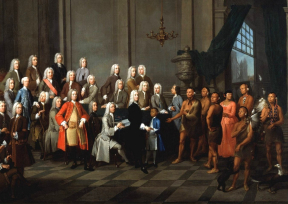
In this podcast Professor David Stirrup of the University of Kent looks at the relationship between the early English and British settlers and the Native North Americans they encountered. Professor Stirrup examines how this relationship and perceptions developed, the migration of Native Americans to Britain and provides insight on what...
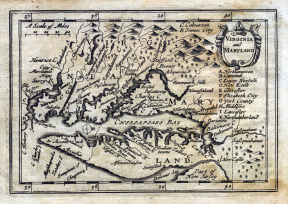
In this podcast Dr Misha Ewen of Historic Royal Palaces discusses her research project Families and the English Atlantic Empire, 1550-1650 which explores the role of women, families, and household economies in early modern empire-building. Misha Ewen specialises in the social and economic history of the early modern Atlantic world,...
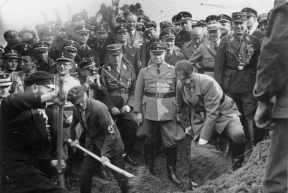
In this podcast, Dr Christopher Dillon of King's College London, discusses the importance of the German economy to the rise of the Nazi Party and discusses the development of the Nazi economy between 1933 and 1945.
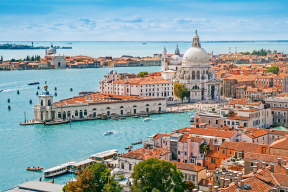
In this podcast Dr Natasha Hodgson of Nottingham Trent University discusses the development of the Crusader States, the role and influence of the Genoa, Venice and Pisa on this development and examines the origins and significance of the Holy Military Orders. Hodgson discusses what daily life was like and the...
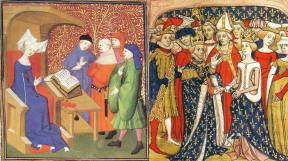
In this podcast Dr Natasha Hodgson of Nottingham Trent University discusses the role and experience of women during the Crusades. For Mediterranean women on the eve of the Crusades, life varied greatly depending upon their status. Women in positions of lordship were involved in all levels of strategy, and although...
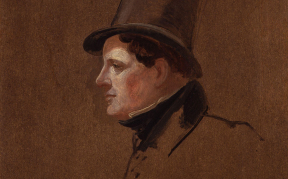
In this podcast Professor Richard Huzzey and Dr Henry Miller of the University of Durham discuss their research project on 'Re-thinking petitions, Parliament, and people in the long nineteenth century'. During this project they analysed records of 1 million public petitions to the House of Commons in the period 1780-1918...
In this podcast Professor Patrick O'Brien of the London School of Economics discusses the economic impact of the Revoutionary and Napoleonic wars on Britain.
In this podcast, Professor Bruce Collins looks at the development of the British army during the French Wars and the nineteenth century.
In this podcast, Michael Crumplin explores the development of military surgery during the Napoleonic Wars. He provides a brief context of the evolution of surgery and outlines the changes in training, surgical knowledge, militarisation, apparatus and patient experience.
In this podcast Dr Colin Storer of the University of Warwick looks at how unified Germany was on the eve of World War I. This podcast looks at the religious, linguistic and ethnic divides in Germany. How different was life for people living in towns rather than the countriside? What...