
Cross Curricular
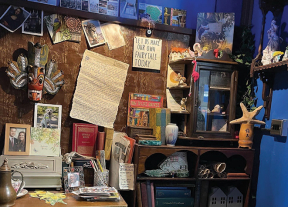
New Eltham in the Royal Borough of Greenwich had teachers and subject leaders tearing their hair out. Despite their best endeavours to keep it tidy, by the end of each half-term it always ended up in a mess. Those busy teachers that never put things back the way they found...

"Teaching epistemic insight goes hand in hand with teaching a broad and balanced curriculum. It includes building students’ understanding of the ways that different types of disciplinary knowledge can help us to address questions that bridge subjects and disciplines." (Teaching and Learning about Epistemic Insight brochure, https://crc.up.pt/wp-content/uploads/sites/101/2017/09/epistemic-insight-brochure.pdf) The Epistemic Insight...

Please note: this piece was written before Sir Mo Farah’s 2022 disclosure that he was trafficked to the UK as a child, so some of its content is no longer accurate. An assembly could focus on the achievements of their lives, experiences as child refugees and migrants, and how they...

This unit focuses on the Georgian period across the mid to late 18th century. It is during this period that Britain (rather than England) begins to consolidate the gains made by Tudor and Stuart explorers and traders. The seeds of the British Empire of the Victorian period are planted at...

This article explores some of the ways history and geography can be taught side by side, so that the sum of the parts adds up to more than the original. How can we teach history with geography and vice versa, to the benefit of both, while fulfilling the aims of...

Since the nineteenth century there has been a rich heritage of outdoor learning pedagogy in Europe, and today in Scandinavia the open air culture (frulitsliv) permeates Early Years education. In 1993 Bridgewater College nursery nurses returned from a visit to Denmark enthused by the outdoor educational settings and started their...
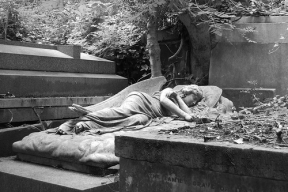
Why visit a cemetery as part of the history curriculum? Local studies now feature prominently in the primary history curriculum for both key stages. This development challenges teachers to find easilyaccessible, inexpensive and relevant resources on their doorstep. A rich resource which has traditionally been overlooked is the local churchyard...
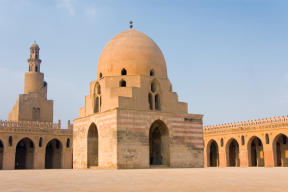
The Primary National Curriculum pinpoints Early Islamic Civilisation as Baghdad c. AD 900 - yet it was so much more. For approximately a thousand years after AD 700 there was an extraordinary amount of activity that radiated out from Baghdad and along a glittering crescent through North Africa and into...
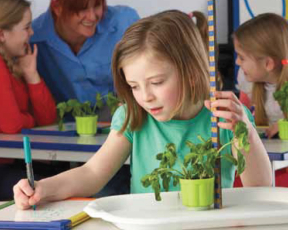
Using ‘Development Matters' to plan learning for history in the Foundation stage You won't find the term history in the Early Years curriculum framework at all. That being so, it can be difficult to know how best to support our Nursery and Reception colleagues when developing historical understanding within the...

The new (2014) Primary History National Curriculum is finally upon us. The first thing you might notice is that the level descriptions have gone. These were first introduced in 1995 and became the mainstay for assessing pupil progression and attainment in Key Stages 1, 2 and 3 across schools in...
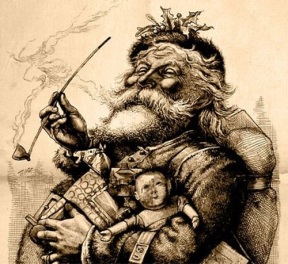
The Historical Association In Alliance With Association for Language Learning. Cross-Curricular Unit: Year 5/6 French and History. A Victorian Christmas.
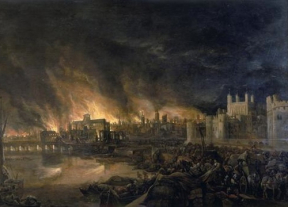
The Great Fire of London is a favourite National Curriculum teaching topic. This paper draws on the latest resources and teaching ideas to suggest how you can meet both the NC history requirements and the wider ones of the National Curriculum, particularly in integrated programmes that include teaching about the...

Drama plays a crucial role in bringing the past to life. For children it enables them to develop their understanding of motivation, behaviour and historical contexts within an essential chronological framework. Primary History 48 , History, Drama and the Classroom, explores the scope and nature of Drama for teaching history....
Hugh Turner illuminates how drama can be used to teach medieval history...
Introduction A great deal has been written recently defining what is meant by creativity in primary education. And much has been written urging us to ‘teach creatively'. Yet there had been no exploration of what teaching creatively means in terms of teaching history until a group of colleagues and I...
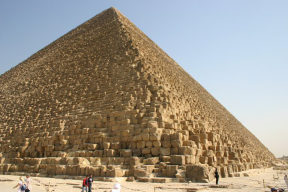
Ideally when teaching history, teachers will look to deliver projects that will engage and motivate, hopefully making the hard work of being creative stimulating and rewarding, based upon questioning, enquiry, investigation of sources and reaching conclusions grounded in the evidence.Ancient Egypt is one of those history topics which, because it...
Editorial note: The role of ICT in the Digital Age is a major, perhaps even, the major factor, in enhancing creativity in the learning and teaching of history. This paper illuminates another dimension of ICT in the Digital Age and creativity. It shows how a teacher's creativity has produced a...
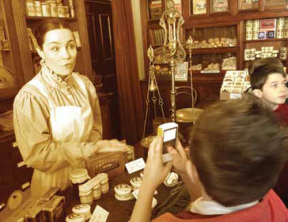
How do we engage young people with their Heritage, answer curriculum needs and make that big leap of transition from primary to secondary school that bit easier? English Heritage's Geosong treasure hunt website went some way to providing answers. What does the website do? Using handheld GPS devices, groups must...
What do we mean by creativity?In the last few years there has been an emphasis on the ‘creative curriculum', ‘creativity' and ‘creative teaching and learning', but there has not always been a shared understanding of what this means. This article uses the definition from ‘Creativity - find it, promote it'...
Creative curricular planning With the National Curriculum under review, it seems that more schools are taking a creative approach to planning by delivering the curriculum through a focused theme or topic. This has allowed schools to take more ownership of the curriculum and has helped teachers become more innovative in...