Individuals & Events

Of course, individuals and events permeate history. However, the Key Stage 1 units of study particularly require the study of significant individuals and events. What makes an individual significant? What might be considered a significant event? The emphasis is upon a comparison of individuals and events that can be used to make links across time, themes and geographical space. In this section you will find resources and articles to help you to plan innovative units of work based around individuals and events that can either be used to reveal a local, national and international picture, or that can be used to illustrate themes over time or geographical space.

Sort by: Date (Newest first) | Title A-Z
Show: All | Articles | Podcasts | Multipage Articles
  • Pull-out posters: Primary History 95

    Article

    Everywhere you look in history you can find deaf people and sign languages.

    Click to view
  • Pull-out posters: Primary History 97

    Article

    Poster 1: Paris Olympics 1924 Poster 2: Parks and gardens in Britain since 1066

    Click to view
  • Recorded webinar: The Great Fire of London

    Article

    Capture the sights and sounds of the insanitary and overcrowded capital city of Stuart England in 1666 with Andrew Wrenn. Compare how city fires were fought in London then and today, learn why the Great Fire spread so quickly from Pudding Lane, hear how Samuel Pepys the diarist witnessed events...

    Click to view
  • Sarah Forbes Bonetta: Scheme of Work

    Article

    Children are introduced to the idea of significance, and how this might change over time. Sarah Forbes Bonetta – we don't even know her real name – was an African princess, a slave in West Africa, a god-daughter of Queen Victoria, a wife, mother and missionary teacher. Does that make her...

    Click to view
  • Scheme of Work: Brunel

    Article

    At Key Stage 1, pupils are asked to examine the lives of significant individuals who have also contributed to national achievements. A study of Isambard Kingdom Brunel provides a fascinating example of an individual whose technological and engineering advances have helped to shape the face of Britain.  Children can identify...

    Click to view
  • Scheme of Work: Grace O'Malley

    Article

    This unit encourages pupils to explore the past by examining their ideas about pirates, with particular reference to Grace O’Malley. The key question leads children to consider what are the characteristics of a pirate and to challenge stereotypes in the light of historical enquiry. The key question also leads to...

    Click to view
  • Scheme of Work: Significant Individuals at Key Stage 1: Ibn Battuta

    Article

    The history programme of study for Key Stage 1 requires pupils to be taught about: 'The lives of significant individuals in the past who have contributed to national and international achievements, some of whom should be used to compare aspects of life in different periods.' In this unit, children are...

    Click to view
  • Scheme of Work: Walter Tull

    Article

    Pupils will look at the childhood and football career of Walter Tull, what happened to him when he fought in World War I and why he was different from most people of his time. They will compare his experiences to issues and people still relevant today including the double Olympian...

    Click to view
  • Scheme of work: Journeys - the story of migration to Britain

    Article

    This unit is designed as a thematic course looking at the big picture of migration to Britain over time. There are many ways that the course can be adapted to include different content which may be more relevant for the local community around your school. Most of the content described in...

    Click to view
  • Scheme of work: Queen Elizabeth II

    Article

    Prior to completing this unit of work, it would be useful for the children to have started to develop an understanding of the substantive concepts of monarchy and royalty through their prior learning. Direct links can be made between studies of specific monarchs and their roles, as well as stories...

    Click to view
  • She sells seashells by the seashore: teaching Mary Anning at Key Stage 1

    Article

    Mary Anning was a fascinating individual who would be a purposeful addition to a history curriculum. This article outlines the rationale behind including her as a significant individual but also offers ideas for developing young children’s understanding of historical interpretations.

    Click to view
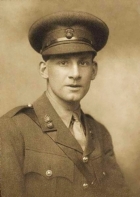
  • Siegfried Sassoon Diaries Online

    Article

    Siegfried Sassoon, soldier and poet of the First World War who controversially began to oppose the war after winning awards for bravery, has his entire war diaries digitised and published online by Cambridge University:

    Click to view
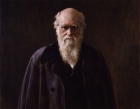
  • Significant Individuals: Charles Darwin

    Article

    Charles Darwin: exploring the man behind the beard – studying the lives of significant individuals in the past Studying the life of Charles Darwin is an exciting way to meet the requirement in Key Stage 1 to teach significant individuals. But what do we actually know about him, beyond the...

    Click to view
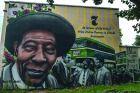
  • Significant anniversaries: The Bristol Bus Boycott, 1963

    Article

    It is sixty years since the Bristol Bus Boycott highlighted race inequalities and discrimination in the workplace. In this article, Stuart Boydell revisits this watershed moment and considers how the Bristol Bus Boycott could be incorporated into the curriculum today. Sixty years ago, Bristol was at the centre of a...

    Click to view
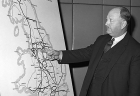
  • Significant anniversaries: the infamous Beeching Report 1963

    Article

    March 2023 sees the anniversary of a report that had profound significance on social history and which affected many parts of the United Kingdom. There is every chance that it had an effect close to your school especially if you are in a more rural or coastal area. The Beeching...

    Click to view
  • Significant people: Mary Wollstonecraft

    Article

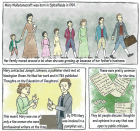
    ‘I do not wish women to have power over men; but over themselves’ – Mary Wollstonecraft The National Curriculum gives the freedom to select any significant individual and many schools have already chosen those outside the commonly-used ones such as Florence Nightingale, Christopher Columbus and Queen Victoria. There is also...

    Click to view
  • Sources for the Great Fire of London and its context

    Article

    Nina Sprigge reveals two interesting sources that can supplement teaching the Fire of London.   Fire of London: fundraising for refugees The receipt on the back cover provides evidence of national fundraising in 1666. It is touching that people from Cowfold, a little village outside London, cared enough to want to...

    Click to view
  • Stories about people: narrative, imagined biography and citizenship in the key stage 2 curriculum

    Article

    Please note: this article pre-dates the current National Curriculum and some content and references are outdated. For children history is a story, and a story mainly about people.(Schools Council, 1969, p12) It is interesting that Grant Bage (1999) used this quote to begin his chapter on Making Meaning of Story and History in,...

    Click to view
  • Stories and National Identity

    Article

    Please note: this article pre-dates the current National Curriculum and some content may be outdated. If you were asked to select just one story which you thought all children should know about British history, what would it be? Would it be Guy Fawkes or Florence Nightingale? The battle of Hastings...

    Click to view
  • Storytelling the past

    Article

    This article will demonstrate how to engage children through storytelling and how it can be used to develop their critical understanding of the past. Why story? Despite their common derivation, the words ‘history’ and ‘story’ suggest very different kinds of knowledge, the former carrying overtones of detached understanding of the...

    Click to view