
Historian articles
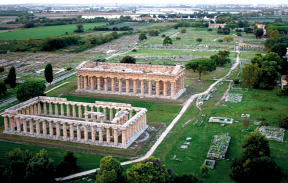
Trevor James introduces the extraordinary archaeological remains from Greek and Roman occupation to be found at Paestum. Paestum is the more recent name of a location originally known as Poseidonia, named in honour of Poseidon, the Greek god of the sea. Poseidonia was a Greek settlement or colony on the...
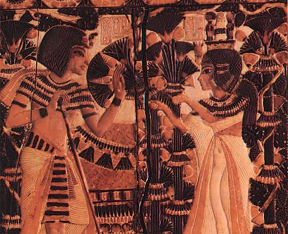
Joyce Tyldesley explains the significant but often hidden roles played by queens in Ancient Egypt. For almost 3,000 years – from the unification of the land in 3100 BC to the arrival of Alexander the Great in 332 BC – the king (or pharaoh) of Egypt served as an essential...
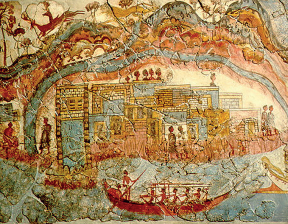
Paul Bracey – The emergence of civilisations provided fundamental changes in the capacity for human development. This said, they exhibited similarities, differences, frailties, negative and positive attributes and should be related to a broadly based appreciation of the past. During the nineteenth and early twentieth centuries the assumption was that...
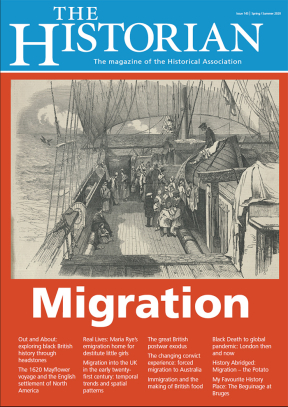
Read The Historian 145 Migration has been a hot topic over the recent past. Tempers have risen, noises have been made. Migration is bad. Migration is good. There have been government targets for net migration (mostly missed by huge margins) and these have prompted much anguish amongst some politicians. So...
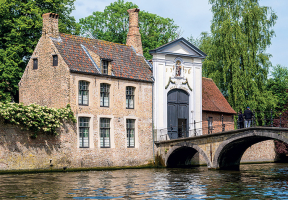
Richard Stone introduces us to a quiet neighbourhood in Bruges which has played its part in the development of women’s independence. Close to the Minnewaterpark, on the fringe of the bustling historic centre of Bruges, with its medieval buildings and atmospheric cobbled streets, the Beguinage is a tranquil haven. Cross...
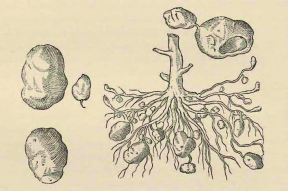
History Abridged: This feature seeks to take a person, event or period and abridge, or focus on, an important event or detail that can get lost in the big picture. Think Horrible Histories for grownups (without the songs and music). See all History Abridged articles The gradual move of humans...
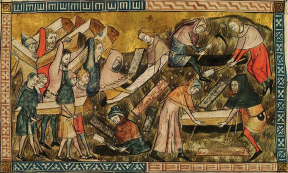
Christine Merie Fox compares the impact of the Black Death on fourteenth-century London with our present-day experience. In 1347, a terrifying disease was carving a path from the East into Northern Africa and Europe. Its entry point into Europe was the south of Italy, via merchant ships from the Black...
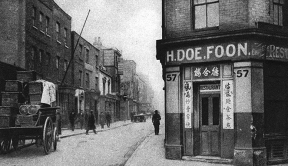
Panikos Panayi explores the way in which immigration has transformed British eating habits over the last two centuries, whether through the rise of the restaurant and the development of eating out, or the culinary revolution at home. Those people who voted to leave the European Union in 2016 because of...
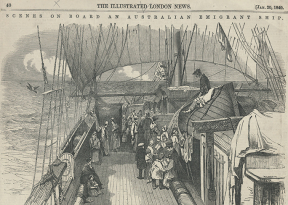
Edward Washington gives us a fascinating insight into life on an emigration ship – the John Knox – taking a group of orphan girls to Sydney, through a letter written after the voyage by the man charged with improving their education during the sea voyage. After his arrival in Sydney...
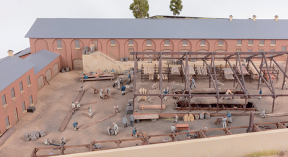
Edward Washington explores the story of William Noah who was sentenced to death for burglary in 1797 at the age of 43. He, and two others, were found guilty of breaking and entering the dwelling-house of Cuthbert Hilton, on the night of the 13 February. From Newgate Prison he was...
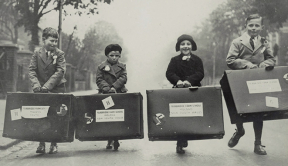
Murray Watson uses oral history interviews to try to explain the many and varied reasaons people had for emigrating from Britain after World War II. When I was invited to write this article about postwar emigration from the UK my first action was to Google the search term ‘postwar emigration...
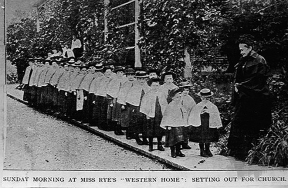
Alf Wilkinson explores the controversial story of Maria Rye, who founded the Female Emigration Society in 1861 in order to take ‘surplus’ young ladies to Australia and New Zealand to work as teachers and governesses. As there was insufficient demand for these, she refocused her work on taking pauper children...

Sam Scott and Lucy Clarke explore the data covering more recent migration to the United Kingdom, most especially from the EU. They discover that since 2000 migrant destinations have changed. No longer do migrants head exclusively to the big cities and industrial areas, but to rural areas, like Boston in...
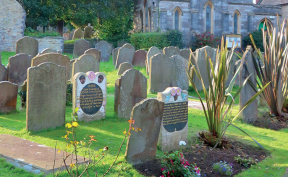
In what has become a very a topical article that was commissioned in late 2019, Jill Sudbury explores some of the known graves of the enslaved and formerly enslaved throughout Britain, and asks for help in recording others as yet unknown. Along the bleak shore of Morecambe Bay, beyond the...
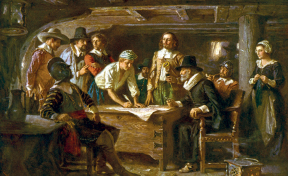
On the 400th anniversary of the arrival of the Pilgrims in New England on the Mayflower, Martyn Whittock explores the reasons for migration to the New World in 1620 and later, and the significance of those migrants, both at the time and their impact on the evolution of the USA...
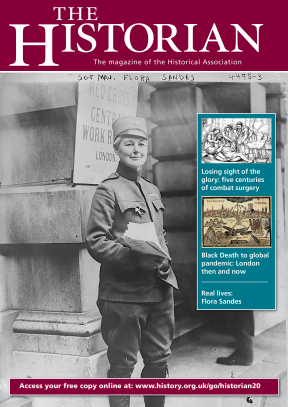
Welcome to this special sample edition of The Historian. We have gathered here just a few of the fascinating articles and features that have been published in the quarterly editions in recent months. Deciding what to select was not an easy task as there are a wide range of styles,...
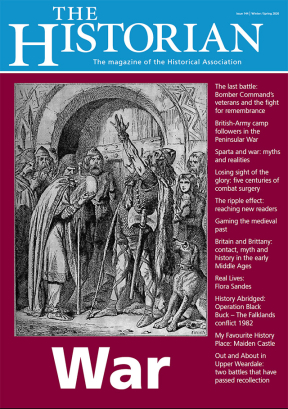
Editorial: War Read The Historian 144 War is such a small word for such a complex human activity and any research and publication that helps us to better understand it is welcome. I recollect a conversation with my local MP when the Conservative education secretary was proposing a new history...
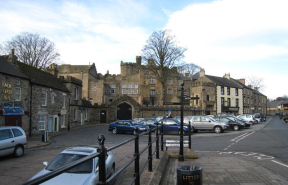
Tony Fox introduces us to two battlefields and the work of the Battlefields Trust. Stanhope takes its name from the ‘stony valley’ in which it sits. It is the most significant town in beautiful Upper Weardale. Like many towns in this area Stanhope’s growth accelerated in the nineteenth century as...
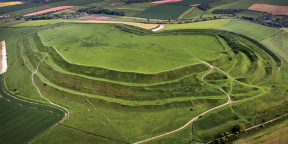
In the six years I have been on the editorial board of The Historian I have enjoyed reading about many historians’ favourite places so it is fitting that I write my last contribution about mine. Maiden Castle is the largest Celtic hill fort in southern Europe. I forget when I...

History Abridged: This feature seeks to take a person, event or period and abridge, or focus on, an important event or detail that can get lost in the big picture. See all History Abridged articles Just as the Naval Task Force had been dispatched in April 1982, days after the...