
Primary History articles
Please note: this article pre-dates the 2014 National Curriculum and some content may be outdated. Simon Schama's plea to "reinvent the art and science of storytelling in the classroom" made the media headlines and echoed centuries of educational history (Bage 1999). "It is, after all, the glory of our historical...
Please note: this article pre-dates the 2014 National Curriculum and some content may be outdated. Until the mid 1930s the vast majority of children attended elementary schools, which went through from five to fourteen. In theory pre-war schools were left relatively free to teach in the way they chose as...

Please note: this article pre-dates the 2014 National Curriculum and some content may be outdated. Teaching history is a balancing act between generalities and the particular. This article seeks to explore how Britishness and ethnic diversity relate to a broader understanding of diversity. We do not challenge the teaching of...
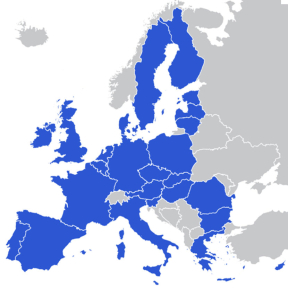
Please note: this article pre-dates the 2014 National Curriculum and some content may be outdated. With the current debate on what content we should teach, and especially with the focus on pupils understanding the history of Britain before they leave school, it is perhaps pertinent to ask how this should...

Please note: this article pre-dates the 2014 National Curriculum and some content may be outdated. Even an inclusive national history curriculum can make Britain (and Europe) appear as the lynchpin of world history. Without a coherent structure for global history, young people remain unaware that continents beyond Europe have histories...
Please note: this article pre-dates the 2014 National Curriculum and some content may be outdated. The main goals of educating children are meeting their educational and achievement needs. Herein is the challenge. Our classrooms are a cornucopia of diversity. The most prominent or acknowledged being gender, class, religion and ethnicity....
Please note: this article pre-dates the 2014 National Curriculum and some content may be outdated. History is an important aspect of the development of even very young children. They need to begin to develop the foundations of an understanding of the past and how it has developed and affected our...
Please note: this article pre-dates the 2014 National Curriculum and some content may be outdated. The historian R.G. Collingwood inspired the Schools Council History Project [SC HP] that transformed the teaching of history in Britain from the early 1970s. The SC HP argued that pupils should be ‘apprentice' historians who...
Please note: this article pre-dates the 2014 National Curriculum and some content may be outdated. The Spring 2008 issue of this magazine, Visual Literacy, highlighted the excellent practice in using visual historical sources that exists in many primary schoolsWe should strive to preserve and extend this critical use of visuals,...

Please note: this article pre-dates the 2014 National Curriculum and some content may be outdated. The Historical Association [HA] supports effective, stimulating and rewarding history teaching through its website, publications and in-service programme, particularly Primary History and its HITT [History in Initial Teacher Training Programme]. HITT provides extensive guidance on...
Please note: this article pre-dates the 2014 National Curriculum and some content may be outdated. From the late 1960s until 1989 history was almost universally taught in primary schools as an element in integrated crosscurricular programmes, normally social studies or humanities. The 1989/1990 National Curriculum: History radically changed this. It...
Please note: this article pre-dates the 2014 National Curriculum and some content may be outdated. History is a subject which of necessity makes extensive use of language in all its forms and so the links with literacy are many. Cooper (2000), Bage (1999), Hoodless (1998) and Nichol, in the Nuffield...
Please note: this article pre-dates the 2014 National Curriculum and some content may be outdated. Gifted and talented (G&T) education has a major focus upon differentiation: the identification and support of pupils who have the abilities to perform at the highest levels. The Autumn 2007 edition of Primary History 47...
Please note: this article pre-dates the 2014 National Curriculum and some content may be outdated. Much of the recent guidance related to assessment, monitoring and recording in primary history has focused more on what does NOT have to be done rather than on practical advice on what might be done....
Please note: this article pre-dates the 2014 National Curriculum and some content may be outdated. Editorial note: Cathie's paper can be used as a checklist of action points for the planning of Programmes of Study incorporating history. Starting points If you are responsible for leading teaching and learning in history,...
The government's 2010 White Paper makes clear that the history curriculum will be reviewed. This is the ideal time to consider that very contentious issue - What History Should We Teach? And who better to ask than those who really know and understand what the curriculum will look and feel...
Introduction: The White Paper The recent Schools' White Paper, The Importance of Teaching, emphasises ‘that the most important factor in determining how well children do is the quality of teachers and teaching' (DfE, 2010:9). White Paper recommendations include: 1. raising the quality of new entrants to the teaching profession; 2....
Please note: this article pre-dates the 2014 National Curriculum and some content may be outdated. In the mid 1990s the Nuffield Foundation funded the development of a primary history curriculum for Yaroslavl in Russia. It was a contemporary curriculum, choosing issues and concepts of central concern to contemporary society and...
Please note: this article pre-dates the 2014 National Curriculum and some content may be outdated. Editorial note: Hilary Cooper outlines the main features of historical thinking. These ideas are embedded in the government's current requirements for teaching National Curriculum History [England] Introduction It is important that children develop a coherent,...
Please note: this article pre-dates the 2014 National Curriculum and some content may be outdated. The national history curricula for Northern Ireland, England and Wales have passed through various stages since working groups were set up in England and Wales in 1989. Developments have been distinct, with Northern Ireland having...