
Primary History articles
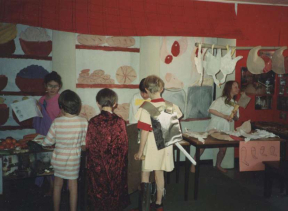
Please note: this article pre-dates the current National Curriculum and some content and references are outdated. Children arrive at school or nursery with their personal, unique mental ‘models’ of the world. the challenge for us is to expand these so that increasingly the pupils will be able rationally to make...
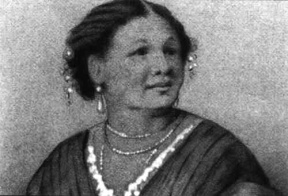
Please note: this article pre-dates the 2014 National Curriculum and some content may be outdated Studying famous people at Key Stage One has obviously been an issue for many years and no matter how long you have been teaching the name Florence Nightingale seems to appear as the only famous...

Please note: this article pre-dates the current National Curriculum and some content and references are outdated. Story is the crucial factor in children’s awareness of past times in their ‘mythic’ phase of mental development, see page 4. Everyone loves a story, stories ‘open out fresh fields, the illimitable beckoning of...

Please note: this resource pre-dates the 2014 National Curriculum and some content and links may be outdated. History education needs to be placed in a wider pattern of curriculum development. Part I of this paper looks at general issues linking History with citizenship education and the early years. Part 2...
Please note: this article pre-dates the 2014 National Curriculum and some content may be outdated The last edition of Primary History published the first part of the report on the KS2 to KS3 transitions project. Part 1 illuminated the first four of produced eight key ideas or guiding principles for...
The draft of the revised Key Stage 3 programme of study for history brings a new prominence to the study of the British Empire. Here one department describes their triumph in enabling students to engage with a topic which could seem very distant from their own lives.
Please note: this article pre-dates the current National Curriculum and some content and references are outdated. In a primary school in Devon, there is a teacher who sings to his class every day: traditional songs; love songs; lyrical ballads; sea shanties; tales of mystery and suspense; songs of ritual and...
Why did I research my family history and write a memoir based on my ancestors’ and my own life? And why is all this relevant to readers of the Primary History Journal and not just self indulgent musing? Because it is an insider’s story of trying to write honest history...
“It’s like they’ve gone up a year!” This was the unprompted observation of a teaching assistant at Buckden Primary School last summer, supporting Giles Fullard, a secondary history teacher from Hinchingbrooke School, near Huntingdon leading a lesson with a year 6 class on “Was Boudicca Britain’s first hero?” The scheme...
For the majority of children a picture book is the first book that they enjoy and share with an adult. Picture books introduce children to different genres of writing, different themes and different artistic styles. As young children 'read' and explore picture books they take meaning from the text and...
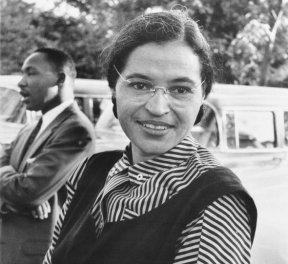
Rosa Parks died in October 2005, aged 92. It's a life story which resonates with any age group. In a recent visit to a nursery, I saw 4 year olds who had lined up the chairs to make a bus, playing out Rosa's refusal to move from her seat. She...
The mention of 'The Domesday Project' to any teacher who was in the classroom in 1985 usually triggers a very vivid memory of involvement in a national survey to capture life at that time. Teachers of over one million pupils in both primary and secondary schools volunteered to be included...
Children develop their understanding of the past through a range of historical sources of evidence. Written sources may provide different types of information for children to work from. Records such as census returns or street directories provide information about families and tradespeople living in a particular communities and old maps...
Children love stories. They like the drama, the excitement, the chance to listen and to wonder. Narrative is a very important part of history and sometimes, by concentrating on facts or on skills, we tend to lose the view of the big picture, especially in the Key Stage 2 curriculum...
Teaching the Holocaust at primary level can be incredibly rewarding and result in pupils broadening their historical understanding as well as encouraging them to consider other issues. The importance of challenging prejudice, ignorance and racism, the importance of not being a bystander and valuing life are just a few of...
Nursery rhymes are good sources of evidence about the past and their potential for developing children's understanding has been discussed in earlier editions of Primary History (Woodhouse: 2005, 2001; Cooper: 2005; Primary History : 2000) They may be used as starting points to provide information about past ways of life...
Please note: this article pre-dates the current National Curriculum and some content and references are outdated. With primary history contributing to writing, some research by Sandra Dunsmuir and Peter Blatchford into pupils aged 4-7 has relevance to history teaching. The findings were published in the "British Journal of Educational Psychology",...
We have come to understand that modern children's literature often provides a way of examining a range of social and moral issues, affording educators the opportunity to discuss issues such as bias and stereotyping. Many adults have seen the possibilities here to contextualise classroom incidents differently, or to explore themes...
Talking about historical stories written at different times in the past can reveal much about the more sophisticated understandings that young children have of the past. Primary school children often work with artefacts, historic architecture and sites to enable them to visualise and reconstruct the past. However, these sources do...
Finding sources for your local study can be a challenge, particularly if you are not familiar with the history of the area around your school. Please note: this article uses the Images of England website which has now closed down. The images can still be found via the Historic England...